Mountaintop to Tap Exhibition Debuts at Queens Museum of Art
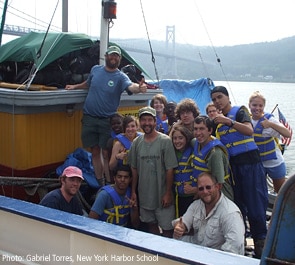
For twelve exceptional high school students, May 15 was truly a watershed moment. It marked the opening reception of an exhibition of photographs and journal entries documenting their three-week journey in July 2007 that traced New York City’s drinking water from the source in the Catskill Mountains to the Central Park reservoir. The exhibition will remain on display through June 29, when it will move to other locations in New York City and the Catskills and eventually return home to Stroud Water Research Center.
These students, now the subject of a documentary film entitled Mountaintop to Tap, rowed, paddled, and hiked the 200 miles across the watersheds that provide 9 million New Yorkers with some of the world’s best fresh water. They were joined along the way by several Stroud Center scientists and educators, NYC Department of Environmental Protection (NYC DEP) officials, and municipal authorities. During the trek, the students did their own water testing using the Stroud Center’s Leaf Pack experimental test kits.
The trek was the brainchild of the Stroud Center and was inspired by a desire to bring together the upstate and downstate communities that share this watershed — underscoring their relationship to one another and their interconnectedness through the water supply. The educational program, created by the Stroud Center and funded by the Leo Model Foundation, the New York State Department of Environmental Conservation, the NYC Department of Environmental Protection, the Virginia Wellington Cabot Foundation, and several generous Friends of the Stroud Center, was designed to educate students to become watershed stewards both in their own right, and in the hope that they would in turn educate others — and, they have.
Through their journals and photographs, we can all enjoy the beauty of the natural resource that is the NYC watershed and understand why it should be protected. We can see what they saw, feel what they felt, and know what they now know—that many organizations are responsible for the protection of our water supply, but, as individuals, we too share in that responsibility because every one of us lives downstream.
For more information about the Stroud Center’s Leaf Pack Network® and the Leaf Pack Experiments Stream Ecology Kit, please visit www.leafpacknetwork.org.
Learn more about the Mountaintop to Tap Trek.
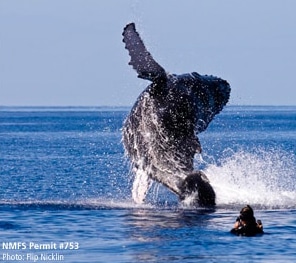
The Water’s Edge to Feature National Geographic Underwater Photographer Flip Nicklin
This year’s Water’s Edge will be held at Longwood Gardens. Each year, supporters of the Stroud Center gather for the Water’s Edge, our annual fundraising dinner and celebration of our most precious resource — fresh water. This marquee event draws speakers from around the world who share our passion for environmental stewardship. Previous speakers have included Jane Goodall, primatologist and founder of the Jane Goodall Institute, and Wangari Maathai, founder of the Green Belt Movement and Winner of the 2004 Nobel Peace Prize.
This fall, we’re particularly excited to welcome National Geographic photographer Flip Nicklin. Reserve your tickets now.
Wild & Scenic Environmental Film Festival Gets Rave Reviews
The meeting house was packed with an enthusiastic crowd on Thursday night, May 1, 2008, when the Stroud Center hosted the Wild & Scenic Environmental Film Festival. The aim of this nationwide film festival is to build a network of grassroots organizations connected by a common goal — to use film to educate, inspire, and promote environmental stewardship.

Started by the South Yuba River Citizens League (SYRCL) as a way to build community within the Yuba watershed in the Sierras of Northern California and to explore environmental issues through the powerful medium of film, the tour is now the largest of its kind in the United States. Its national sponsors include outdoor gear maker Patagonia, Inc., along with Bright Planet, Clif Bar & Co., Earth Cinema Circle, Tom’s of Maine, and Whole Foods Market.
“When our friends at Trail Creek Outfitters asked us to host the Festival, we leaped at the opportunity,” said Bern Sweeney, director of the Stroud Center. “These films provide the perfect complement to the watershed education programs we conduct for people of all ages, and the proceeds from the event help us continue to do great work.”
“One-third of the audience members were new to the Stroud Center, allowing us to introduce them to what we’re doing in our research and education programs to understand fresh water and protect water quality,” said Lynn Biddle, Director of Development. We’re grateful for the generous support of our local sponsors, especially Trail Creek Outfitters, who made it all happen.”
In addition to Trail Creek Outfitters, local sponsors also included: Concordville Subaru, Dig-It Landscape & Garden Designs, Francine’s Community Marketplace, and SWI Vegetables.
Attendees feasted on a fabulous spread of hors d’oeuvres, beer, and wine and sat down to enjoy eight award-winning films and documentaries. While they may have sat in the dark for several hours, they left enlightened, educated, and inspired.
Stroud Scientists at Work
Understanding Stream Conditions Throughout Pennsylvania
Just what do the myriad of state labels mean in terms of biodiversity, management, and protection of Pennsylvania’s streams and rivers? Scientists from the Stroud Center set out to answer that question in a 12-year study that examined water quality in relation to the management and regulatory labels applied to the 86,000 miles of streams and rivers throughout Pennsylvania. The project was designed to help the public understand the water quality of the local streams and to establish a baseline for evaluating future restoration and protection efforts in the watersheds.
The study focused on the Schuylkill River Basin as a proxy for other streams and rivers throughout Pennsylvania because of (1) the variety of land uses in its watershed and (2) the integral role it plays in the communal and economic life of southeastern Pennsylvania.
Validating the State’s Labeling System
Stroud Center scientists focused their efforts on the 3 labels the state uses to describe stream conditions (Aquatic Life Use, Special Protection, and Current Status) and then sought answers to the following questions: Do these labels actually represent different types of streams and conditions? Do they accurately reflect the assessments of our 12-year study? Are the specially protected streams truly the best streams in Pennsylvania? Is the quality of their water getting better, staying the same, or getting worse? Finally, what factors contribute to the differences among these streams, and what practices can we employ to improve them or prevent their further degradation?
In addition to evaluating the accuracy of the labeling system, the scientists also set out to answer a seemingly simple – but surprisingly complex – question: Is the study stream degraded – and if so, how far has it traveled from its natural and pristine state? They learned a lot.
The State of the Schuylkill River Basin
We asked senior scientist John Jackson what the state of the Schuylkill River Basin is. “That’s a complex question because the two-label system used for regulatory purposes fails to convey important information needed to really understand, manage, and protect our streams,“ said Jackson.
Environmental conditions in the Schuylkill River Basin range from Good (23%) to Poor (32%), and the differences are significant. For example, the average Poor stream site in the study had lost more than 70% of the pollution-sensitive families found at the average Good site; the worst site had lost 99% — or virtually all of its sensitive macroinvertebrates. “Imagine if you woke up one day to find that 70% of your neighbors were gone,” said Jackson. “You would probably be pretty alarmed, and your conclusion would rightly be that something was wrong. The primary causes of this loss of biodiversity are human activities in the watershed and we know how to address these problems — provided we have the will to do it.”
This study was funded by the William Penn Foundation. Learn more about the Schuylkill River Project.
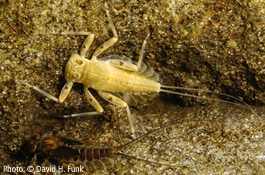
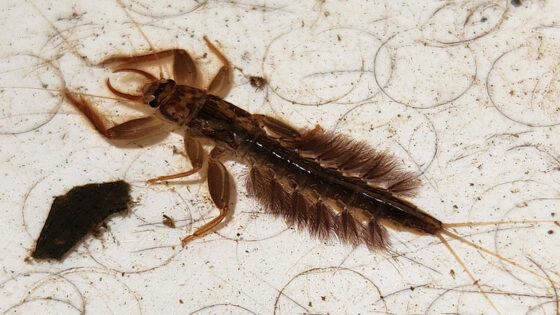
“Aquatic bugs are the dominant animal group in most streams and rivers worldwide, and they’re also an important part of the food chain and stream ecosystem,” said Jackson. “Together, these macroinvertebrate species provide a very sensitive measure of environmental change and stress. Their abundance and diversity also make them great subjects for statistical analyses, which is why scientists worldwide continue to rely on them as a standard measurement tool.”
Are There Things That Can Be Done to Better Protect All Waterways?
Answer: Yes, our analyses suggest certain philosophies and practices that will enhance the protection of all streams in Pennsylvania.
- Recognize that stream degradation occurs gradually and that greater human development and activity lead to greater stream degradation. Our data do not support past suggestions that streams do not respond to human activity until a threshold is crossed. Consequently, every decision we make about land use and cover has the potential to affect stream conditions.
- Plant and protect trees. There is a positive connection between stream quality and watershed forest cover. Our data suggest stream condition is better when forests are maintained, and we do know from other studies that streamside forests can both reduce the movement of human pollutants into streams and increase the ability of streams to process, degrade, or otherwise sequester pollutants that do enter them.
- Monitor regularly and frequently. This is particularly important if a watershed is undergoing change because, without data, we cannot accurately assess the results of protection, conservation, and restoration efforts. Monitoring a site once every 5 years yields only four data points over 15 years, which is insufficient to gauge all but the most dramatic changes that may occur.
- Protect watersheds, not just stream sections. Exceptional Value and High-Quality streams are relatively rare and highly significant features in the Pennsylvania landscape. For downstream reaches of streams that deserve Special Protection, it is crucial that Special Protection status be granted to the entire upstream watershed as well. We need to treat these Pennsylvania jewels the way we treat other natural and cultural treasures. We would never disqualify a historic building for special protection or preservation just because it has some broken windows or rotten boards — we would fix the damage as part of the plan to preserve the building. Likewise, we would never ignore the roof of a historic building while attempting to protect the rest of the structure and its contents — we would preserve the roof first. If there are tributaries upstream of Special Protection sections that do not presently qualify for Special Protection status, then these streams should be improved as part of the protection process so that Special Protection status can be extended, and these valuable streams are better enhanced and stabilized.
In the News
News of Drugs in Our Drinking Water Underscores the Need for More Research
It came as a total surprise to many when AP reporters Jeff Donn and Martha Mendoza broke their story, Drugs Found in Drinking Water, in March 2008. The public was alarmed to learn that there are unregulated substances in our drinking water for which the impact on humans is not fully understood. This report, which cited research scientist Anthony Aufdenkampe, because of the Stroud Center’s extensive New York City Watershed project data, created a maelstrom of media activity around the world as individuals began to question what they had always taken for granted — the quality of the water they consume every day.
The news made headlines from New York to California and as far away as New Zealand, South Africa, and Singapore. Some 375 stories by media outlets, including FOX News, Forbes.com, the New York Times, NBC, NPR, USA TODAY, and WIRED News, hit newsstands, televisions, and computer desktops around the globe. The Blogosphere also ran with the story, adding perspectives that reflected the public’s concern. From teenagers to adults — industry, ethnic, and religious groups to hobbyists — this subject struck a chord, and the web was used to spread the word and raise issues about the state of our water supply.
Throughout the month, journalists from across the country and the world sought Aufdenkampe’s insights into the sources of contaminants found in our water supply and what could be done about it. His presence on the CBS national evening news underscored the significance of the Stroud Center’s role in this issue. Also featured on the broadcast were shots of the Stroud Center’s geochemists, Stephanie Dix and Linda Carter, extracting water samples in the Organic Geochemistry and Stable Isotope Lab and footage of the Stroud Center’s indoor stream.
The public’s heightened awareness and concern over the issue of pharmaceuticals and emerging contaminants in our drinking water underscores just how vital the Stroud Center’s freshwater research is — and how more needs to be done to understand how watersheds function so that we can protect, preserve and restore them everywhere.
Stroud Scientists and Educators Present
Disseminating Our Findings to Our Peers and the Public at Large
Our ability to disseminate our findings to a broad audience allows us to increase awareness and create a public dialogue centered on the protection, preservation, and restoration of watersheds everywhere. It’s for that reason that our scientists and educators engage in both scientific and public forums to share their findings. The following highlights recent presentations.
Stroud Center Scientists Play a Major Role at NABS
Stroud Center scientists had a large presence at the 56th Annual Meeting of the North American Benthological Society (NABS) in Salt Lake City, Utah this May. NABS is an international scientific organization whose purpose is to promote better understanding of lakes, streams and rivers. At its annual meeting for the scientific community speakers disseminate new research results, interpretations and other information to their peers.
Stroud Center scientists have active leadership roles in several of the Society’s Executive Committees, including the Constitutional Governance, Editorial, Endowment, Strategic Planning, and Tax Certification committees, but their real commitment to NABS and its goals is best expressed through their research contributions which continue to further benthological science. The following is a list of their NABS presentations:
- Density, Growth, and Secondary Production of a Freshwater Crab in a Tropical Mountain Stream (John K. Jackson)
- Does Longitudinal Dispersion Influence the Measurement of Uptake Length? It Depends on the Péclet Number. (J. Denis Newbold)
- Habitat Stability and the Structure and Function of Benthic Bacterial Communities on Rocks and Sediments in a Small Temperate Stream (Louis A. Kaplan)
- Ecosystem Metabolism in a Stream Impacted by Acid Mine Drainage (AMD) and One Undergoing AMD Remediation (Thomas L. Bott)
- Modeling Sources of Seston, Particulate Organic Carbon, and Particulate Nitrogen within a Stream Ecosystem (David C. Richardson)
- Objectivity in the Resolution of Species: A Case Study in the Ephemerellidae (David H. Funk)
Taking Stock of New York City’s Drinking Water
Bern Sweeney recently joined presenters from The Clean Drinking Water Coalition (CDWC) and John Jay College of Criminal Justice on May 15, 2008, to discuss their respective findings on the state of New York City’s drinking water. The event, Taking Stock of New York City’s Drinking Water, drew a crowd of more than 100 New Yorkers thirsty for knowledge about the quality of the water they drink. Sweeney addressed the audience with an overview of trends in water quality in the NYC Watershed — the results of a recently completed six-year study designed to provide a technical baseline for measuring future changes in the streams, rivers, and reservoirs that supply New York City’s drinking water.
Learn more about the New York Project
Schuylkill Watershed Congress
Stroud Center senior scientist John Jackson was the keynote speaker at the Schuylkill Watershed Congress, held in May 2008. His presentation, Is a cold water fishery by any other name still as clean a stream? A look at Pennsylvania’s complex system for labeling streams and what these labels mean for a stream’s biodiversity, management, and protection was well received by the 200 participants.
Stroud Center education programs manager, Kristen Travers, also addressed the gathering with a presentation about the Stroud Center’s water quality study in Bucks County, Pennsylvania – a study designed to replicate research conducted 40 years ago in the 1960s, before the passing of the Clean Water Act, in order to determine exactly how water quality has changed since that time and how long-term changes to the watersheds have affected the streams within them.
National Water Quality Monitoring Conference
Monitoring: Key to Understanding our Waters was the theme of this year’s National Water Quality Monitoring Conference in Atlantic City in May 2008. The conference highlighted the importance of monitoring in achieving the goal of clean water for all. Stroud Center education programs manager Kristen Travers presented Macroinvertebrate Monitoring: Training and Education for Volunteers.
American Society for Microbiology
Members of the world’s largest scientific society of individuals interested in the microbiological sciences gathered in Boston for the American Society of Microbiology’s 2008 meeting this June. The Society’s mission is to advance microbiological sciences through the pursuit of scientific knowledge and dissemination of the results of fundamental and applied research. Stroud senior scientist Lou Kaplan and Ph.D. candidate Karen Hogan presented Storm Induced Transient Alterations in “Climax” Streambed Bacterial Community Structure in the Pennsylvania, U.S.A., Piedmont.
Chester Ridley Crum Watersheds Association
In concert with Chester Ridley Crum Watersheds Association and the Habitat Resource Network of Southeastern Pennsylvania, Penn State’s Brandywine campus hosted an event in February 2008 to educate municipal officials, watershed associations, and the public about the effects of stormwater runoff and how to counter it. Stroud Center education programs manager Vivian Williams presented Installing and Operating Rain Barrels to a crowd of more than 100 attendees.