
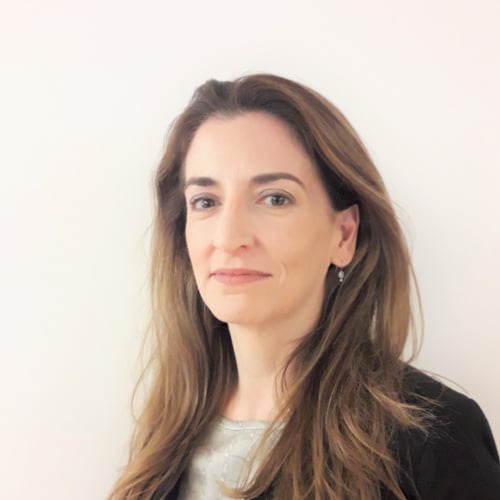
Senior Research Scientist
- Principal investigator, Fluvial Geomorphology Group.
- Adjunct professor, Department of Earth & Environmental Sciences, University of Pennsylvania.
- Adjunct faculty, Department of Geography, Kansas State University.
- Affiliate faculty, Department of Geography, University of Delaware.
- Affiliate faculty, Department of Geological Sciences, University of Delaware.
Contact
mdaniels@stroudcenter.org
tel. 610-910-0044
970 Spencer Road, Avondale, PA 19311
Interests and Expertise
Melinda Daniels’ research program focuses broadly on the fluvial geomorphology, hydrology, and stream ecosystem ecology of both natural and human-modified river systems, from reach to watershed scales. Her interests include river restoration, watershed management, and stream ecosystem science. Though much of it is theoretically based, all of her research is placed within the context of better understanding our impact on rivers, improving river management, and enabling successful river restoration.
Daniels’ work includes examining how people perceive river environments and the process of communicating science to river managers and stakeholders. Essentially, her research perspective examines rivers as coupled human and natural systems.
Education
- Ph.D., physical geography, University of Illinois, Urbana-Champaign, Illinois.
- Master of Research in environmental science, University College London, London, United Kingdom.
- B.S., natural resources and environmental science, Cornell University, Ithaca, New York.
Professional Experience
- Senior research scientist, Stroud Water Research Center, 2023–present.
- Associate research scientist, Stroud Water Research Center, 2013–2022.
- Associate professor, Department of Geography, Physical and Environmental Geography, Kansas State University, 2010–2013.
- Assistant professor, Department of Geography, Physical and Environmental Geography, Kansas State University, 2008–2010.
- Assistant professor, Department of Geography, Physical and Environmental Geography, University of Connecticut, 2002–2008.
- Instructor, University of Illinois, 2001–2002.
- Research assistant and fellow, stream confluence dynamics, river restoration science, University of Illinois, 1998–2001.
Publications
Teaching Environmental Sustainability – Model My Watershed: curriculum and teacher guide
Understanding freshwater resource problems

See all publications by Stroud Center authors
Related News
Research Reveals Caddisflies are Ecosystem Engineers
Scientists Monitor New Wetland Designed for Flood Control and Improved Stream Habitat
Nature’s Engineers: Beavers Provide Benefits to Streams
Water Science Careers: Fluvial Geomorphology
Award-Winning Web Toolkit Helps Protect Fresh Water
Crayfish May Help Restore Dirty Streams, Study Finds