Meta pixel
Menu

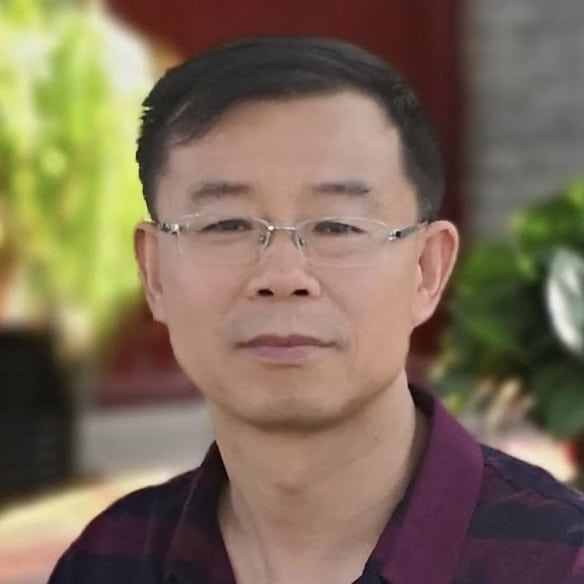
Jinjun Kan, Ph.D.

584 584 Stroud Water Research Center
Jinjun Kan, Ph.D.

Senior Research Scientist

  • Principal investigator, Microbiology Group.
  • Adjunct professor, Department of Biology, University of Pennsylvania.
  • Adjunct professor, Department of Plant and Soil Sciences, University of Delaware.

Contact

jkan@stroudcenter.org
tel. 610-910-0047
970 Spencer Road, Avondale, PA 19311

https://orcid.org/0000-0001-5331-380X

Interests and Expertise

Jinjun Kan’s interests include environmental microbiology and molecular microbial ecology of aquatic ecosystems, particularly freshwater and estuaries, with a focus on algal, bacterial, archaeal, and viral population dynamics, and interactions with local environments, including trophic interactions, nutrient cycling, and biogeochemistry.

Google Scholar | ResearchGate | Download CV

Education

  • Ph.D., environmental molecular microbiology/biotechnology, University of Maryland, College Park, Maryland.
  • M.S., ecology, First Institute of Oceanography, State Oceanic Administration, Qingdao, China.
  • B.S., ecology and environmental sciences, Ocean University of China, Qingdao, China.

Professional Experience

  • Senior research scientist, Stroud Water Research Center, 2024–present.
  • Associate research scientist, Stroud Water Research Center, 2017–2023.
  • Assistant research scientist, Stroud Water Research Center, 2010–2017.
  • Postdoctoral fellow, University of Southern California, Los Angeles, California, 2006–2010.
  • Research assistant, University of Maryland Biotechnology Institute, College Park, Maryland, 2001–2006.
  • Research assistant, Hong Kong University of Science and Technology, 1999–2001.

Publications

High fecal indicator bacteria in temperate headwater streams at baseflow: implications for management and public health

D.T. Myers, L. Zgleszewski, R. Bier, J.R. Price, S. Morgan, J.K. Jackson, D. Oviedo-Vargas, M. Daniels, D.B. Arscott, J. Kan. 2025. Water Research X 29: 100347.

Seasonal variation and key controls of groundwater ammonium concentrations in hypoxic/anoxic riparian sediments

Sena, M.G., M. Peipoch, B. Joshi, M.M. Rahman, E. Peck, A.J. Gold, J. Kan, and S. Inamdar. 2025. Journal of Geophysical Research Biogeosciences 130(2): e2023JG007900.

Evaluation of soil properties and bulk δ15N to assess decadal changes in floodplain denitrification following restoration

Galella, J.G., M.M. Rahman, A.M. Yaculak, M. Peipoch, J. Kan, M. Sena, B. Joshi, S.S. Kaushal, and S. Inamdar. 2025. Restoration Ecology 33(1): e14327.

Vertical heterogeneity enhances network complexity and stability of co-occurrence microbes in the eastern Indian Ocean

Zhang, C., F. Liu, Y. Zou, C. Wang, H. Zhang, B. Wang, J. Kan, A. McMinn, H. Wang, and M. Wang. 2024. Environmental Research 263(3): 120225.

Agricultural practices influence soil microbiome assembly and interactions at different depths identified by machine learning

Mo, Y., R. Bier, X. Li, M. Daniels, A. Smith, L. Yu, and J. Kan. 2024. Communications Biology 7, 1349.

See all publications by Stroud Center authors

Field Notes From Our Work in Costa Rica

A team of five Stroud Center scientists worked under the rainbows of the Orosí Volcano in Costa Rica to survey a dozen streams.

Getting Slimed: Scientists Investigate Biofilms in Streams Amidst Climate Change

Slippery, shiny, and available in varying shades of green, slime is the latest research interest of two Stroud Water Research Center scientists.

Good Fences Make Good Water

Cows wading in a stream might make a pretty picture but the reality is a lot less pleasant. Find out why in this 1-minute podcast featuring Jinjun Kan, Ph.D.

Microbial Fuel Cells

Stroud Water Research Center is exploring the possibility of generating clean and renewable energy by using microorganisms.

DNA Tool Helps Scientists Identify Bacteria in Streams

Stroud Center scientists are using DNA to identify the likely sources of fecal bacteria in streams, a potential human health risk.

From Stream to Tap: Keeping Fresh Water Clean and Safe

Water treatment facilities have procedures in place to make water safe for drinking. But the dirtier the water, the greater the cost to treat it.
Loading...