Moving Freshwater Science Forward
Our efforts at Stroud™ Water Research Center require intellectual curiosity, a systematic and rigorous approach to scientific research, and the drive to answer a series of challenging questions about freshwater ecosystems. The answers to these questions may take decades to fully understand, but it is critical that we persist, as they have the power to influence others in ways that positively affect the world’s finite supply of clean fresh water.
Landmark Studies
International Research
Research Groups
Projects

Real-Time Data

Publications

Videos

Events

Podcasts

Recent Publications
Hualong, W., F. Liu, M. Wang, Y. Bettarel, Y. Eissler, F. Chen, and J. Kan. 2024. Microbiology Spectrum, early online access.
Bier, R.L., M. Daniels, D. Oviedo-Vargas, M. Peipoch, J.R. Price, E. Omondi, A. Smith, and J. Kan. 2024. Agriculture, Ecosystems & Environment, early online access.
Variation in freshwater insect osmoregulatory traits: A comparative approach
Cochran, J.K., S.E. Orr, D.H. Funk, A.C. Figurskey, M.H. Reiskind, and D.B. Buchwalter. 2024. Ecological and Evolutionary Physiology, early online access.
Freshwater Research News
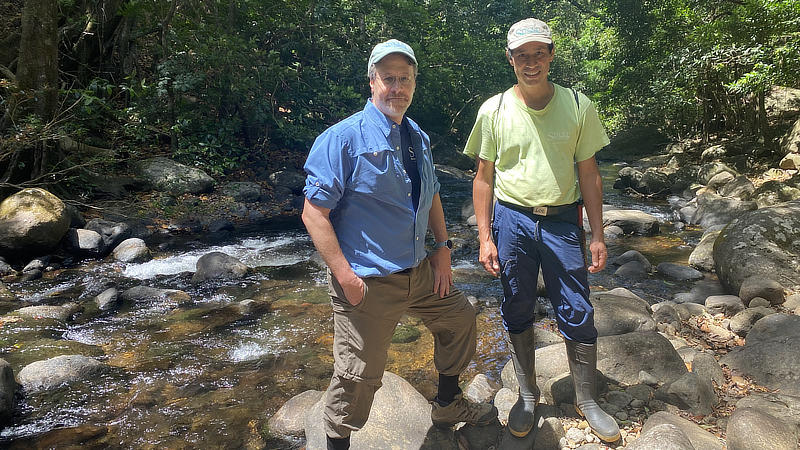
Tropical Research Reveals Climate Change Impacts on Water Quality
Stroud Center scientists continue to investigate how climate change influences tropical species and ecosystem dynamics.
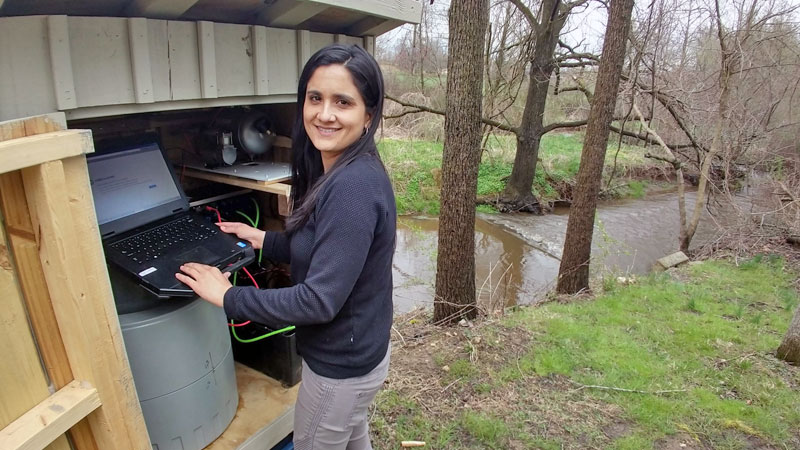
Stroud Center Scientist to Serve as Nature Conservancy Trustee
Diana Oviedo Vargas, Ph.D., is to serve as a trustee of the Nature Conservancy in Pennsylvania and Delaware, the conservancy recently announced.
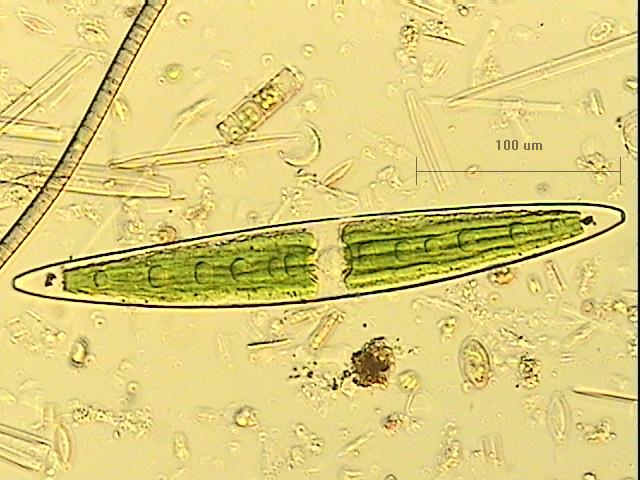
A Fresh Look at River Algae in the Delaware River Basin
A novel method to evaluate how algal concentration changes during river floods may be key to more accurately predicting how to keep algae under control.
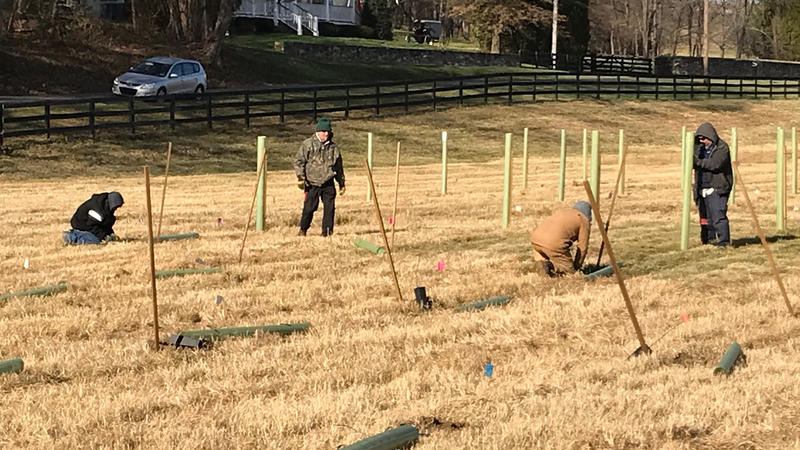
Cutting Waste in the Reforestation of Riparian Zones
New research on buffer plantings seeks to reduce plastic waste, maintenance costs, and the mortality of planted trees and shrubs.
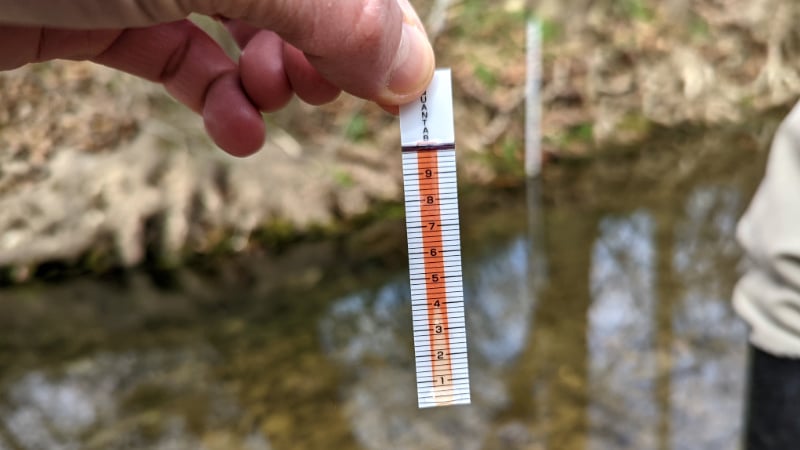
Why Volunteers Are Tracking Down Road Salt in Streams
With help from the Stroud Center, community scientists and watershed groups are measuring the impact of salt pollution on fresh water and taking action.
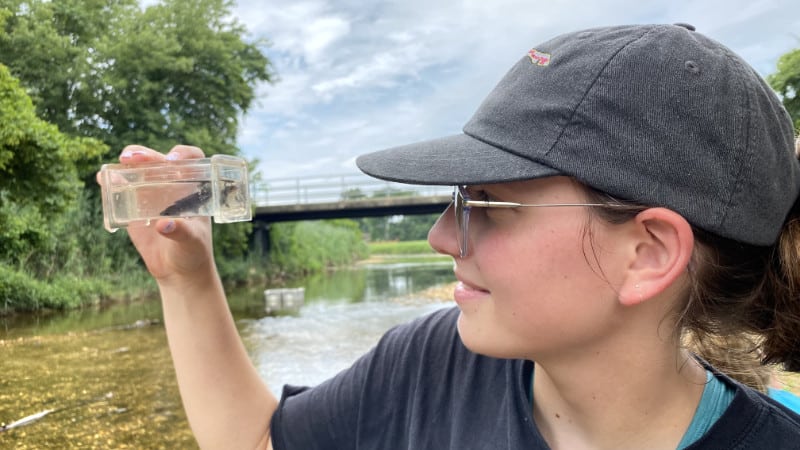
The Tiny Things We Cannot See: Sylvie Randall Explores the Threats and Promises of Microbes
“Everyone uses science whether they know it or not,” says Randall. And it’s needed to tackle the world’s greatest challenges.
