
The Historic Cabin
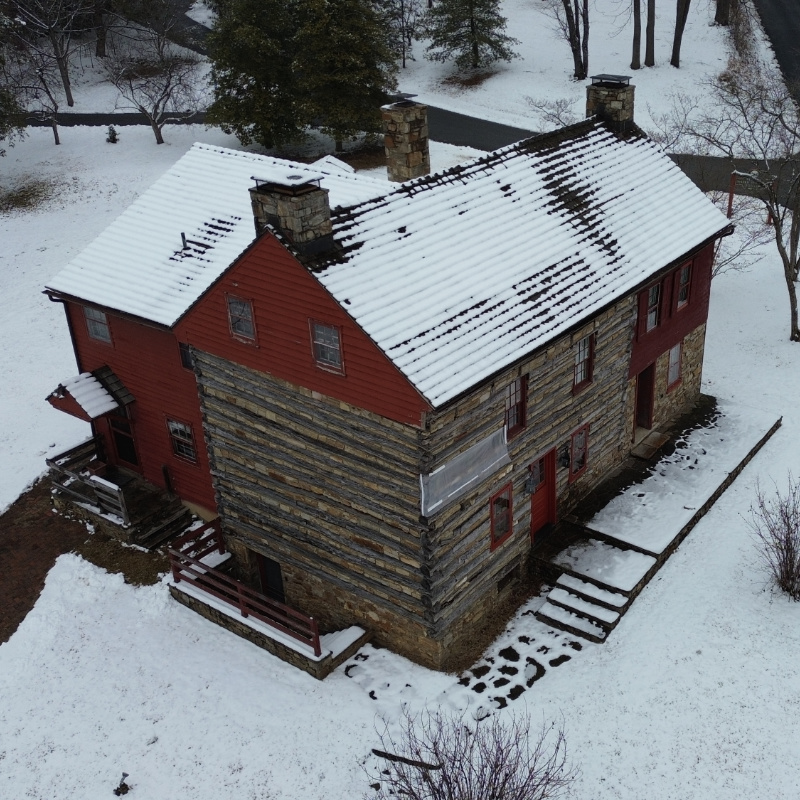
A historic cabin, believed to date from between 1710 and 1740, sits adjacent to the Stroud Water Research Center’s main building, which is also a historic structure — a bank barn dating back to the early 1800s. The cabin is a vital component of the Stroud Center campus, offering a space to inspire and foster collaboration among students and scientists, driving freshwater research, environmental education, and watershed restoration into the future.
Restoration and Modernization
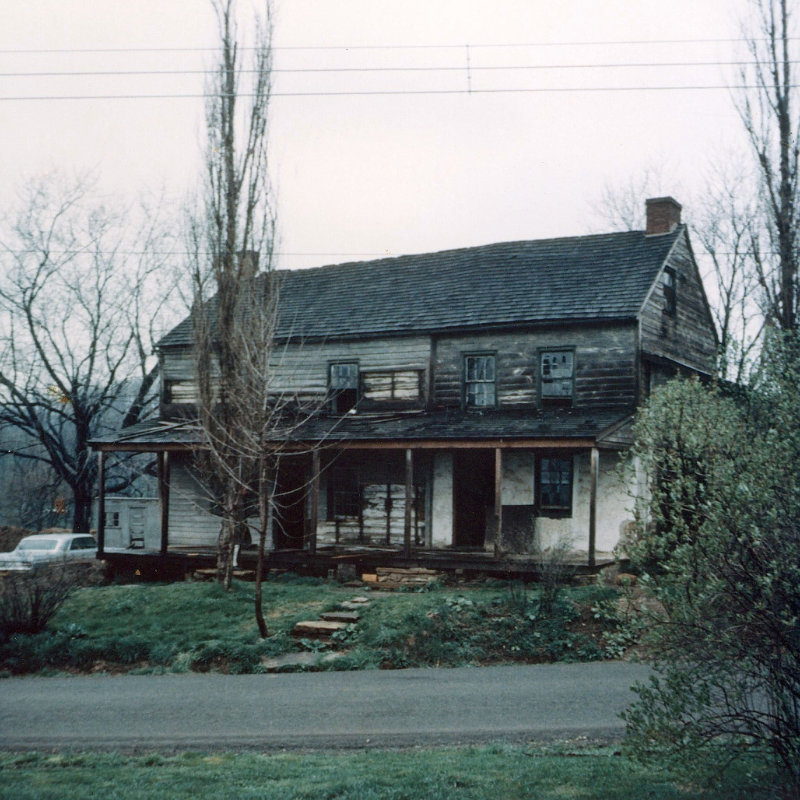
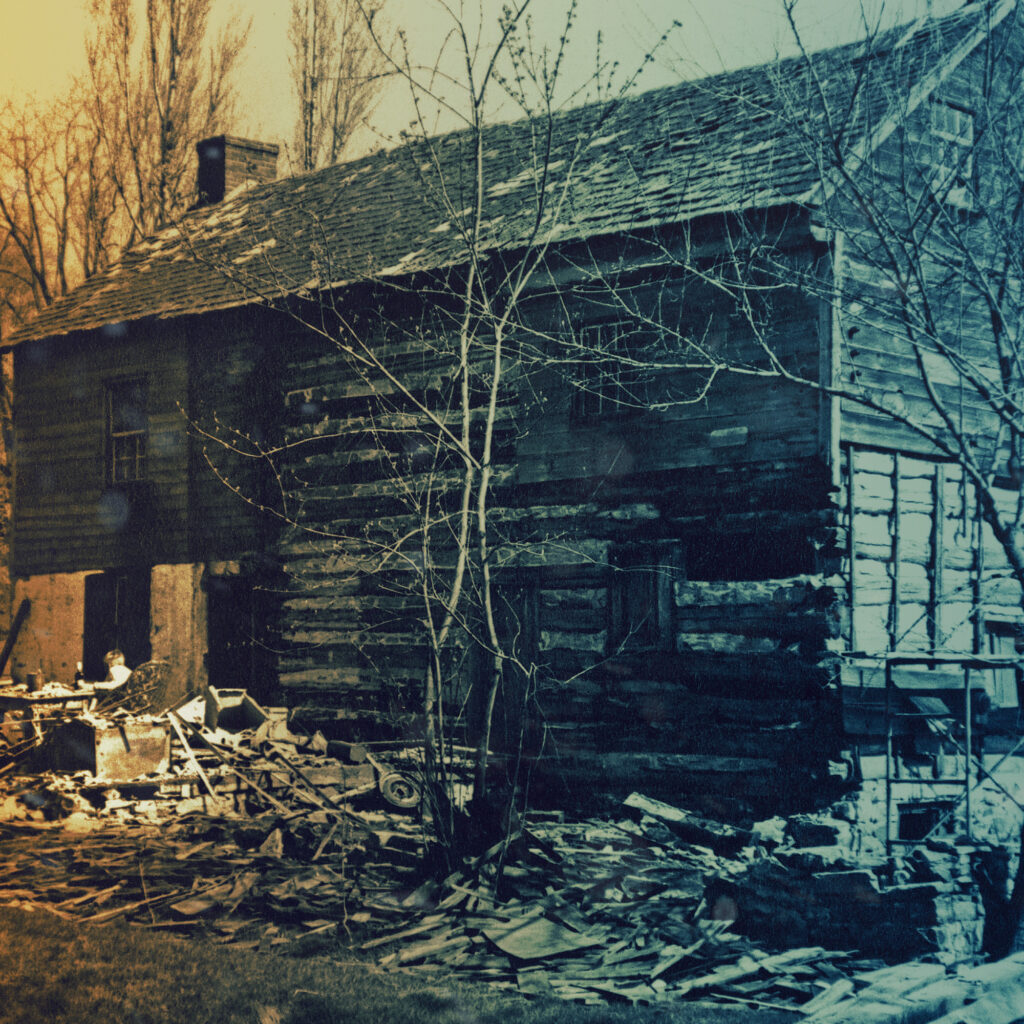
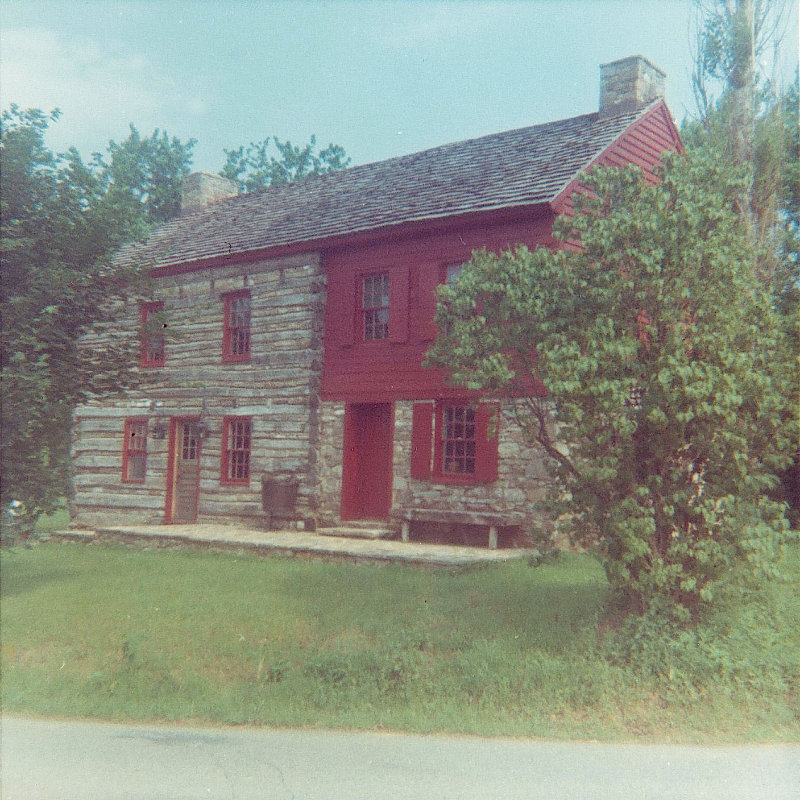
In 1967, Stroud Center co-founder W.B. Dixon Stroud Sr. renovated the cabin to support the Stroud Center’s growing needs, converting it into an apartment and dormitory.
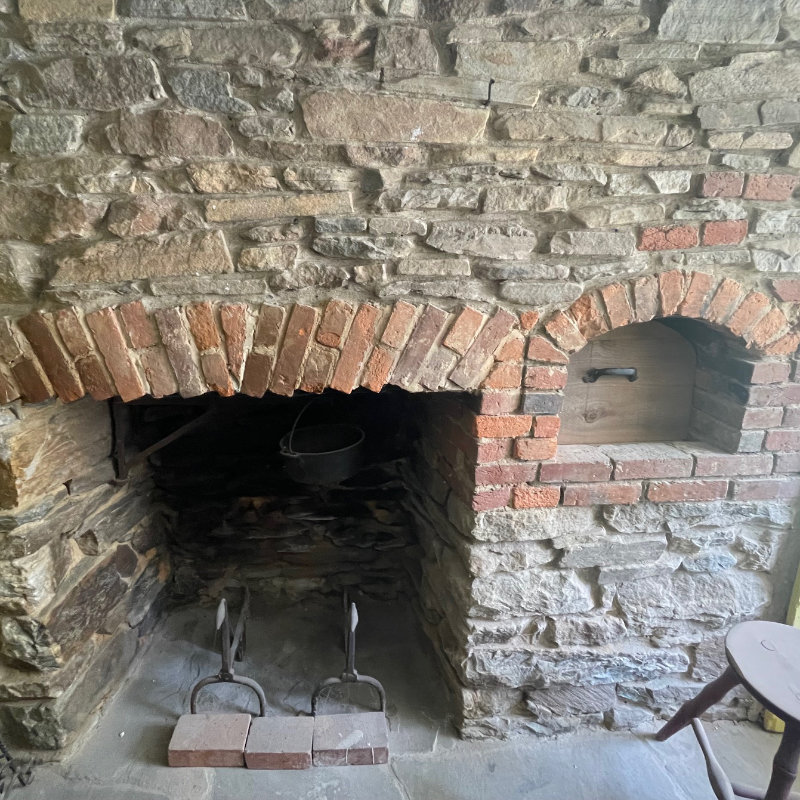
The renovation included replacing deteriorating logs, restoring the stone chinking and mortar, reinforcing the foundation, reconstructing older additions, and fully updating the interior and mechanical systems. It also featured a reconstructed replica of the beehive oven in General Lafayette’s headquarters at the Brandywine Battlefield.
Additional interior renovations in the early 2000s modernized the kitchens, bathrooms, and insulation, and the cedar shake roof was replaced in 2011. However, much of the building still retains the character of the 1967 renovation.

An Essential Space
The cabin features a basement and three floors, consisting of an apartment side with a living room, dining room, kitchen, bedroom, and bathroom, and a dormitory side with a shared living space, multiple bedrooms, and bathrooms.
Since 1967, the cabin has supported a wide range of uses — from office space to long-term housing for researchers and students. It remains essential to the Stroud Center’s mission, helping foster partnerships with universities and providing housing for participants in internships and national science programs.
“The cabin at the Stroud Center has been an enormous benefit to me and to my graduate students; we use it several times a year when conducting time-sensitive experiments several states away from our home institution. Staying in the cabin allows us to spend less on gas, lodging, and food, enabling us to focus on our research and allowing funding to have a greater impact. The ability to continue using the cabin would substantially support our efforts to gain knowledge of how to best protect freshwater ecosystems. Thank you for considering supporting the cabin’s renovation.” — Raven Bier, Ph.D., assistant research scientist, Savannah River Ecology Lab, University of Georgia, and adjunct science faculty, Stroud Water Research Center
Preserving the Past, Building the Future
The restoration of Stroud Water Research Center’s historic cabin is not merely a preservation effort — it is a vital investment in the future of environmental research and education. By safeguarding this physical link to our past, we create a dynamic space that honors the legacy of the Stroud Center while expanding its capacity to engage, educate, and inspire future generations.
With your support, we will restore more than just a structure — we will restore a place where science, history, and community converge in service of clean fresh water for all.