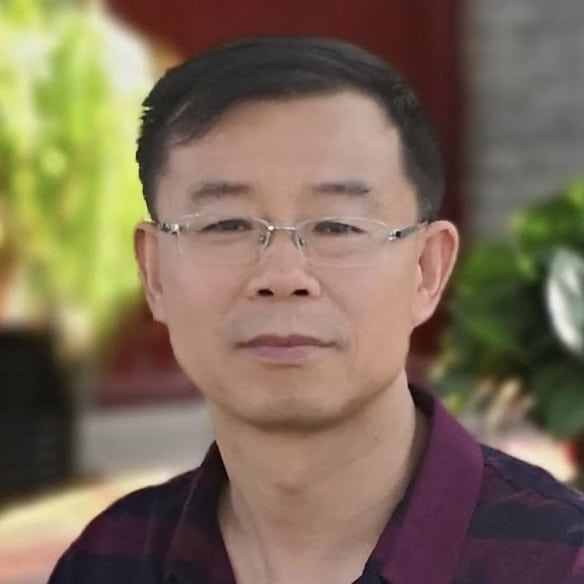
Senior Research Scientist
- Principal investigator, Microbiology Group.
- Adjunct professor, Department of Biology, University of Pennsylvania.
- Adjunct professor, Department of Plant and Soil Sciences, University of Delaware.
Contact
jkan@stroudcenter.org
tel. 610-910-0047
970 Spencer Road, Avondale, PA 19311

https://orcid.org/0000-0001-5331-380X
Interests and Expertise
Jinjun Kan’s interests include environmental microbiology and molecular microbial ecology of aquatic ecosystems, particularly freshwater and estuaries, with a focus on algal, bacterial, archaeal, and viral population dynamics, and interactions with local environments, including trophic interactions, nutrient cycling, and biogeochemistry.
Google Scholar | ResearchGate | Download CV
Education
- Ph.D., environmental molecular microbiology/biotechnology, University of Maryland, College Park, Maryland.
- M.S., ecology, First Institute of Oceanography, State Oceanic Administration, Qingdao, China.
- B.S., ecology and environmental sciences, Ocean University of China, Qingdao, China.
Professional Experience
- Senior research scientist, Stroud Water Research Center, 2024–present.
- Associate research scientist, Stroud Water Research Center, 2017–2023.
- Assistant research scientist, Stroud Water Research Center, 2010–2017.
- Postdoctoral fellow, University of Southern California, Los Angeles, California, 2006–2010.
- Research assistant, University of Maryland Biotechnology Institute, College Park, Maryland, 2001–2006.
- Research assistant, Hong Kong University of Science and Technology, 1999–2001.
Publications
Interception of river sediment in estuaries revealed by microbial community source tracking
Distinct changes in riparian sediment microbial communities with depth and time since dam removal
High-frequency soil redox data provide novel insights into biogeochemical hot spots and hot moments

See all publications by Stroud Center authors
Related News
Harnessing Machine Learning for Sustainable Farming and Water Protection
Silk Grass Farms is a Force for Good
Stroud Center Collaborations Amplify Impact on Fresh Water
Sediment Sleuthing: Microbe DNA May Be Key to Restoring an Estuary Near You