
Tiny Insects, Big Clues About Our Rivers
For decades, scientists at Stroud Water Research Center have studied mayflies because they are a hallmark of healthy streams and rivers. When mayflies disappear, something is wrong.
The Great Mayfly Hatch
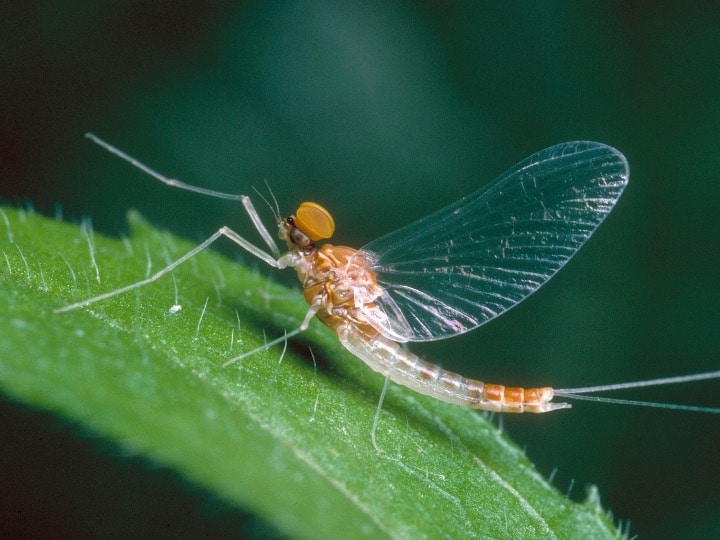
Mayfly season is here! Over the next few weeks, watch your local waterways for one of nature’s most extraordinary annual events. You may spot newly emerged adults resting on vegetation, swarms dancing above the water, or fish feeding on a fresh hatch. If you capture a photo or video, share it with us on social media and tag us @stroudcenter.
Watch the Magic Happen
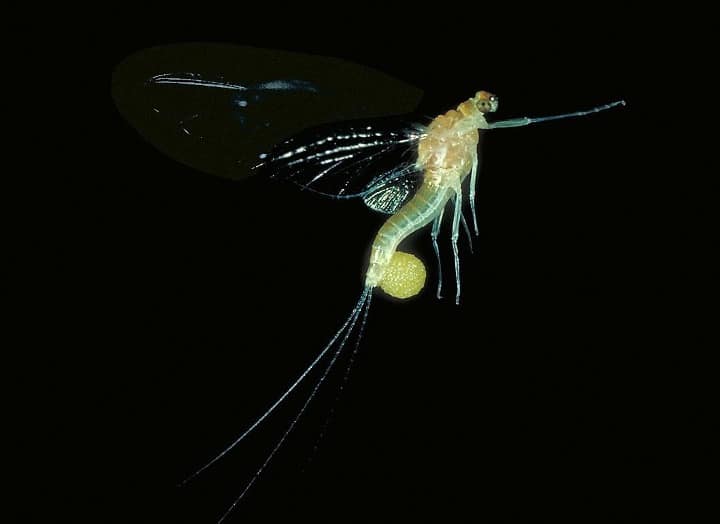
A female mayfly lays her eggs. Only a minute later, hundreds of young emerge. Captured by Stroud Center entomologist David Funk, this extraordinary moment has fascinated viewers around the world.
Why We Care About Mayflies
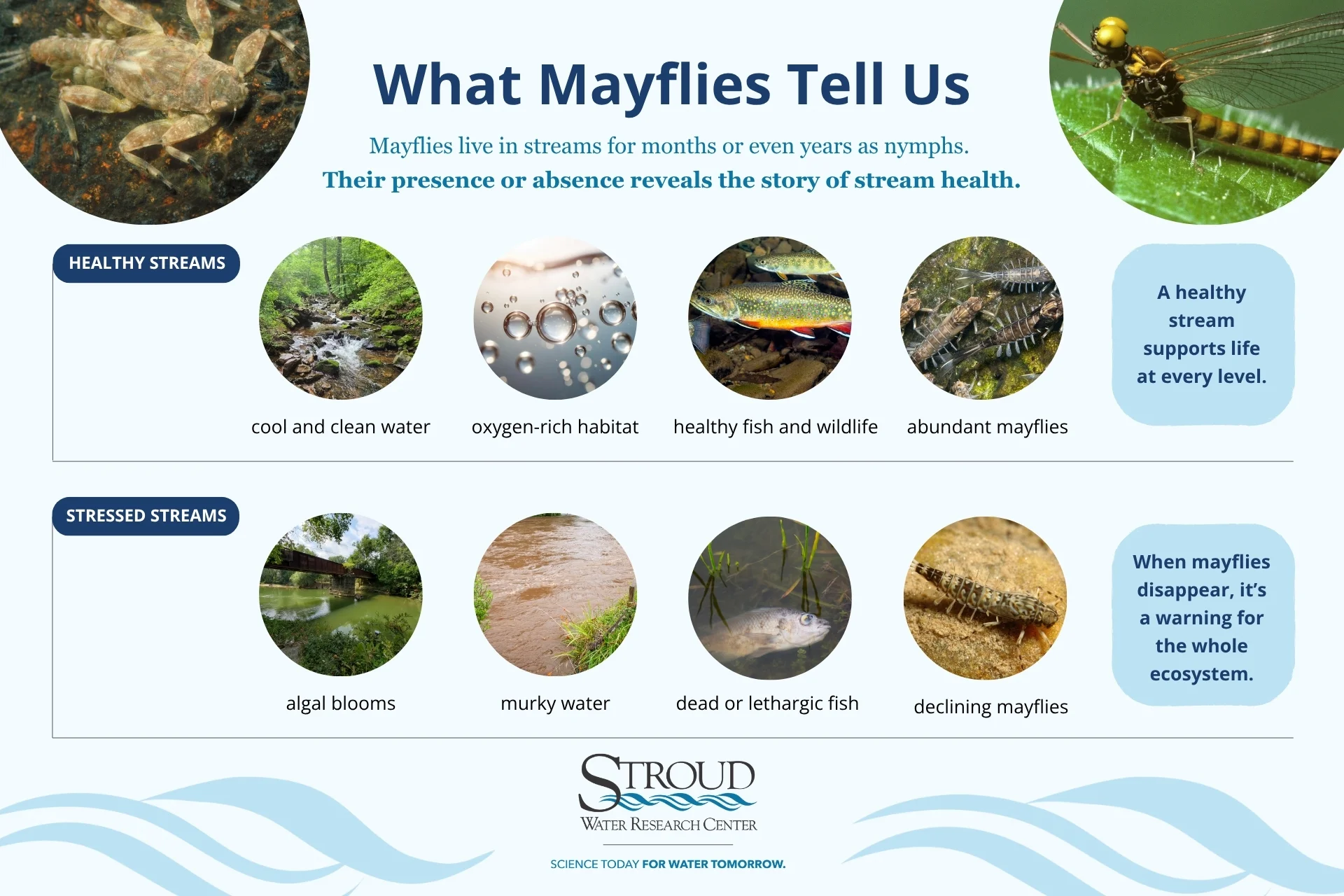
They tell us when streams are healthy.
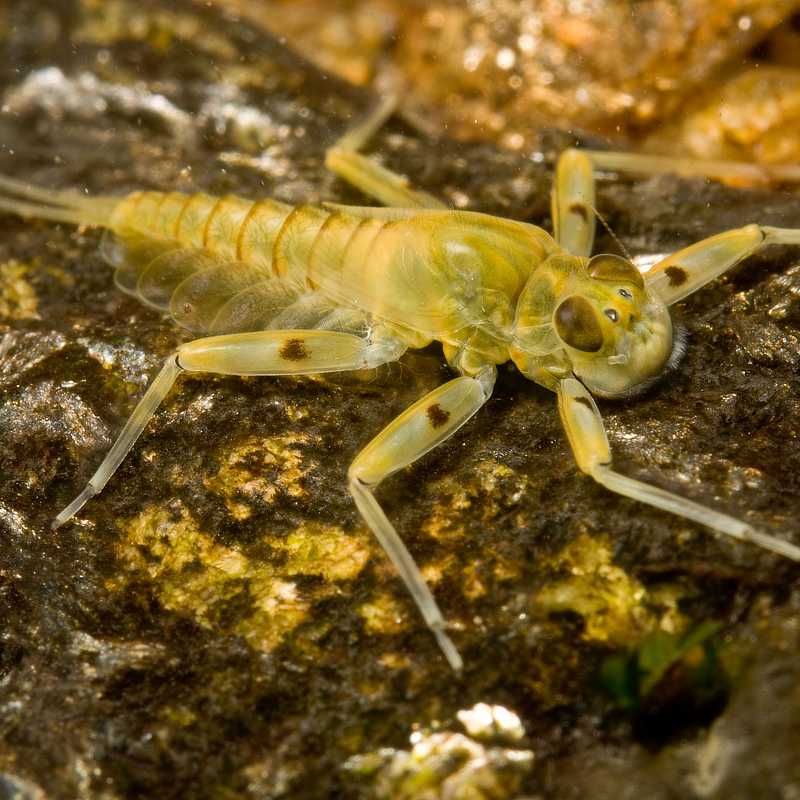
Many mayfly species are sensitive to pollution, warming temperatures, and excess salt. Their presence is one of the clearest signs of clean water.
They help us predict environmental change.
The Stroud Center uses mayflies to study how climate change, road salt, polluted wastewater and stormwater, and other stressors affect freshwater ecosystems.
They reveal nature’s hidden wonders.
Some mayflies can hatch moments after being laid. Others reproduce without males. Scientists are still discovering new species.
Meet the Mayfly Expert
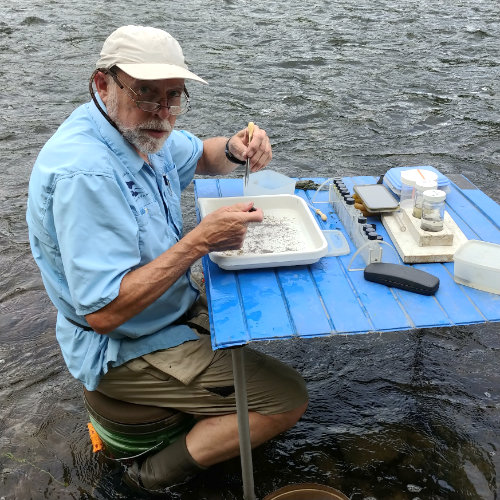
“I like figuring out who is who, where they live, and why.” — Dave Funk
Few people have done more to reveal the secret lives of mayflies than Dave Funk. During nearly five decades at the Stroud Center, Dave combined scientific discovery with extraordinary photography to showcase the beauty and importance of freshwater insects.
His striking images have been featured in publications including Natural History, Scientific American, and BBC Wildlife, while his research and expertise have been highlighted by outlets such as Science Friday. Thanks to Dave’s work, countless people have discovered that some of the most fascinating stories in nature begin beneath the surface of a stream.
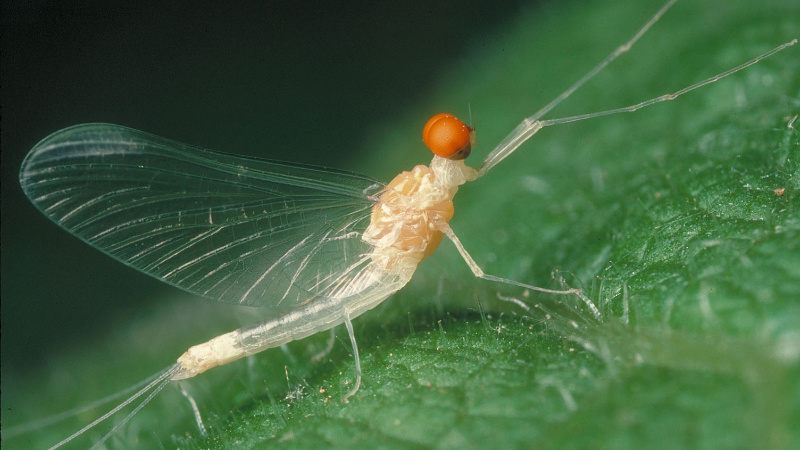
The Magic of Mayflies: Explore the remarkable biology behind one of our most beloved freshwater insects.
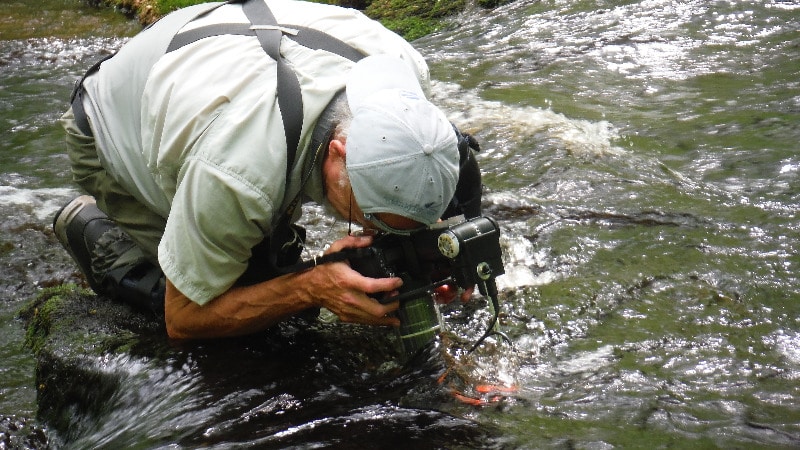
The Bug Whisperer: Meet Dave Funk and discover how decades of mayfly expertise have transformed freshwater science.

Six New Species Identified: Learn how Stroud Center researchers continue to uncover biodiversity hidden in plain sight.

How Mayflies Keep Perfect Time: Scientists uncovered how mayflies synchronize their life cycles, revealing how climate change could disrupt that timing.
Explore Mayfly Science
Climate and Temperature
- Modeling Mayflies to Understand the Challenges of a Warming Planet
- Could Rising Temps Be Killing Mayflies?
Pollution and Water Quality
Biodiversity and Discovery
Leading the Study of Mayflies and Stream Health
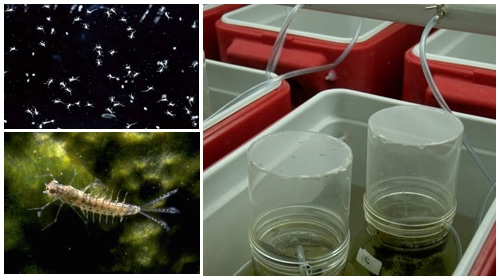
The Stroud Center has long been a leader in freshwater science and aquatic entomology. Our researchers have discovered new species, developed tools for assessing stream health, and helped shape scientific understanding of how insects respond to environmental change.
From the hidden lives of mayflies to the health of entire watersheds, our work connects the smallest stream creatures to some of the biggest questions facing freshwater ecosystems today.
Help Protect the Streams Mayflies Need
Subscribe for more cool freshwater science. Take the next step and donate to support science today for water tomorrow.