By Lowell Iporac, Ph.D.
Last fall, within New York City’s densely urban environment, university and high school students discovered many macroinvertebrates in a small, shallow section of the Bronx River. Bordered by urban green spaces, including the Bronx Zoo, it’s the only freshwater river in the city.
The students interned at the zoo as part of Project TRUE (Teens Researching Urban Ecology). A collaboration between the Wildlife Conservation Society, which operates the zoo, and Fordham University, Project TRUE is a six-month research and mentorship program. It brings together five undergraduate mentors from the university and 20 to 25 high school students from the Bronx, with the goal of helping high school student interns learn from peer role models while conducting urban ecology research.
Since its inception in 2015, Project TRUE has supported youth development through inquiry-based urban ecology research. Interns research tree health, freshwater turtles, bird diversity, invasive spotted lanternflies, and the endangered American eel. Through these experiences, they discover how their research interests could lead to STEM careers.
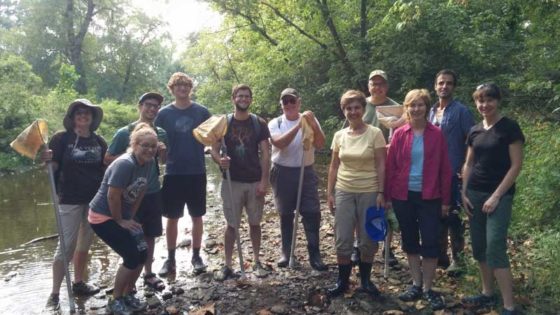
In September, Tara Muenz, associate director of education and Leaf Pack Network administrator at Stroud Water Research Center, guided the interns through macroinvertebrate sampling and identification for the zoo’s BioBlitz, an event to capture the vast biodiversity in green spaces within and around the zoo’s grounds.
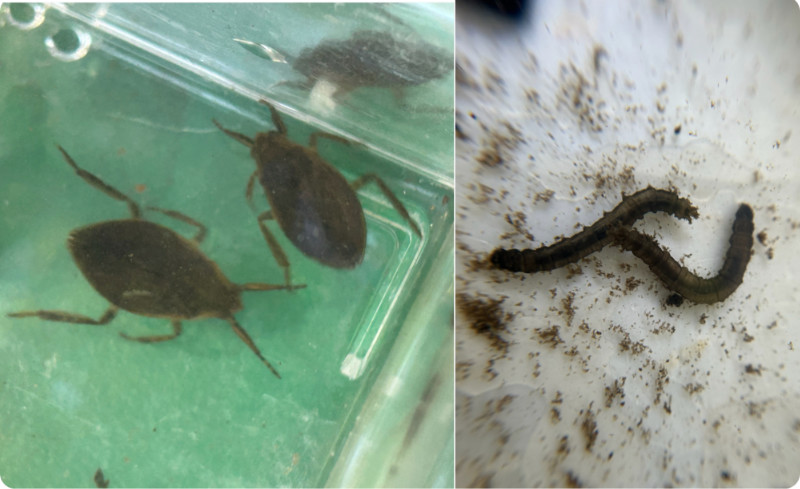
The interns used kicknets, eel mops, and the iNaturalist community science app to find and identify giant water bugs, nematoceran fly larvae, and even small fish such as the eastern mosquitofish. It was a stark contrast from what they found during the summer BioBlitz: mostly amphipods, or scuds.
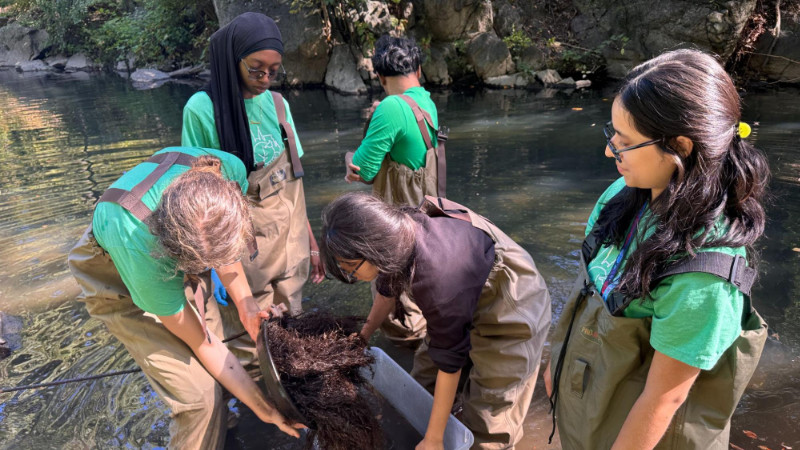
This new partnership between Project TRUE and the Stroud Center gave the interns a better understanding of macroinvertebrate survey methodology and an opportunity to meet a STEM professional and practice networking.
The fall experience also built on the interns’ summer eel research. Every summer, Project TRUE interns collect data on eels, which eat macroinvertebrates. Previous studies by Project TRUE interns, for example, used eel mops, kicknets, and leaf packs to assess macroinvertebrate community structure as a measurement of habitat quality and as a potential food source for American eels.
This summer, intern Liza Solórzano Escobar made leaf packs using the Leaf Pack Network protocol and surveyed macroinvertebrates using kicknets and eel mops. She and the other interns then uploaded their leaf pack data to Monitor My Watershed for Twin Dams and the 182nd Street Dam, both next to Bronx Zoo grounds.
To conclude the project, the interns presented their findings, “Ap(eel)ing to Macroinvertebrates: A Study on American Eel and Macroinvertebrate Populations in the Bronx River,” at the New York City Science Research Mentorship Consortium Symposium in August.
Since 2018, Project TRUE eel research has supported the New York City Department of Parks and Recreation’s monitoring of eel populations as they migrate across the Bronx River. Using eel mops made of both frayed rope and plant saucers to mimic sargassum seaweed from the Sargasso Sea, interns contribute to annual efforts to count American eel numbers in the river.
Juvenile eels seek refuge in these mops as they migrate upstream from the ocean to freshwater rivers until they reach reproductive age. As a catadromous fish, these primarily freshwater eels eventually return to the Sargasso Sea to reproduce and die, only for the life cycle to start again with their own offspring.
Get Involved
Macroinvertebrate surveys are a fun and easy way to spark interest in freshwater ecology. With the right tools, anyone can reveal the hidden biodiversity living in our streams.
Ready to get involved? Here are three actions you can take:
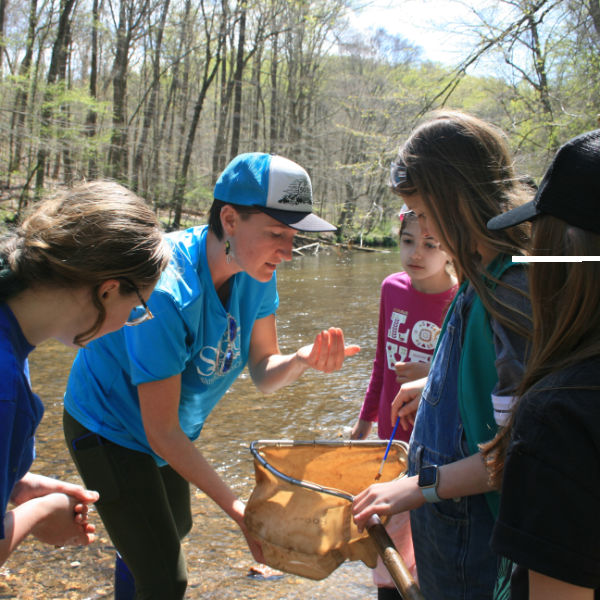
- Teach it. If you are a science teacher or manage a research program, deploy leaf packs and use resources available from the Leaf Pack Network to help students and interns collect and study macroinvertebrates firsthand.
- Share what you find. Whenever you collect data using leaf packs, upload it to Monitor My Watershed so scientists everywhere can use it to spot patterns, track change, and ask new research questions — together.
- Explore your local waterways. Whether you’re an educator or a community scientist, log your observations with iNaturalist and use PocketMacros to identify what you find. By adding your discoveries to the growing community record, you expand our collective understanding of streams and rivers.
Grab your net, deploy a leaf pack, and open an app. Your local waterway is waiting.
About the Author
Lowell Iporac, Ph.D, is an adjunct educator with the Wildlife Conservation Society for Project TRUE, a youth research and mentorship program at the Bronx Zoo in New York.