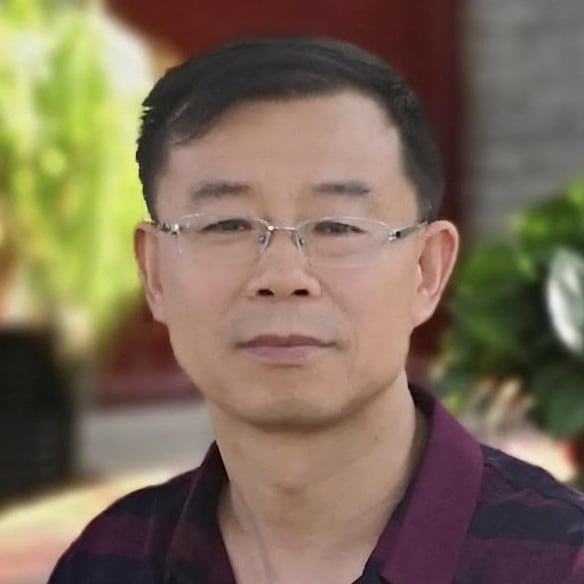
Senior Research Scientist
- Principal investigator, Microbiology Group.
- Adjunct professor, Department of Biology, University of Pennsylvania.
- Adjunct professor, Department of Plant and Soil Sciences, University of Delaware.
Contact
jkan@stroudcenter.org
tel. 610-910-0047
970 Spencer Road, Avondale, PA 19311

https://orcid.org/0000-0001-5331-380X
Interests and Expertise
Jinjun Kan’s interests include environmental microbiology and molecular microbial ecology of aquatic ecosystems, particularly freshwater and estuaries, with a focus on algal, bacterial, archaeal, and viral population dynamics, and interactions with local environments, including trophic interactions, nutrient cycling, and biogeochemistry.
Google Scholar | ResearchGate | Download CV
Education
- Ph.D., environmental molecular microbiology/biotechnology, University of Maryland, College Park, Maryland.
- M.S., ecology, First Institute of Oceanography, State Oceanic Administration, Qingdao, China.
- B.S., ecology and environmental sciences, Ocean University of China, Qingdao, China.
Professional Experience
- Senior research scientist, Stroud Water Research Center, 2024–present.
- Associate research scientist, Stroud Water Research Center, 2017–2023.
- Assistant research scientist, Stroud Water Research Center, 2010–2017.
- Postdoctoral fellow, University of Southern California, Los Angeles, California, 2006–2010.
- Research assistant, University of Maryland Biotechnology Institute, College Park, Maryland, 2001–2006.
- Research assistant, Hong Kong University of Science and Technology, 1999–2001.
Publications
Riparian groundwater nitrogen (N) isotopes reveal human imprints of dams and road salt salinization
Depth shapes microbiome assembly and network stability in the Mariana Trench

See all publications by Stroud Center authors
Related News
Stroud Center Awarded Grant to Study Meta-Ecosystems
UpStream Newsletter, Summer 2011
UpStream Newsletter, Spring 2010