Longtime Advisor to Environmental Agencies Recognized for Research, Community Leadership, and Protecting Streams and Drinking Water

A Stroud Water Research Center scientist helping to monitor, explain, and reduce the impact of road salt and other pollutants on streams and drinking water has received international recognition for his work.
John K. Jackson, Ph.D., senior research scientist and principal investigator of the Stroud Center’s Entomology Group, has been awarded the Environmental Stewardship Award from the Society for Freshwater Science (SFS).
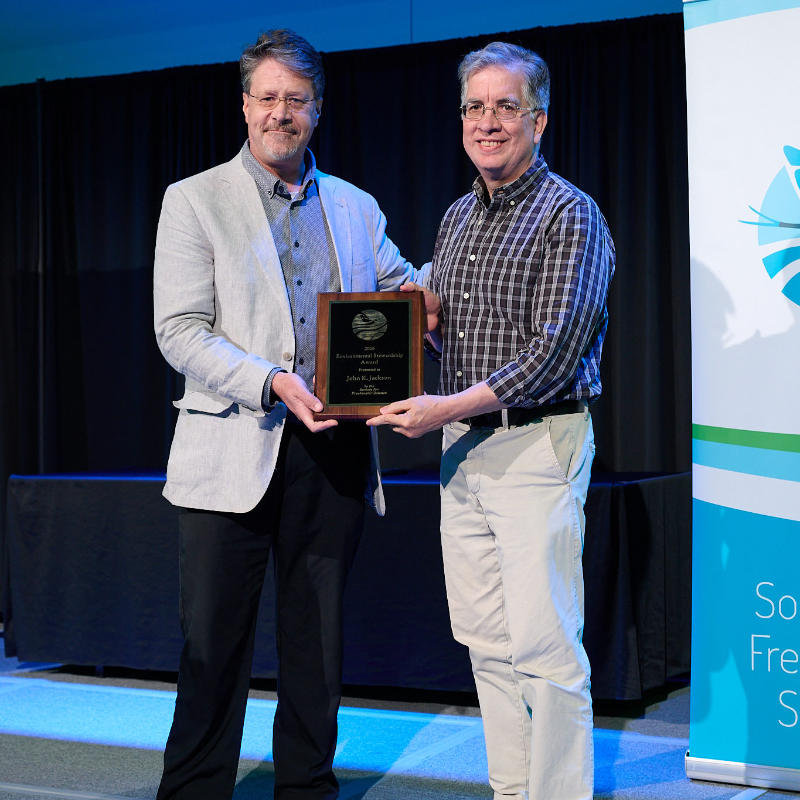
“In addition to advancing research, Dr. Jackson has played a key role in environmental decision-making and empowering communities with the knowledge and data they need to protect their local waters,” said David B. Arscott, Ph.D., the Stroud Center’s executive director and a research scientist.
Jackson has served for nearly 20 years on the Delaware River Basin Commission’s Water Quality Advisory Committee, contributing scientific insight to complex policy discussions on issues ranging from dissolved oxygen standards to hydraulic fracturing. He also advises the Pennsylvania Department of Environmental Protection through its Water Resources Advisory Committee.
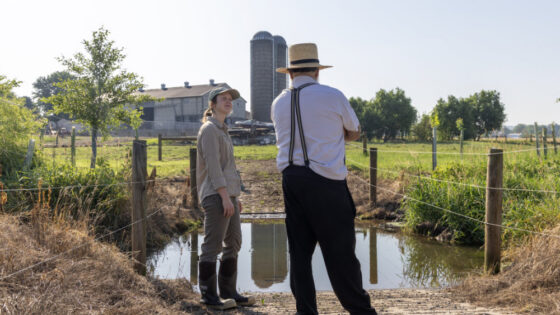
Jackson has helped expand public engagement in freshwater science and protection. He supported the development of the Penn State Master Watershed Stewards Program, a statewide community science (citizen science) initiative that monitors streams and drives local clean water action. And he helped develop this network of people and connections into a large-scale community science effort to monitor stream health. The effort has mobilized dozens of conservation organizations and more than 700 volunteers who collectively have sampled thousands of stream sites throughout the mid-Atlantic region.

The community science data show how the steep rise in road salt use has led to unnatural salt levels in freshwater ecosystems, threatening aquatic life and drinking water sources. Volunteers gathering the data have identified hotspots and evidence of chronic groundwater contamination. Their data appear on a live map maintained by the Stroud Center.
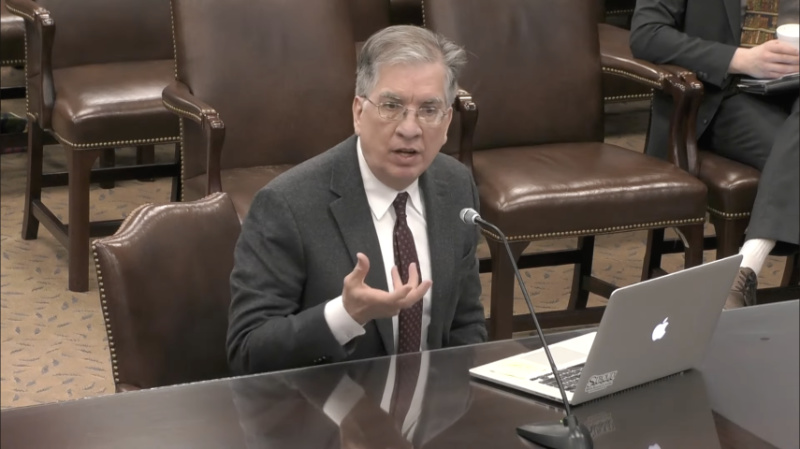
To help people act on these findings, Jackson has provided expert testimony and presented at public events to explain the impact of pollution on streams and how to protect them.
About the Award
The SFS Environmental Stewardship Award, one of three 2026 SFS Career Awards announced today, is awarded to a recipient who has successfully translated scientific knowledge into the social and public arenas through policy or regulatory reform, research that enhances freshwater ecosystem rehabilitation or conservation, or public outreach and science education that strengthens support for managing freshwater ecosystems.
SFS President Sally Entrekin said, “SFS Career Awards celebrate decades of scientific excellence by our members, which advances not just science but also moves policy and sets trajectories for conservation and restoration. These awards are an annual highlight that serve to inspire and sustain us throughout the year.”
Where Freshwater Science Moves Forward, Jackson Leads
A stream ecologist and aquatic entomologist, Jackson has more than four decades of experience studying rivers and streams — from tropical forest waters to heavily urbanized waterways. His work reveals how human activities shape the health of freshwater ecosystems and the pollution-sensitive species that live in them.
At the Stroud Center, Jackson leads long-running studies that have tracked water chemistry and aquatic life across 50–100 stream sites each year over the last 30 years, producing one of the region’s longest-running and most extensive stream monitoring efforts. His research also includes ambitious watershed restoration experiments that span 10 to 30 years, providing rare insights into how streams recover over time.
Community participation is central to his work: hundreds of interns, students, and volunteers have contributed to the long-term data that underpin his research. He holds a Ph.D. in entomology from the University of California, Berkeley; an M.S. in zoology from Arizona State University; and a B.S. in biology with honors from the University of Notre Dame. He also serves as an adjunct professor at the University of Pennsylvania and the University of Delaware.
***
About Stroud Water Research Center
For more than half a century, Stroud Water Research Center has focused on the science of rivers and streams. In its mission to advance knowledge and stewardship of freshwater systems through global research, education, and watershed restoration, the Stroud Center produces the trusted science needed for successful stream and river conservation while fostering people’s passion for the water in their lives. The Stroud Center is an independent, 501(c)(3) not-for-profit organization. stroudcenter.org
Contacts
Diane Huskinson, Associate Director of Communications, Stroud Water Research Center