

By Scott Ensign and Dave Arscott
The final score of every sports event we watch is (hopefully) a credible outcome thanks to the expert judgment of the officiating crew (except for those unfair calls against our team). Using a scientific and unbiased method, the scorecard of the nation’s waterways, healthy versus unhealthy, is judged by groups of experts across the country. Produced every two years by each state’s environmental agency, this massive scientific scorecard tells us which rivers adequately support aquatic life, which don’t, what’s changed, and why.
In a recent Philadelphia Inquirer opinion piece, we drew attention to the results in Pennsylvania’s new Integrated Water Quality Report. The aquatic life in 50 miles of waterways improved but worsened in another 480 of them. Unfortunately, this was not an unusual report for Pennsylvania and reflects a worsening trend nationwide.
Why is stream health, more specifically stream biology, deteriorating when over $500 million is spent annually on conservation and stream restoration?
We might not be targeting all, or even the most important, pollutants. State regulators have to identify problem pollutants, and in some rivers the culprit is obvious.
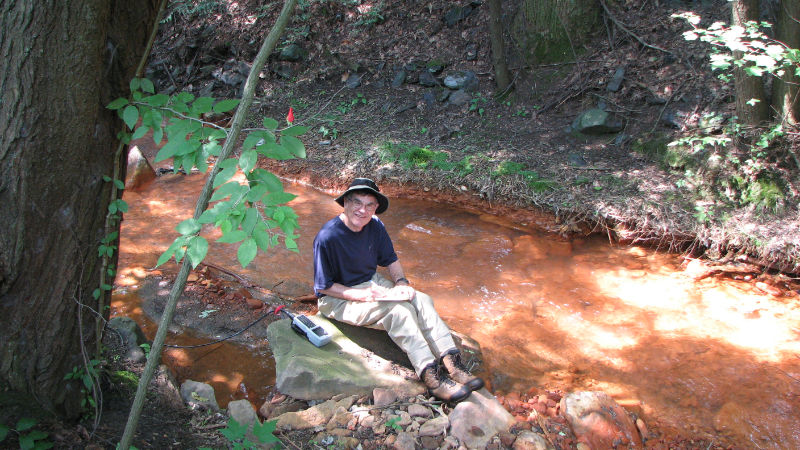
For example, acid mine drainage is both easily diagnosed and effectively remediated: this type of cleanup is responsible for nearly half the stream and river restoration success stories in Pennsylvania.
But other pollutants with well-known toxicity are not regulated (like road salt) or are not routinely measured (like imidacloprid, one in a class of widely used but highly toxic pesticides). Others are just now being assessed for toxicity, like 6PPD-quinone, an oxidation product of a chemical that comes from rubber tires.
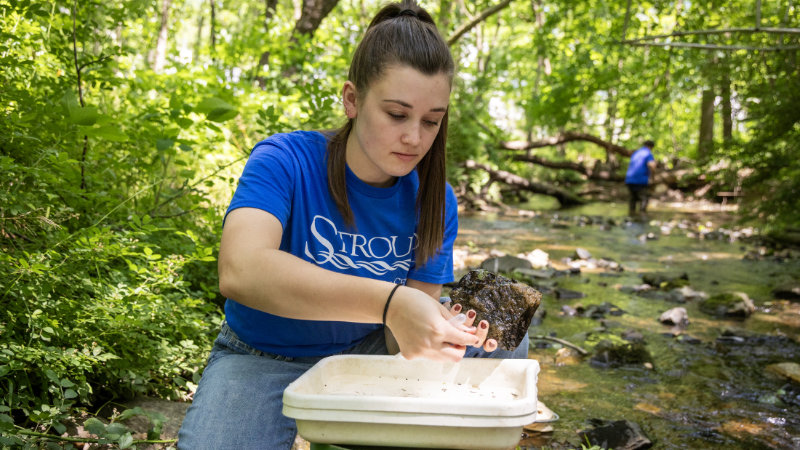
Those assessments, using laboratory and field studies, have been a mainstay of Stroud Water Research Center’s science for over 50 years, and they have helped state agencies, federal agencies, and companies understand how pollution affects stream organisms.
The Stroud Center’s expertise is also sought after by regulatory bodies that set pollution limits. Dr. John Jackson’s 20 years of service to the Pennsylvania’s Water Quality Advisory Board and Dr. Diana Oviedo’s service on the Delaware River Basin Commission’s Toxics Advisory Committee are some of the ways the Stroud Center brings the latest science to regulators.
Even when we do manage to remove the worst pollutants from our rivers, we may need to wait longer than we’d like for aquatic life to respond. For example, many of the 2,490 insect species at the base of the food web in Pennsylvania streams have evolved to eat, in one form or another, tree leaves. Even after pollution is curtailed and row crops beside the stream are replaced by tree seedlings, it takes at least seven years before leaves begin to nourish the food web and provide shade from the summer heat. It may take even longer for silt and sand to wash away, exposing buried rocks that provide the preferred habitat for many aquatic insects.
We know this from decades-long experiments at the Stroud Center, where the many factors affecting river health have been carefully measured. The data show that aquatic life, our scorecard for success, can recover if pollutants are curtailed and trees regrow, but it takes patience. Moreover, this recovery is more cost-effective and proven than the quick fix sought by engineers selling stream restoration projects.
Progress may be slow, but Pennsylvania’s 2026 Integrated Water Quality Report is not all bad news.
First, we are fortunate that rigorous scientific methods are used by the state’s Department of Environmental Protection. Its transparent reporting is among the best in the nation. Studying every one of Pennsylvania’s 85,568 miles of streams is a Herculean task, particularly given recent staffing cuts that make it harder for DEP to collect important data.
Second, the report shows that the glimmer of hope shines brightest for small streams. That’s because it is easier to comprehensively address pollution and habitat restoration throughout their small watersheds than, say, in the entire Delaware River basin.
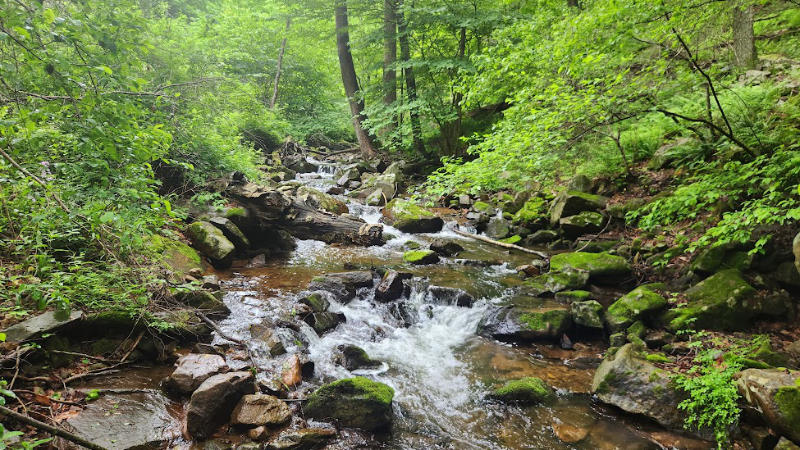
This watershed approach to restoring stream health has been championed by the Stroud Center for decades, and our science has gradually influenced statewide programs across the region to prioritize aggregation of conservation efforts in small watersheds.
Learn more by exploring your state’s water quality, and support the cutting-edge science, restoration, and outreach we do at the Stroud Center on behalf of streams and rivers nationwide.