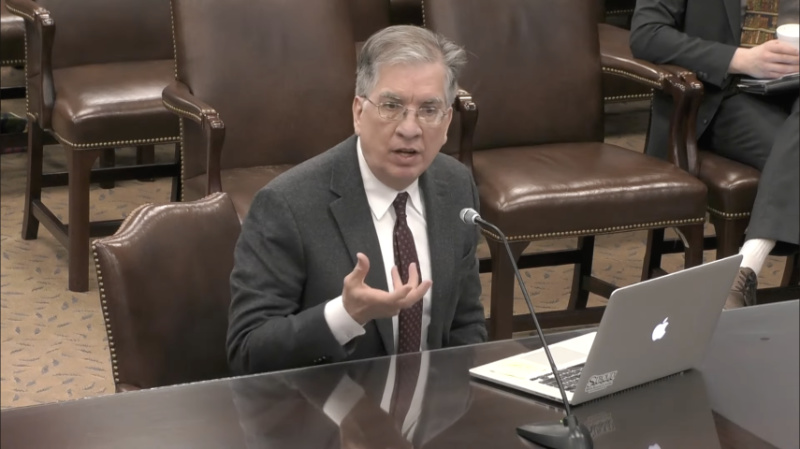
On February 6, 2026, Senior Research Scientist John K. Jackson, Ph.D., was invited to testify before the Pennsylvania House Environmental & Natural Resource Protection Committee. The public hearing “Stream Impairment in Pennsylvania” was organized by the committee in response to the draft Integrated Water Quality Report 2026 issued by the Pennsylvania Department of Environmental Protection.
Detailed and complex, this report card on the health of Pennsylvania’s waterways enables us to highlight trends in the health of our waterways: those that improved and those that did not. Jackson’s written testimony is provided below, and a video recording of the hearing is available.
House Environmental & Natural Resource Protection Committee Public Hearing: “Stream Impairment in Pennsylvania”
Testimony, February 6, 2026
Dear Honorable Chairman Vitali and Honorable members of the House Environmental & Natural Resources Protection Committee,
My name is John Jackson, Ph.D., and I am a senior research scientist at Stroud Water Research Center in Avondale, PA. The Stroud Center is a private, not-for-profit organization, and our mission is to advance knowledge and stewardship of freshwater systems through global research, education, and watershed restoration. Our staff consists of about 50 full-time employees, and another 10 to 25 part-time employees.
My training and experience are in stream ecology and aquatic entomology, and my research over the last 36 years at the Stroud Center has focused on the effects of human activities on pollution-sensitive aquatic insects, and on long-term efforts to restore impaired streams. It is with that background that I come to speak to your Committee about the 2026 Draft Integrative Report, and the challenge of fixing impaired streams (i.e., removing streams from the Pennsylvania list of impaired streams).
What Does the 2026 Draft Integrated Report Tell Us?
The Clean Water Act of 1972 protects all legitimate uses of our nation’s streams, rivers, and lakes. We often summarize this as ensuring that the waters are swimmable, drinkable, and fishable. My expertise is in using aquatic life (i.e., macroinvertebrates, especially aquatic insects) to assess that aspect of stream health. This approach was first developed in the early 1900s and has been applied widely across the United States as well as in many other developed and developing countries.
The methods used in the U.S. have been evolving since the 1950s, and in Pennsylvania there have been important developments and reevaluations over the last 25 years. One important aspect in both the development and reevaluation of the Pennsylvania monitoring methods is that the impairment classification starts with data from many reference sites – that is, Exceptional Value (EV) streams. Pennsylvania has 3,970 miles of EV streams, and these “Best of the Best” sites provide excellent, reproduceable starting points for defining and quantifying both degradation and restoration.

The Draft 2026 Integrated Report provides all sorts of insights into the state of Pennsylvania’s water resources. Pennsylvania is literally a water world with about 86,000 miles of streams. Unfortunately, many (31,451 miles, or 37%) are classified as impaired for one or more protected uses. It is important to note that for aquatic life, the impaired classification means there has been a major loss of pollution-sensitive macroinvertebrate species (i.e., 50-100% are missing from a sample).
This is not a minor change: It means pollution pressure is intense and will not be easily reduced. PADEP is very transparent about what they did and found, and the web-based storybook format has made the information far more accessible. There are summaries as well as stream-specific information. It can still be challenging to find a specific result — because there is so much to find. Compared to the massive catalog that was produced 10 to 20 years ago, this report is far more informative and easily used.
Because the current stream assessment effort dates back only to the late 1990s, the Integrated Report cannot make an important point: Pennsylvania streams and rivers are generally cleaner and healthier today relative to before the Clean Water Act was signed in 1972.
Unfortunately, we generally do not have data from 1940 to 1970 and only limited data between 1970 and 1990. However, we know progress has been made because we see, smell, and feel it — dead fish don’t litter stream banks, pipe discharges don’t reek of filth, and rivers don’t burn. And when we have data, it often shows reductions in some chemical pollutants and increases for some pollution-sensitive species.
The Draft 2026 Integrated Report tells us that stream impairment in Pennsylvania primarily reflects people’s use of land and water in agricultural, urban, and mining landscapes. This observation has been consistent throughout many integrated reports, and it is common sense that pollution is a people problem.
Obviously, if we are going to achieve our goal of cleaner, healthier streams, we need to reduce the pollutants impacting these streams by changing our use of land and water.
The Draft 2026 Integrated Report highlights a relatively small number of stream miles that were added or removed from the impaired list. My interpretation of these changes is that they generally do not reflect significant declines or improvements in stream health, but rather classification changes as more data became available.
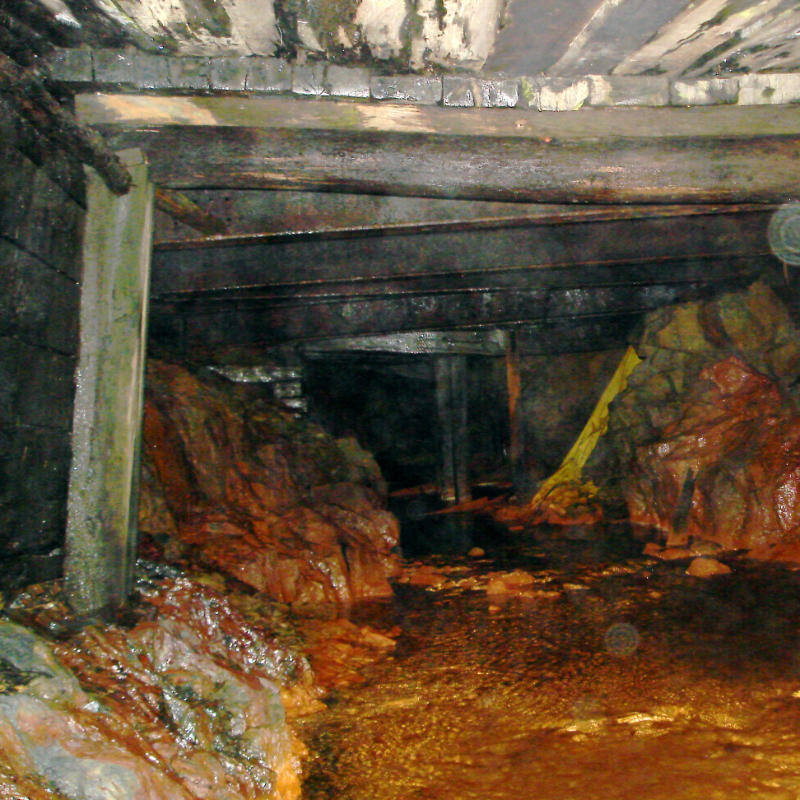
Over the years, the most frequent success stories have been of streams impacted by abandoned mine drainage (AMD, more on this today from Robert Hughes of the Eastern Pennsylvania Coalition for Abandoned Mine Reclamation). The stressors associated with AMD are well known, and effectively remediated. AMD remediations illustrate that aquatic life in streams can improve when stressors are reduced.
Why are we not measuring more improvements among our impaired streams or seeing more streams removed from our list of impaired waters? Fixing degraded streams today is not easy, and Pennsylvania is not alone in this challenge.
All states are struggling to find success in fixing streams. We did well in the 1960s through 1980s by focusing on pollutants that we knew were a problem at that time, often fixing thermal effluents with cooling towers on power plants or mixing towers on big dams, or by digesting or removing pollutants in wastewater treatment plants or by banning the use or discharge of toxic substances.
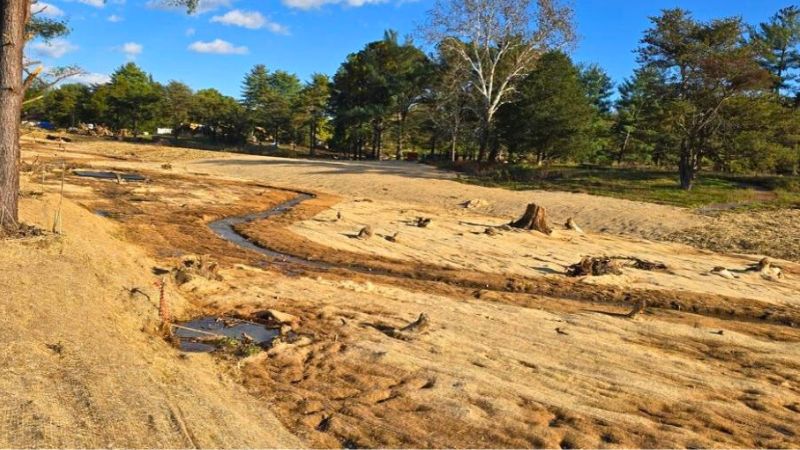
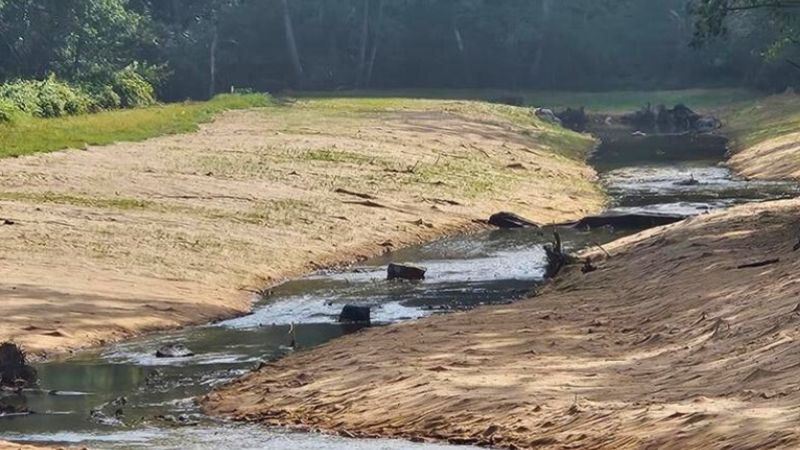
Starting in the 1990s, we moved away from those thermal and chemical pollutants and pollution-reduction approaches and more often focused on how stream channels and floodplains looked. This involved reengineering and landscaping the stream corridor, which you might know as legacy sediment removal, natural stream channel design, or floodplain reconstruction/reconnection. The idea that stream impairments were an expression of changes in stream hydrology, hydraulics, and geomorphology was new in the 1990s, but two decades of science since then have found that this intervention has generally not fixed impaired streams.
This is not to say channels or floodplains were in their natural condition. Rather, the lack of improvement following “restoration” of the channel and floodplain indicates that key stressors that were depressing or eliminating pollution-sensitive species were not associated with historical changes in stream channels and floodplains. If we are to get the results we are planning and paying for, we need to do some different things.
“The definition of insanity is doing the same thing over and over again and expecting different results.”
How Can We Get More Clean Streams?
Based on my experience and the work of coworkers and colleagues at the Stroud Center and beyond, my recommendation is that we need more projects, better projects, and aggregated projects if we want to address the impaired streams problem in Pennsylvania.
We need more projects because we have many impaired streams and rivers, and these impairments reflect the land and water use choices of thousands of landowners across thousands of parcels in the watersheds that form these streams and rivers.
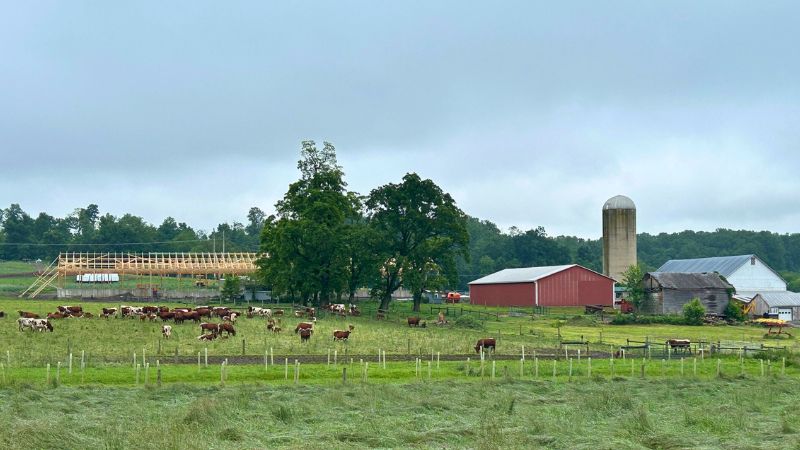
For example, Pennsylvania has 52,000 farms and 7.3 million acres of farmland. If we implemented pollution-reduction best management practices (BMPs) on 1,000 farms per year (at 100 acres per farm), it would take 50 to 75 years to address them all. Similarly, about 5% of Pennsylvania is urbanized and this represents about 4,300 miles of urban streams.
If we implemented pollution-reduction BMPs on the properties associated with 100 miles of urban streams per year, it would take 43 years to address them all. This approach treats every parcel as a potential source of pollutants over time, and is therefore part of the problem and the solution. In both cases (1,000 farms/year or 100 miles of urban streams per year), it would take decades to address our impaired streams even at these high rates of project implementation (relative to now).
We need better projects for both agricultural and urban streams because our pollutants and landscapes are complicated and our projects often fail to address all the pollution all the time.
There are many different pollutants and pollution sources, and these can vary within a year, and among years and properties. Some are well-known like thermal stressors, wastewater effluents, and agricultural and urban runoff. Others are contaminants of emerging concern (i.e., they may be new or well-known, but they are unregulated, and we do not commonly monitor them, addressed below). So as a preventative measure, it is important to recognize and address all the pollutants and pollution sources.
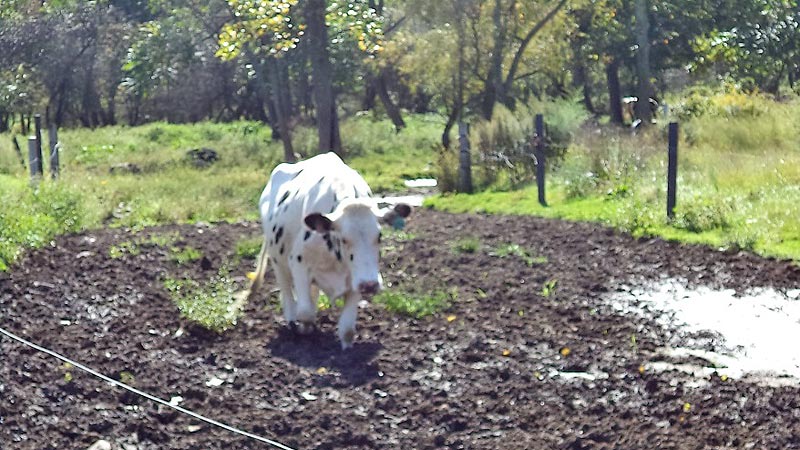
For example, if you reduce erosion and manure around a barnyard but do not address livestock in the stream, it is likely that the livestock are still contaminating and physically beating up the stream, and vice versa. Similarly, overland flow from a poorly managed crop field or pasture could overwhelm the benefits of a riparian forest buffer while a properly managed crop field or pasture does not replace the benefits of a riparian forest buffer.
The Stroud Center’s approach is to address the whole farm — from fields and pastures to barnyards and even roads. Much has changed over the decades and farmers now view their landscapes and options differently. That holds a lot of promise for the future, but it still requires work to get it all planned, implemented, and then maintained.
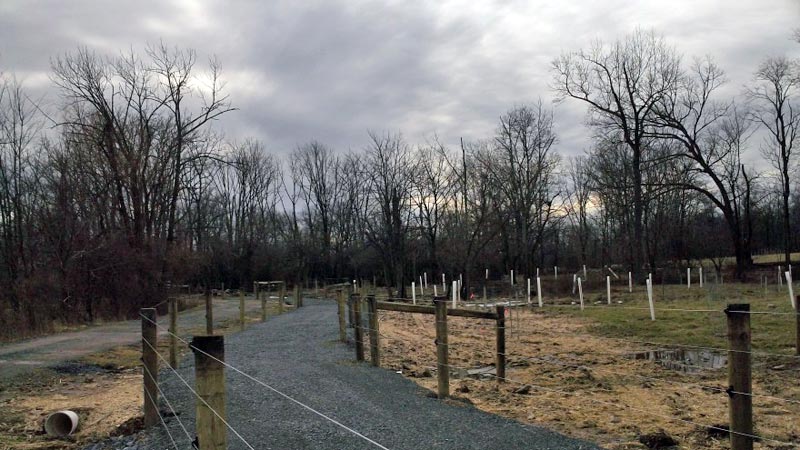
We need aggregated projects because it is the cumulative effort that should result in the most measurable results.
If you work on 10 random farms out of 100 farms in a watershed, then in theory you have only addressed about 10% of the pollutant load, and there is nothing in the literature that would suggest that is an adequate long-term solution because the remaining 90% would still overwhelm any positive change. However, if those 10 farms are aggregated on a small tributary with 15 farms, then you have addressed about 67% of the potential pollution sources, and there is a much better chance of measurable results.
The key to success stories for landowners and the general public, and for delisting streams is measurable results. In practice, there will be a combination of aggregated and dispersed projects, but making aggregation a priority helps ensure more success stories over time.
As I already mentioned, we need to avoid projects that do not work when it comes to delisting streams, especially reengineering and landscaping stream channels and floodplains.
There may be times and places where this is a viable option (e.g., protecting valuable infrastructure or historical sites, or beautifying public spaces), but the available studies suggest that this is a poor investment when delisting streams is the primary goal. Lessons from 1970 through 1990 suggest we need to return our focus to thermal and chemical contaminants as was done before 1990, and not prioritize how some perceive streams should look.
Finally, in addition to needing more projects, better projects, and aggregated projects, we need to better understand emerging pollutants and how they are presumably contributing to impairments.
These are common products widely used across our landscapes, and they contribute to the chemical cocktail that reaches our streams. This includes new and old pesticides (i.e., herbicides, insecticides, fungicides), asphalt sealants (polycyclic aromatic hydrocarbons), road salt, pharmaceuticals, and most recently, tire-wear compounds (e.g., 6PPD-Q).
Recent studies have found these chemicals at toxic concentrations in stream water or sediments in both urban and agricultural settings. We cannot reduce pollutants that are stressing our streams if we are not measuring those pollutants. How would we know if they are a problem much less where and when?
Thank you for inviting me to contribute to this hearing.
Sincerely,
John K. Jackson, Ph.D.
Senior Research Scientist