
By Wills Curley
In 2016, Bud and Marilyn Miller agreed to plant 11 acres of trees and shrubs to protect and enhance their spring-fed stream that runs through the center of their historic Berks County, Pennsylvania, farm.
“It’s amazing what a little patience can become,” Bud Miller remarked, looking back at a process that started nearly 10 years ago.
Evolving Science, Stronger Buffers
While the basic idea of planting a riparian forest to enhance stream health hasn’t changed much, the specifics of how to do it successfully have, due to years of ongoing research and field trials done by Stroud Water Research Center. Current recommendations include a higher percentage of trees to shrubs, prioritizing the development of canopy and shade, and increasing planting density to nearly 200 stems per acre.
Overcoming Challenges
Earlier riparian buffer concepts prioritized an equal share of trees and shrubs, and, with native nurseries still in their formative years, the number of species available was short of robust. Despite some droughts and a persistent population of whitetail deer and large bucks that can reduce tree survivorship, the Miller’s buffer is firmly established. It is finally becoming a forest of its own.
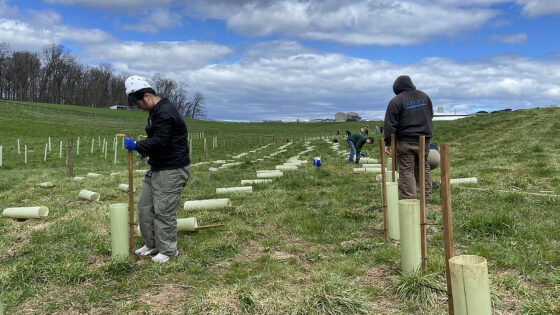
This success can be traced to the beginning stages of the planting and ongoing maintenance. Frequent mowing and herbicide treatments are necessary to beat back invasive grasses, weeds, and vines that are prolific in southeastern Pennsylvania. Miller’s attention to mowing, as well as his children’s help with invasive removal over the years, has made an enormous difference in the overall success and survivorship of his buffer.

A Forest Emerges

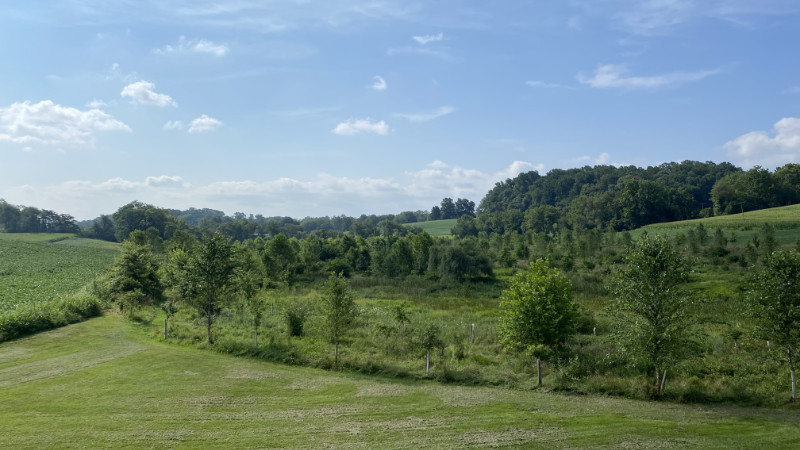
Miller is amazed by how the planting has developed. Seedlings that started in containers and stood only 2 to 3 feet tall now exceed 10, 20, and even 30 feet. Native species like sycamore and maple stand tallest.
He’s noted an increase in wildlife, from birds to butterflies, as well as shifting activity within the stream itself: “There are noticeably more bugs in the stream, and the areas where we have shade, the stream is becoming wider and clearer.”
Future plans for the Millers’ property are to keep it in the family. Their daughter is planning to purchase the property as they continue to develop what they have already spent so much time and energy on.
Miller is proud to say the buffer creates a spark that draws immediate attention, and visitors can’t help but walk over to see what the planting is developing into. He says that this interest from visitors “shows what Mother Nature can do.”
Grandkids and adult children all have found joy walking the “Miller Meadow Loop” and experiencing what time, patience, and a riparian buffer can bring. As future generations of Millers become stewards of the property, they can reflect on and appreciate Miller’s work to ensure the long-term success of these woods.
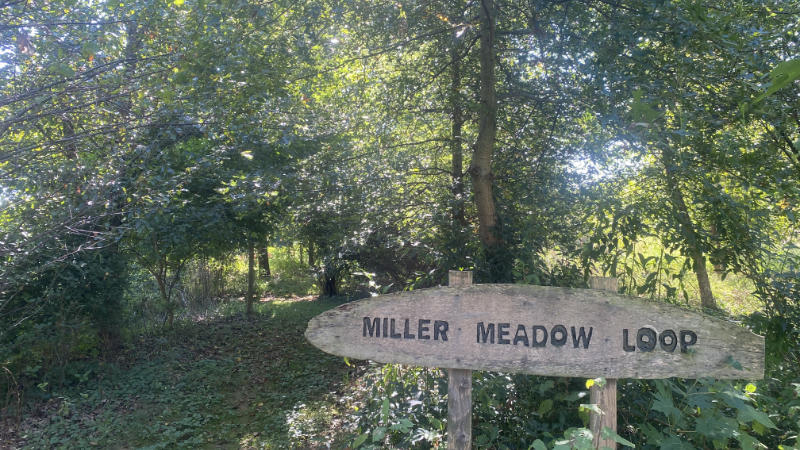
After nearly 10 years, Bud and Marilyn Miller’s 11-acre buffer is firmly established and is finally becoming a forest of its own. Join landowners like the Millers who are creating thriving forests and healthier waterways with the Stroud Center. Our team is here to help design, plant, and support a riparian buffer that will benefit your land and stream for generations to come. Contact us today to explore how we can help you create a lasting legacy on your property.