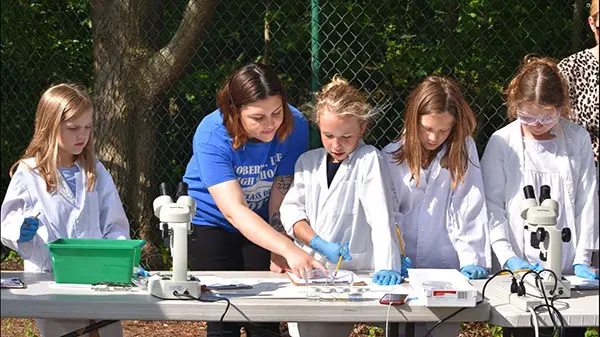
Elementary students are diving into real-world watershed science through the Shared Waters curriculum, which combines hands-on investigation with student-led action projects. Designed for grades 3–6, the curriculum teaches how everyday choices affect stream health and empowers students to protect local waterways.
The program grew out of a NOAA Bay Watershed Education and Training (B-WET) grant and partnership involving Millersville University of Pennsylvania, Virginia Wesleyan University, Penn Manor School District, and Norfolk Collegiate School. Together, they created an upstream–downstream collaboration to systemically bring Meaningful Watershed Educational Experiences (MWEE) into classrooms.
Shared Waters delivers 10 lessons aligned with Next Generation Science Standards and multiple state standards, emphasizing environmental literacy and sustainability.

Students explore the water cycle and watershed concepts, test chemical properties of streams, identify aquatic macroinvertebrates as indicators of water quality, and assess the effects of human activities on watersheds. Each unit culminates in a student-designed action project.
To connect classroom learning with real-world data and tools, the lessons incorporate Stroud Water Research Center’s WikiWatershed Toolkit, including tools such as the Leaf Pack Network, Model My Watershed, and the Runoff Simulation. Although originally focused on the Chesapeake Bay Watershed, educators can easily adapt the program to any geography and local watershed.
Watch this video to learn more about the curriculum and get inspired!