This article was published in May 2026 and updated in August 2026.
Tools Behind the Science is a series exploring innovative technologies developed by Stroud Water Research Center that make freshwater science possible. From open source hardware and software to data platforms, these tools help researchers, educators, and communities better understand and protect our rivers and streams. Read part 2 in this series.

By Scott H. Ensign, Ph.D.
The Surprising Journey From Stream Sensors to Honeybee Hives
In the spring of 2017, a group of researchers at Colorado State University did something nobody at Stroud Water Research Center had anticipated.
They took a circuit board we’d designed to monitor Pennsylvania streams and attached it to a beehive. Using infrared detectors and a Mayfly Data Logger, they built a system to count honeybees passing in and out of a hive entrance, tracking the rhythms of a colony under stress. They presented it that fall at the Entomology Society of America’s annual conference in Boulder.
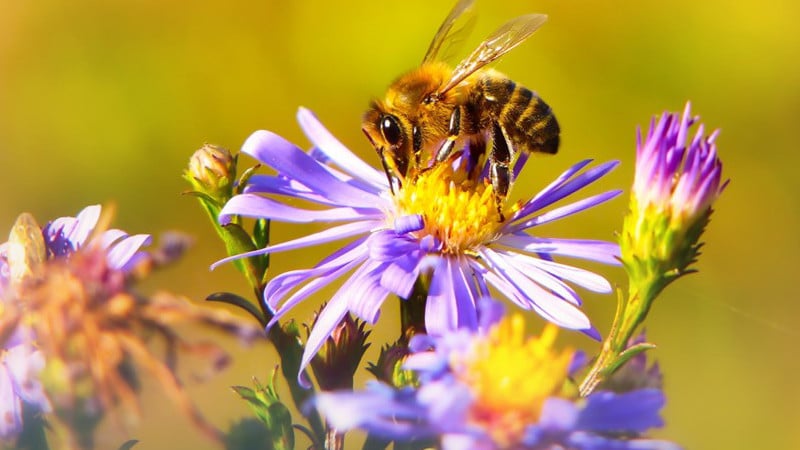
This was a surprising milestone for the Mayfly Data Logger and a use far beyond its original intent, but it would prove to be the first of many such surprises in the years ahead.
That moment also captures something important about what the Stroud Center is and how it works.
Why the Stroud Center Builds Its Own Tools
The Stroud Center is not a university. It is not a consulting firm. It is not a technology company. It’s a little of all three: a nonprofit that publishes peer-reviewed research, educates the public, restores watersheds, and, over the decades, builds the tools that make environmental monitoring possible in the first place.
Most organizations choose between those roles, but we integrate them because we’ve found they reinforce each other. The science informs the tools. The tools enable more science. The restoration work grounds both in the conditions of real watersheds.
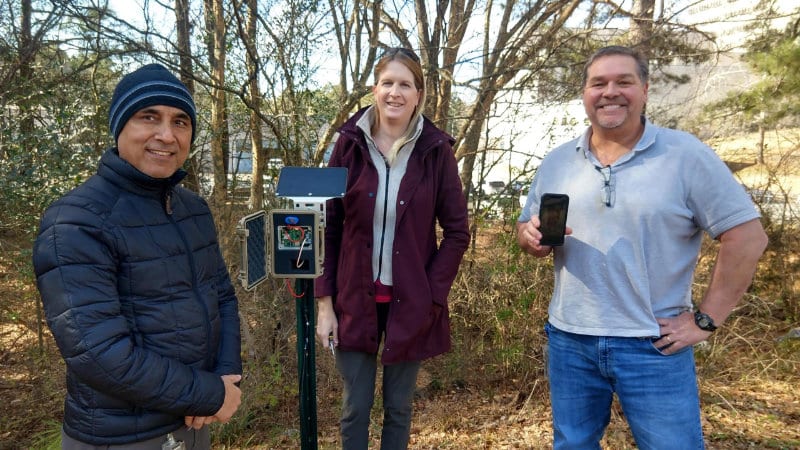
Our EnviroDIY initiative sits at the center of this interplay. Born from a straightforward frustration over the expense and constraints of proprietary hardware, EnviroDIY was our solution for managing professional-grade sensors with low-cost electronics.
Its centerpiece is the Mayfly Data Logger, designed and continuously refined over more than a decade by the Stroud Center’s electrical engineer, Shannon Hicks, through nine generations of hardware. EnviroDIY is an open source technology, so its design files, software, and assembly instructions are all freely available to anyone who wants them, and they can use the technology and adapt it however they want.
How an Open Source Technology Spread Through Science
The Mayfly doesn’t have an advertising budget. It has a publication record.
That distinction matters. When researchers publish a scientific study, they stake their professional reputation on every method and instrument they report. Peer review — the process by which independent experts scrutinize a study before it can appear in a scientific journal — is science’s quality-control system.
When a paper clears that bar, the tools it used clear it too. And the Mayfly has now cleared that bar across a shocking range of disciplines and geographies.
Capturing the Variability in Snowpack
Snow hydrologists at Utah State University deployed Mayfly-based stations across a remote mountain watershed to capture the variability in snowpack that conventional monitoring networks miss.
Recording Storm Overwash on Barrier Islands
Coastal researchers at UNC-Chapel Hill and UNC-Greensboro built Mayfly-based sensors to record storm overwash on Virginia barrier islands during hurricanes.
Tracking How Heat Moves From Streets and Rooftops Into Stormwater
Civil engineers at Marquette University paired Mayfly-based temperature loggers with drone-mounted infrared cameras to track how heat moves from Milwaukee’s streets and rooftops into urban stormwater.
Detecting Chloride Pulses From Road Salt Pulses
Geoscientists at Carleton College monitored groundwater beneath Minneapolis, using Mayfly-based sensors to detect chloride pulses from road salt and a steady, measurable warming of the aquifer.
Sensing Contaminants in Rooftop Rainwater Harvesting
The EPA tested a Mayfly-based rooftop rainwater-sensing system and published the results.
Detecting Pollutants and Their Watershed Sources
Scientists in New Zealand honed the detection of pollutants and their watershed sources using the Mayfly, and simultaneously demonstrated up to a tenfold cost savings compared to using commercial monitoring systems.
Monitoring Mussel Reactions to Polluted Water
A researcher at San Diego State University wired Mayfly Data Loggers to mussels to monitor how the animals snap shut and stop feeding when polluted water floods their estuary.
A researcher wired Mayfly Data Loggers to mussels to monitor how the animals snap shut and stop feeding when polluted water floods their estuary.
None of these researchers saw an advertisement for the Mayfly. None were recruited. They found it — through a colleague’s paper, a conference presentation, a GitHub repository — and decided it could solve their problem. That is a grassroots adoption story, not a marketing one. The tool spread the way good ideas spread in science: person to person, study to study, one published result leading the next researcher to try it.
We’ve seen the same pattern within our own work. Colleagues here at the Stroud Center used EnviroDIY to support a landmark community science stream monitoring network in the Delaware River basin, involving more than 50 watershed organizations and 100 monitoring stations, and published the results in Frontiers in Ecology and the Environment. We investigated sediment pollution in Maryland estuaries, published earlier this year in Estuaries and Coasts, using Mayfly-based monitoring.
We build the tools, and the tools end up in our own science in ways we didn’t plan at the outset.
Building Better Science Through Open Collaboration
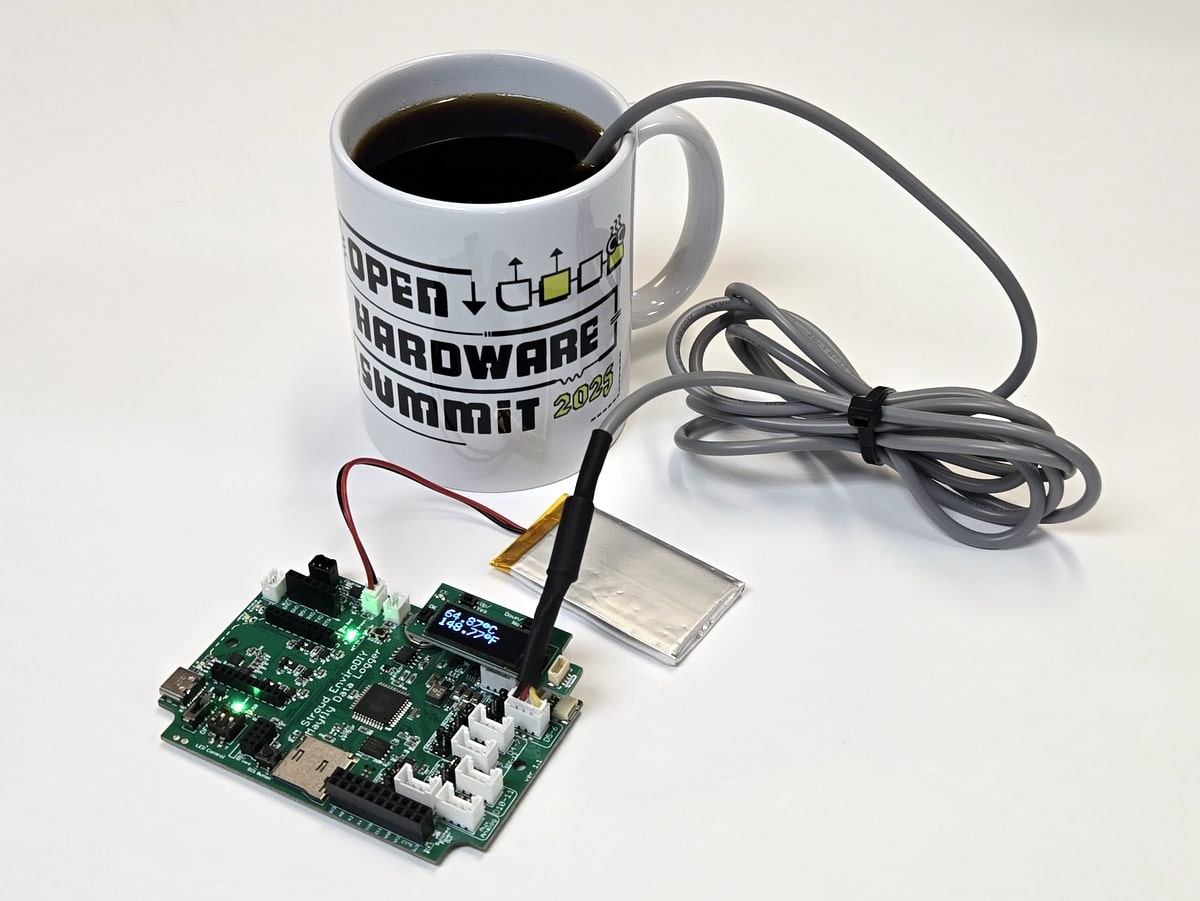
The Mayfly Data Logger was recently certified by the Open Source Hardware Association, an international body that verifies whether a hardware design genuinely meets open source standards: the schematics shared, the design reproducible, and improvements able to flow back to the community. It is a formal recognition of something the publication record had already demonstrated.
This is not an overpriced niche gadget. It is versatile, cost-effective infrastructure that’s always improving thanks to the open source community. Whenever automated continuous monitoring is needed, the Mayfly is the obvious tool of choice for the job.
The goal of the Mayfly was to build something useful, share it freely, and let scientists do their work. What I didn’t anticipate was how far that would travel — into snowfields and beaches and city aquifers and mussels, from New England to New Zealand — or how many questions, far beyond ones related to fresh water, it would help answer.
Support the Development and Maintenance of EnviroDIY
EnviroDIY is part of the WikiWatershed Toolkit, designed to help people learn about and protect their watersheds. The tools are free or inexpensive for users, but they are not free to maintain and improve. Support this critical infrastructure.
About the Author
Scott Ensign is an ecosystem ecologist working to discover how plants, animals, and microbes interact within rivers and how the results of those processes influence how people and society interact with rivers. In collaboration with his colleagues, he makes biogeochemical measurements, performs experiments, and interprets results using statistical models and analysis. Ensign is particularly interested in developing new measurement technologies for aquatic environments, exploring how sea level rise affects rivers, and implementing conservation techniques that improve ecological conditions and the utility people derive from freshwater ecosystems.