Stroud Water Research Center is pleased to announce a partnership with Penn Vet’s New Bolton Center (NBC) to deliver clean water and restore healthy streams to Chester County, Pennsylvania.
Widely recognized for its world-class equine hospital, NBC is also a 700-acre living laboratory for integrated agriculture and ecosystem research. Situated at the headwaters of White Clay Creek, the campus plays a pivotal role in protecting soil health, biodiversity, and downstream water quality.
Join Us at Willowdale
This work is made possible not only through science and collaboration, but through community support.

On Saturday, May 9, the Willowdale Steeplechase will bring together friends, families, and supporters from across the region to celebrate and invest in clean water and veterinary excellence.
As a nonprofit event, Willowdale raises critical funds for both the Stroud Center and NBC, advancing freshwater research, agricultural stewardship, and the next generation of large-animal veterinarians.
By attending or supporting Willowdale, you are directly contributing to the health of our streams, our farms, and our communities.
A Decade of Shared Momentum in the Watershed
Over the past 10 years, through the Delaware River Watershed Initiative, the Stroud Center has partnered with 106 landowners in the Red Clay and White Clay Creek watersheds to restore healthy agricultural landscapes. Together, we have implemented:
- 259 acres of riparian forest buffers.
- 282 best management practices (BMPs).
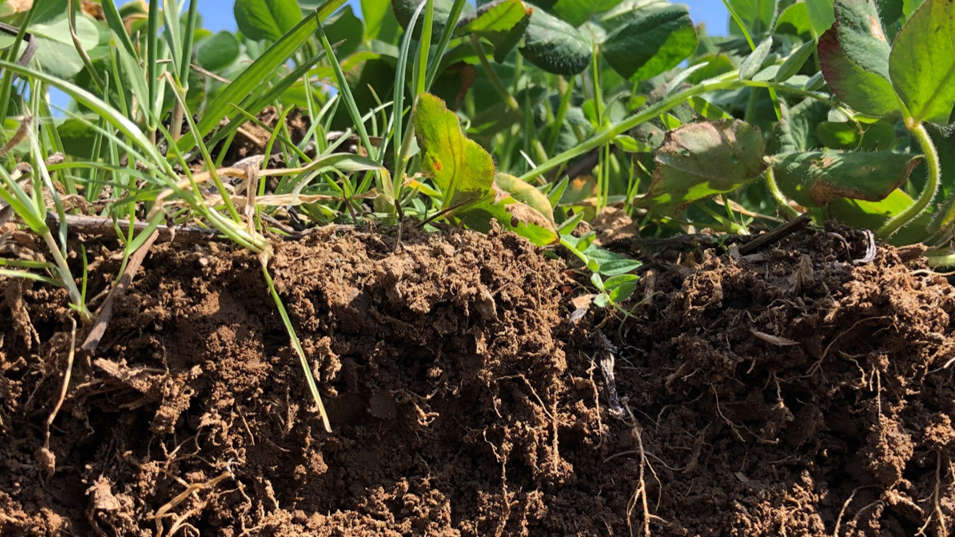
- Soil health improvements across 3,580 acres of farmland.
NBC sits at the boundary of these watersheds — an area of tremendous potential given its scale, location, and role in agricultural innovation. As NBC explored new directions for stewardship, the opportunity for collaboration emerged.
A Vision for the Farm of the Future
The Penn Vet School and PennPraxis — the applied practice arm of the University of Pennsylvania Weitzman School of Design — launched a “Farm of the Future” charrette to explore innovative approaches to:
- Sustainable food systems.
- Teaching-farm design.
- Biodiversity.
- Soil carbon.
- Water and waste strategies.
- Regenerative agricultural practices.
- New models for research and public engagement.
This forward-looking work created fertile ground for partnership with the Stroud Center, uniting expertise in agricultural management, design, and watershed science.
Turning Vision Into Action
NBC leadership and faculty enthusiastically embraced working with the Stroud Center to implement agricultural and water quality improvements across their campus. The collaboration began with two pilot projects:
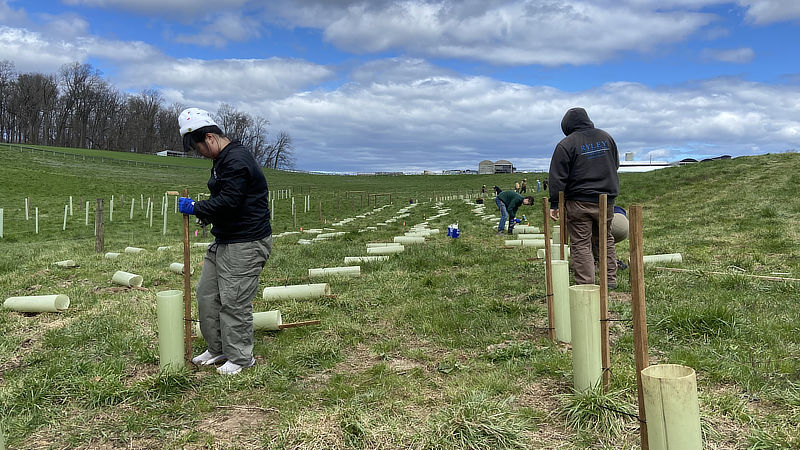
- A 1.5-acre, traditional riparian forest buffer.
- A 15-acre agroforestry silvopasture, including a 2.3-acre block of willow, dogwood, and other shrubs that will be part of a rotational grazing system for dairy heifers.
The dairy faculty will evaluate the nutritional benefits of shrub grazing, while the Stroud Center will assess how integrating shrubs into working lands enhances stream protection and expands the function of riparian buffers.
Additional completed projects include:
- A 2.25-acre riparian forest buffer.
- A stormwater basin and grass waterway to address road runoff and erosion in the former feral pony pasture along Line Road.
Major Projects on the Horizon
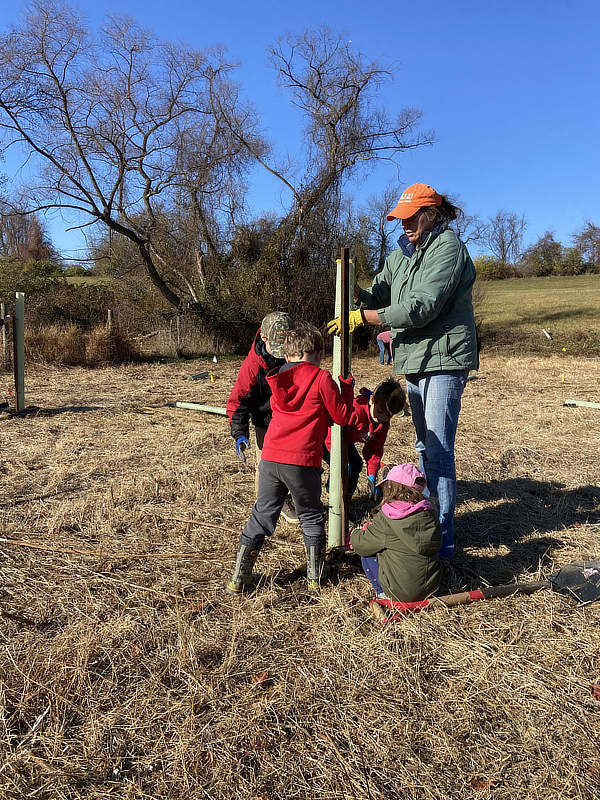
In fall 2025, the Stroud Center installed a 22-acre forest buffer along more than one mile of stream, paired with livestock-exclusion fencing and stream crossings. This project includes the restoration of a historically straightened channel, offering a rare chance to monitor how forested buffers encourage natural shifts in stream shape, habitat, and flow.
Additional projects now and planning include:
- 6-7 acres of riparian forest buffer along South Brook at the Hoffman Equine Center.
- Another 5-6 acres of riparian forest buffer are under discussion.
Collectively, these efforts represent approximately 50 acres of new riparian forests along approximately 2.3 miles of streams, positioning the New Bolton Center as a regional model for agricultural campus watershed restoration.
The Stroud Center is also collaborating with NBC faculty on crop-field management enhancements and improved approaches to dairy manure handling and storage — key strategies for reducing nutrient runoff and protecting water quality.
Penn Vet and PennPraxis, with input from the Stroud Center, are also evaluating complementary opportunities, including adding trail networks, researching ecological benefits to birds and pollinators, and developing student and volunteer engagement programs.
This partnership reflects a shared commitment to land stewardship, agricultural innovation, and watershed health. Together, NBC and the Stroud Center are demonstrating how working lands can support both productive agriculture and clean, thriving streams — starting at the very headwaters where it matters most.