Lancaster Congregations “Rescue” Vine-Covered Trees and Create “Kids’ Forest” Along Stream
Planting and caring for trees is a tried and true conservation action that supports wildlife, reduces polluted runoff, and removes planet-warming carbon from the atmosphere. Recognizing this, Stroud Water Research Center plants approximately 100 acres of streamside forests each year to restore watersheds in southeastern Pennsylvania. What to do, however, if some of these trees are overwhelmed by fast-growing, invasive vines and shrubs?
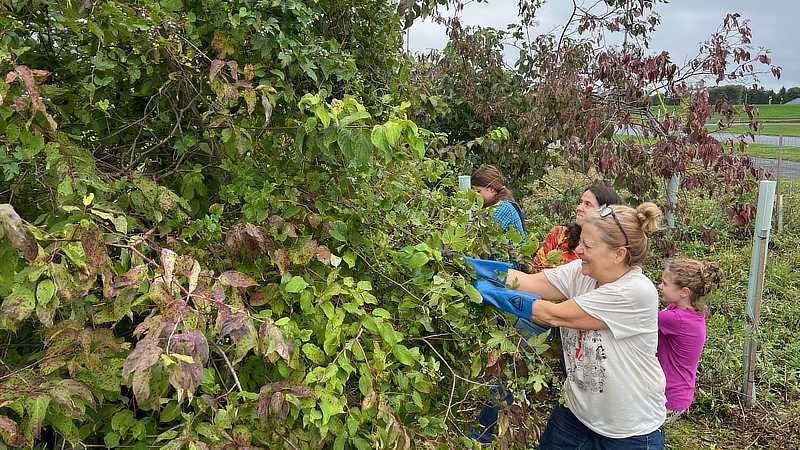
Such was the condition of a small streamside forest planted years ago in Overlook Park, near the Manheim Township Public Library. The trees in this conservation area were covered in a blanket of bittersweet and porcelain berry vines, a common problem in the region. Some trees had died under the weight and shade of the vines. At ground level, invasive Bradford pear trees and honeysuckle shrubs dominated the understory. Stroud Center staff noticed the problem while working in an adjacent reforestation area that was contributed by the township.
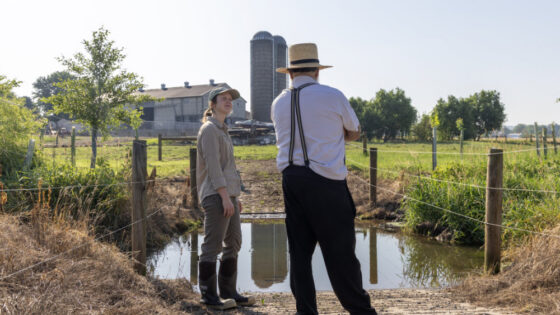
Enter a multigenerational group of nature enthusiasts from Community Mennonite Church of Lancaster. Having recently completed an affordable housing project, church members were asking the question, “What’s next?” What could be a fun, meaningful outdoor project in which all ages could participate?
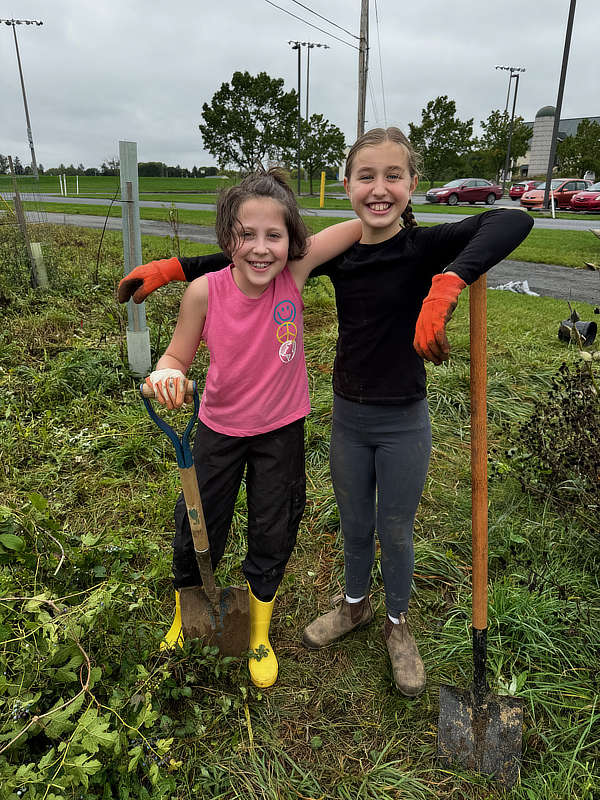
Stroud Center staff suggested that volunteers from the church help save a small but important streamside forest in a nearby public park that’s also close to a busy library. Meredith Fisher, the church’s director of youth ministries, loved the idea of a publicly accessible forest maintained by kids, for kids.
Fisher said, “Many of our young people are very concerned about the environment, and they want to do something. They loved the idea of saving a small forest while creating a shady retreat where other kids can learn about nature and play in a stream.”
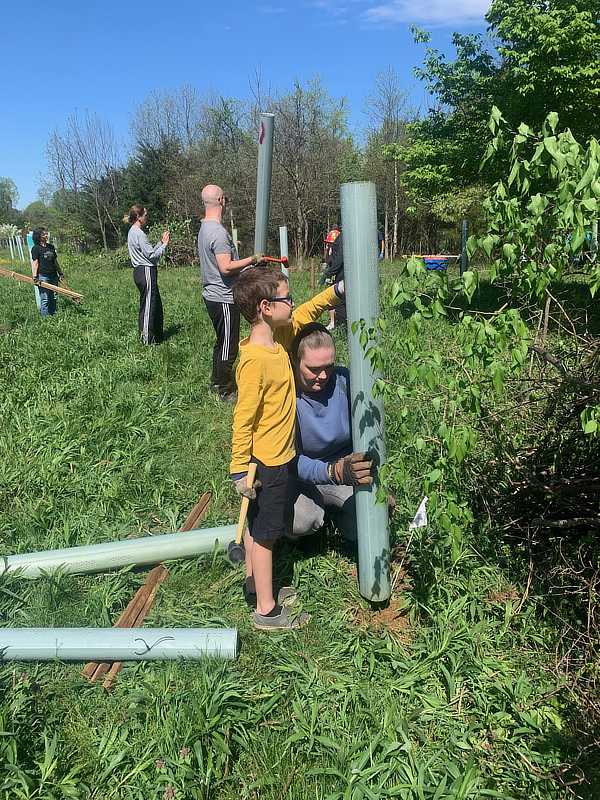
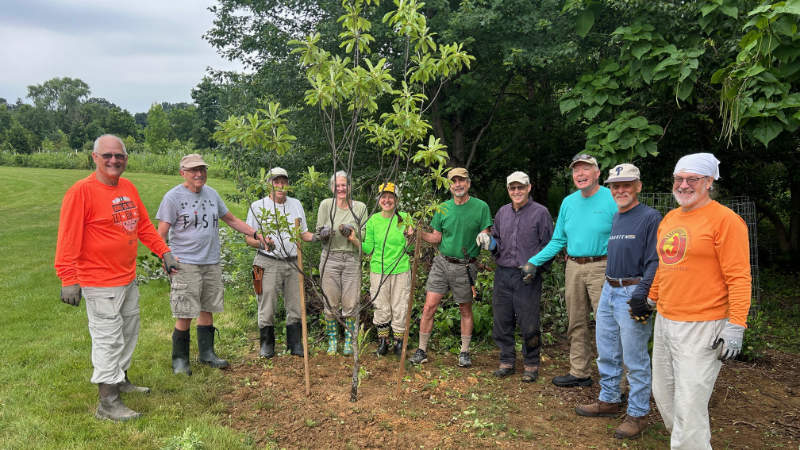
Kids and adults started clearing vines and undergrowth last March. In their place, volunteers planted new shrubs and trees. Adults from the church, along with volunteers from another Lancaster congregation — Highland Presbyterian — now meet monthly to continue the restoration work with the help of Stroud Center staff.
The original trees are flourishing once again. Rescued shrubs that appeared to be dead have grown new green shoots. A small, spring-fed stream flows through this revived landscape that invites warm-weather wading.
Rescuing a Rare Tree
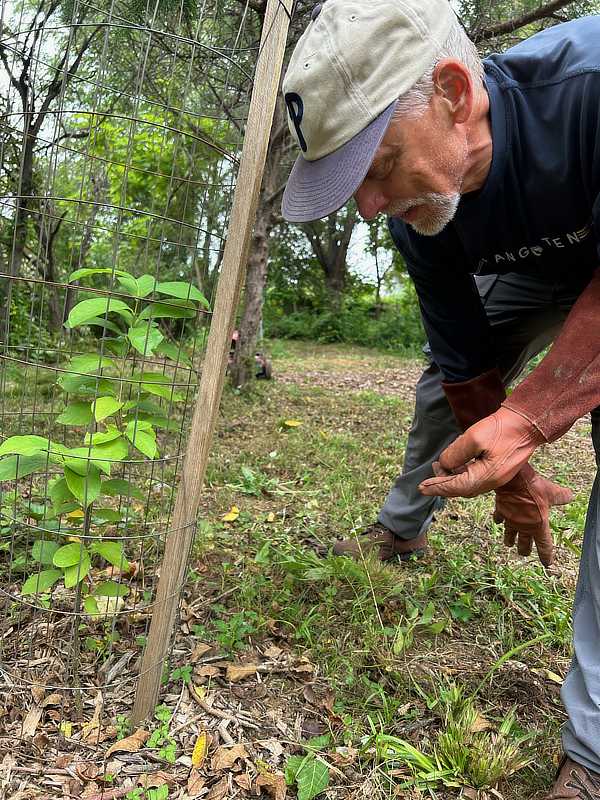
To celebrate the completion of the project’s first phase, church members planted a rescued Franklin tree (Franklinia alatamaha) in a prominent spot at the entry to the restored forest. The small but lovely specimen was spared from a likely fatal destiny at a construction site.
The Franklinia is one of the rarest trees in North America, likely extinct in the wild since the early 19th century and now grown only as an ornamental tree in the eastern U.S. First identified by the Philadelphia botanists John Bartram and son William, all living Franklinias are descendants of seeds collected from its native Georgia habitat and propagated at Bartram’s Garden in Philadelphia. William named the tree after his father’s good friend, Benjamin Franklin.
People Responding to Forests Under Stress
Forests throughout the mid-Atlantic are suffering from invasive species, development pressure, and a warming climate. Interventions to ensure their growth and survival are necessary. This group of amateur conservationists is showing that all of us, regardless of age, can take part in forest conservation and restoration.
Interested in helping streams and forests in your area? Reach out to Jess Provinski.