Taxonomic Certification Program Verifies Skills of Those in Biomonitoring and Environmental Impact Work
Why Taxonomic Certification Matters
Biomonitoring plays a vital role in protecting fresh water. Federal programs, research institutions like Stroud Water Research Center, and for-profit environmental firms all survey rivers and streams to evaluate their health and water quality; they do so by methodically identifying the type and abundance of macroinvertebrates, algae, and fish that live in them. The data can then be used to assess the impact of human activities on freshwater ecosystems.
For such efforts to be successful, the data must be accurate and precise.

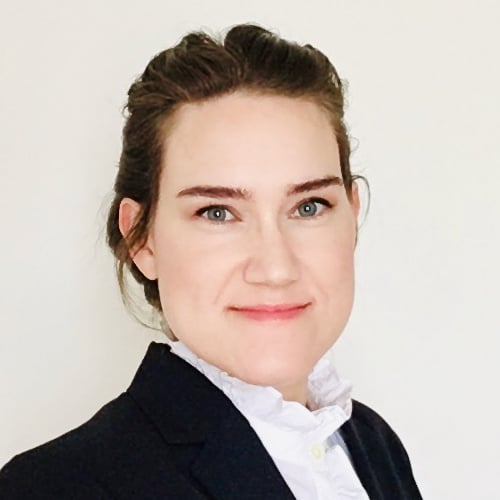
Trevor Hall, an environmental scientist at Three Oaks Engineering in Durham, North Carolina, hopes to add to such data by eventually identifying and classifying freshwater organisms in house for his company’s environmental impact assessments. He is one of fewer than 400 individuals in North America to have earned taxonomic certifications from the Society for Freshwater Science (SFS), and he says they will enhance his company’s application to become a state-certified lab.
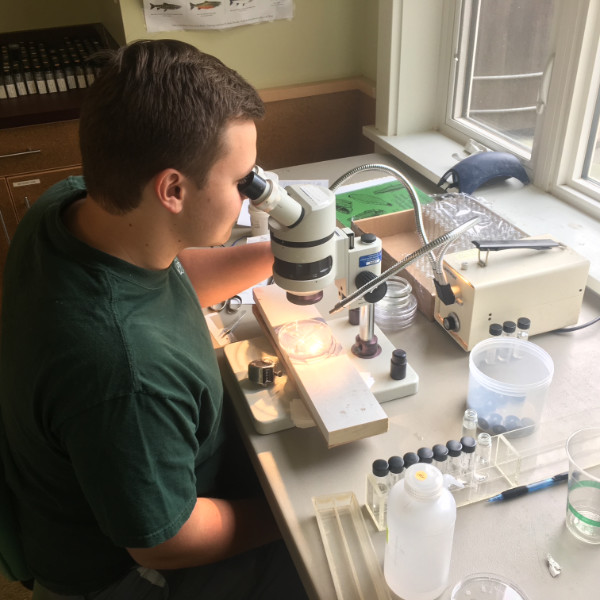
Regular practice, Hall says, is vital to do the job well. He first got that practice shortly before graduating from college in 2016, when he embarked on an internship at the Stroud Center.
“It was like boom, boom, boom, boom, boom!” Hall says, recalling the ease with which he could identify and classify organisms by the end of his internship. He earned his family-level certification in 2022 and recently his genus-level certification in eastern Ephemeroptera, Plecoptera, and Trichoptera (the orders of mayflies, stoneflies, and caddisflies).

SFS Meets Need for Taxonomic Standards
SFS, formerly the North American Benthological Society, created the Taxonomic Certification Program (TCP) in 2004. Until then, no formal program for North America existed, and many state and federal agencies involved in environmental regulation and monitoring were concerned: without a standard protocol and rigorous skills testing, data quality and consistency across monitoring programs were less assured.
The TCP, now administered by the Stroud Center, has become the gold standard, with certifications in aquatic invertebrates, diatoms, and soon, fish. It’s the only program of its kind.
Passing any of the exams requires a minimum of 95% correct from a select list of common and uncommon taxa from a region. Of those who take the exams each year, between 41% and 73% pass, depending on which taxonomic group is covered.
Environment and Climate Change Canada (ECCC), the federal department that manages the Canadian Aquatic Biomonitoring Network (CABIN), recommends the TCP in its training materials and laboratory methods manual.
The program is helpful for networks like CABIN that share data and build biomonitoring capacity with help from citizen scientists, according to Stephanie Strachan, who is ECCC’s CABIN section head for freshwater monitoring in the Pacific and Athabasca-Arctic Watershed.
Strachan says, “We say that we would like people to be genus-level certified. Some network participants can do family level. That helps them have some credibility to the data that they’re sharing.”
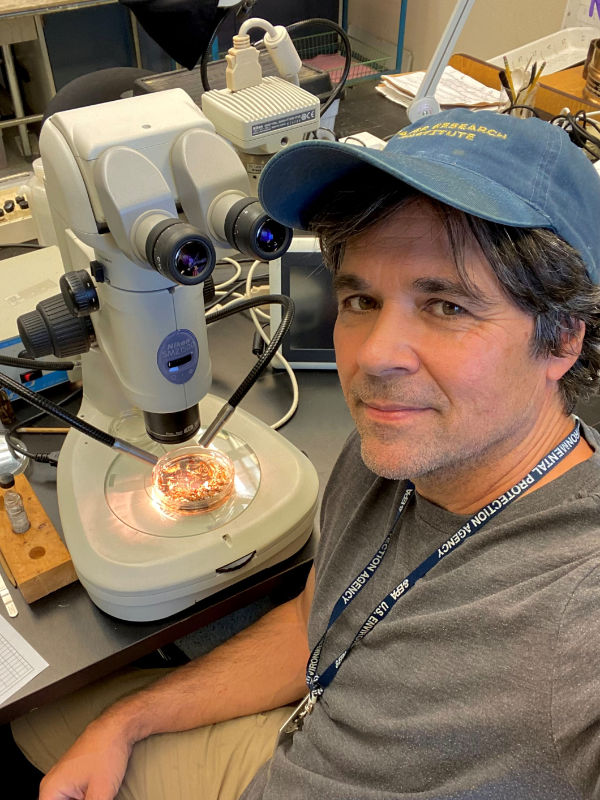
Greg Pond, an aquatic biologist with the Environmental Protection Agency, Mid-Atlantic Region, says when he reviews permits for mitigation or remediation plans, which are required under the Clean Water Act, he considers whether the applications include anyone on the team with an SFS taxonomic certification.
“For the benthic work that we do, we don’t specify that the taxonomist has to be certified, but we do put it into our standard operating procedures as a demonstration of capabilities,” Pond says, adding that all agency taxonomists in states in his region that handle taxonomy in house — Virginia, Maryland, Pennsylvania, and West Virginia — are certified through the program.
Sean Sullivan, an aquatic ecologist and invertebrate taxonomist with Rhithron Associates, Inc., in Missoula, Montana, says his company encourages all staff who do taxonomic identification to get certified. He and his staff hold multiple certifications.
“I would absolutely encourage people to take it, especially students. It would be a plus if somebody came to me with a CV and said, ‘Look, I’m already certified,’” Sullivan says.
All Entomology Group research scientists at the Stroud Center hold genus-level certifications.
Michael Broomall, the TCP program administrator and a Stroud Center staff scientist in the Entomology Group, says that although the certification does not guarantee high-quality data, it does establish a baseline minimum skills standard in the industry, enhancing trust, transparency, and consistency in environmental reporting.
Learn more about the taxonomic certification program.
How to Get Involved
Find a Certified Professional
When it comes to freshwater biomonitoring, habitat assessments, or regulatory compliance, accurate species identification isn’t optional — it’s essential. Search our growing list of certified professionals to find qualified experts in your region or specialty area.
Get Certified
- Scientists: Whether you’re a seasoned biologist or just starting your freshwater science career, you can prove your expertise and build trust in your data.
- Citizen Scientists and Community Groups: Gain recognition and ensure your data is respected in scientific and policy discussions.
- Anglers: A new fish identification certification is coming soon, and it’s designed with stewards like you in mind. Follow the Stroud Center on social media for the program launch and exam announcements.
Follow Us