Leaf Packs Offer Students Receiving Special Education Services an Engaging Alternative to Traditional Stream Studies
By Andrea Fellows
Stream studies are among the most engaging and memorable ways to teach students about environmental conservation and ecosystem health. There is something special about standing in a stream, turning over rocks, and discovering the organisms living beneath them.
Yet for many educators, providing these experiences can be challenging. Funding limitations, transportation costs, staffing shortages, scheduling constraints, and field trip requirements often create barriers to outdoor learning.
And for students receiving special education services, access to traditional field-based investigations may be further limited without proper support for their medical, physical, sensory, and behavioral needs.
Leaf packs offer a creative solution.
My name is Andrea Fellows, and I am a STEM teacher serving six center-based special education programs in Lancaster County, Pennsylvania. My students range from 4 to 21 years old and participate in emotional support, autistic support, and school-to-work programs. Over the past several years, I have worked to expand environmental education opportunities for these students through field experiences and classroom investigations, with an emphasis on finding creative ways to bring outdoor learning into the classroom through trail-camera footage, audio recordings, virtual field trips, and guest presentations.
While I have been fortunate to coordinate environmental education field trips for each of my programs, these experiences require extensive planning, funding, and collaboration among school staff, administrators, and community partners.
Leaf packs have allowed me to bring many of the same ecological concepts directly into the classroom while reducing barriers and increasing participation. In many ways, they have become a bridge between classroom learning and future outdoor experiences.
Getting Started With Leaf Packs
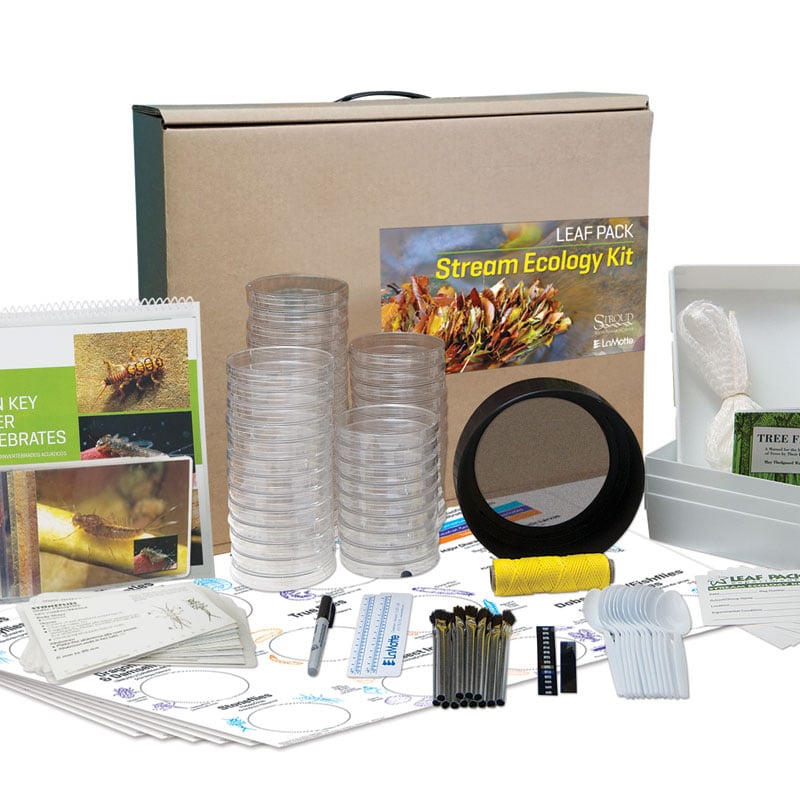
My leaf pack journey began in September 2024 when I attended a workshop at Stroud Water Research Center. During the training, I learned how to deploy and analyze leaf packs, facilitate classroom investigations, and connect macroinvertebrate studies to environmental science concepts. The other participants and I each received a Leaf Pack Stream Ecology Kit, which included many of the supplies needed to begin implementing investigations with students.
Additional materials I purchased included a cooler with an aerator, ice packs, rebar for installation, extra hand lenses, macroinvertebrate identification guides, and containers for transporting stream water.
Thanks to grant funding and professional development opportunities, the initial setup costs were manageable and helped create a sustainable program that I can continue using year after year. For educators interested in implementing a leaf pack project, I highly recommend seeking out similar training and funding opportunities, as they can make getting started much more feasible.
Finding a suitable stream site was the next step. I reached out to several local parks and conservation organizations before identifying a location that was both accessible and relatively undisturbed. Using the same stream site over multiple years has allowed me to become familiar with the habitat, identify productive collection areas, and better understand seasonal changes in the macroinvertebrate community.
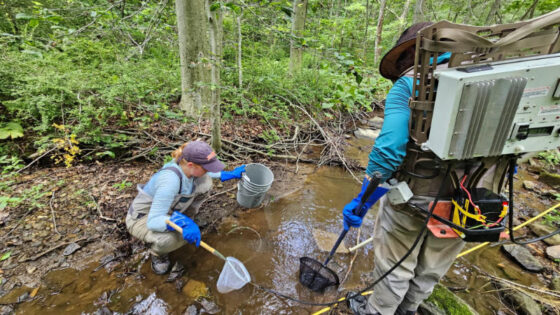
Each year, I supplement the organisms found within the leaf packs by collecting additional specimens with kick nets. Students have had opportunities to observe leeches, aquatic worms, snails, clams, and other organisms that might not always appear in the packs themselves. These additions help create a richer investigation experience and expose students to a wider variety of freshwater life.
The Work Behind the Investigation
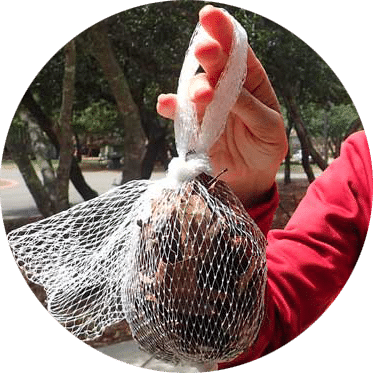
Deploying and analyzing leaf packs requires time and planning, especially when teaching multiple classes. Because I teach 23 classes, I typically conduct five consecutive days of investigations. This means visiting the stream each day during investigation week to collect fresh leaf packs and return macroinvertebrates to their homes.
While the preparation can be demanding, it ensures that students observe healthy, active macroinvertebrates throughout the investigation period and that our investigation models responsible environmental stewardship.
Approximately one month before the classroom investigation, I place multiple leaf packs at several locations within the stream. I always place more packs than I expect to use in case some are disturbed by weather, wildlife, or curious visitors. Signs and waterproof labels help reduce accidental interference and make retrieval easier.
Although placement requires effort, it has become one of my favorite parts of the project. Friends and family often join me, turning the experience into a shared adventure. As a bonus, the visibility of the leaf packs often generates interest from community members, creating opportunities to share information about freshwater ecosystems and environmental education.
Macroinvertebrate Week
Macroinvertebrate investigations have become a classroom favorite and one of the most anticipated activities of the year for my students. Students frequently bring up past discoveries and are always excited when they realize it’s time to study macros again.
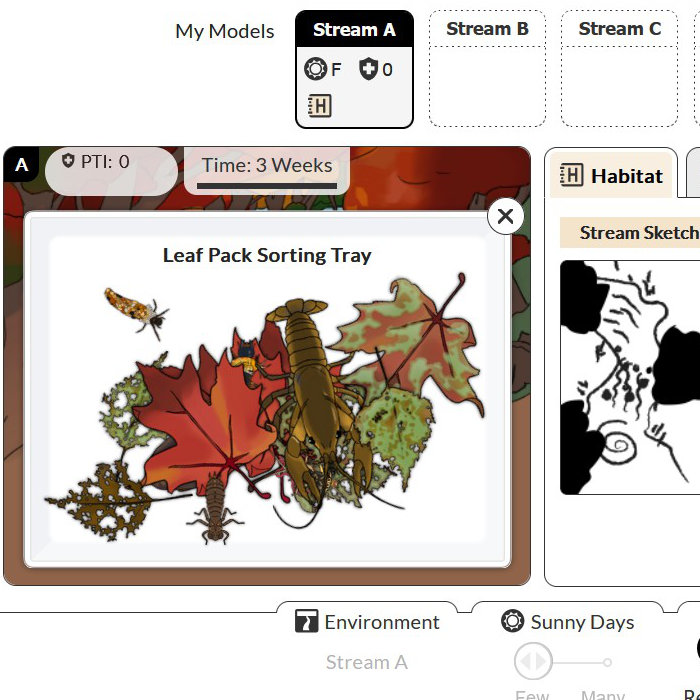
To prepare students for success, I use the Leaf Pack Network Simulation before introducing live specimens. The simulation helps students understand what they will encounter, learn about common macroinvertebrates, and practice observation skills in a low-pressure environment. Because it is accessible on both Chromebooks and tablets, it works well for learners with a variety of needs.
On investigation day, we begin by gathering around a cooler filled with stream water and leaf packs. I show students photographs of the stream where the organisms were collected and explain the installation, collection, and release process. We discuss how and why we keep the macroinvertebrates safe, emphasizing that these organisms are living components of a larger ecosystem and deserve our care and respect.
Students then move to their workspaces, where they receive investigation bins filled with leaves, water, and hidden macroinvertebrates. The excitement is immediate. Students carefully sort through leaves, use hand lenses to make observations, and enthusiastically share discoveries with classmates.
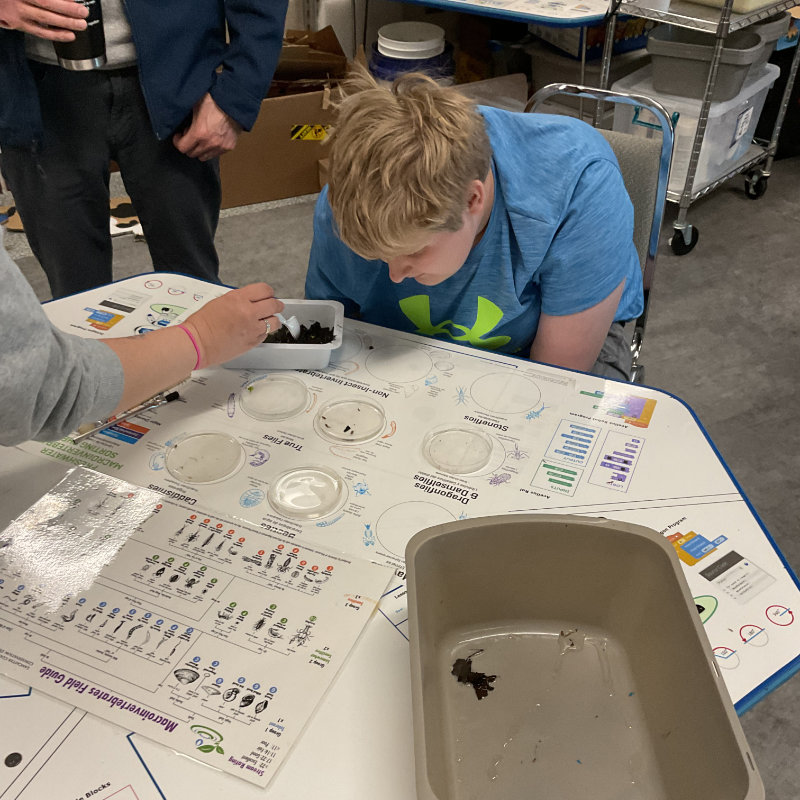
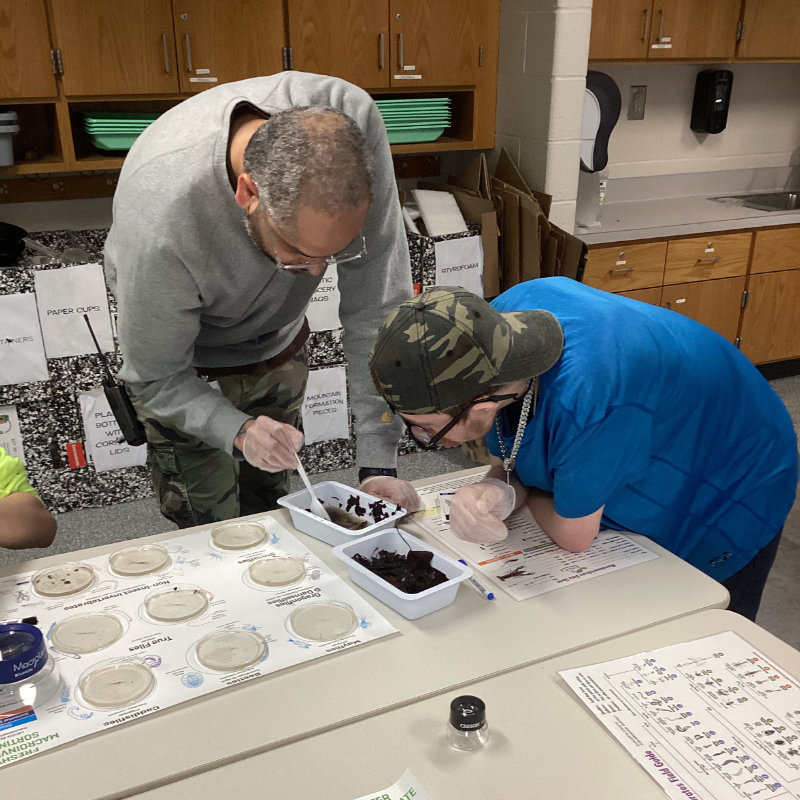
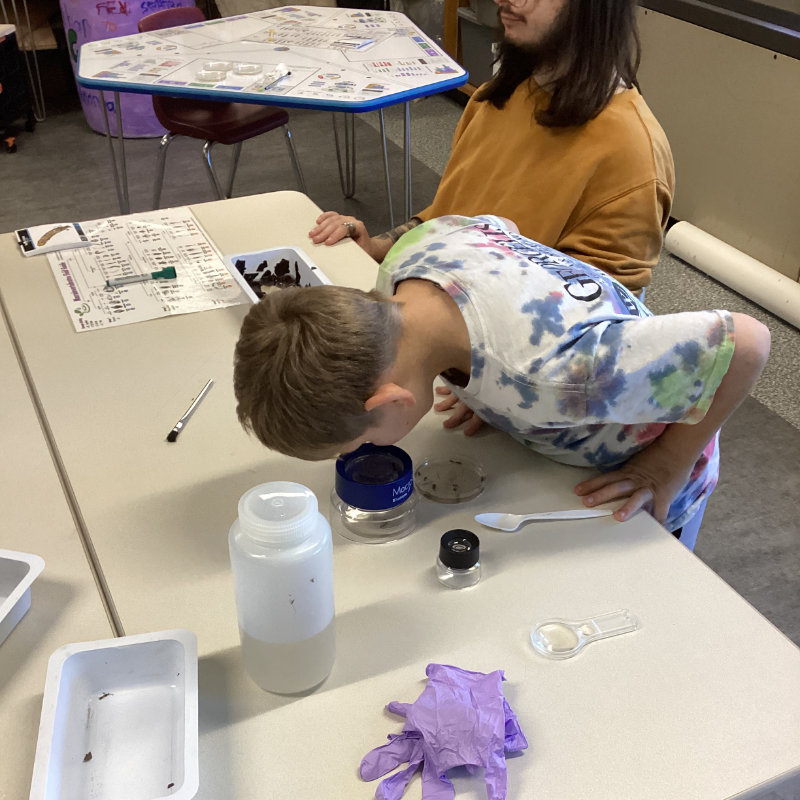
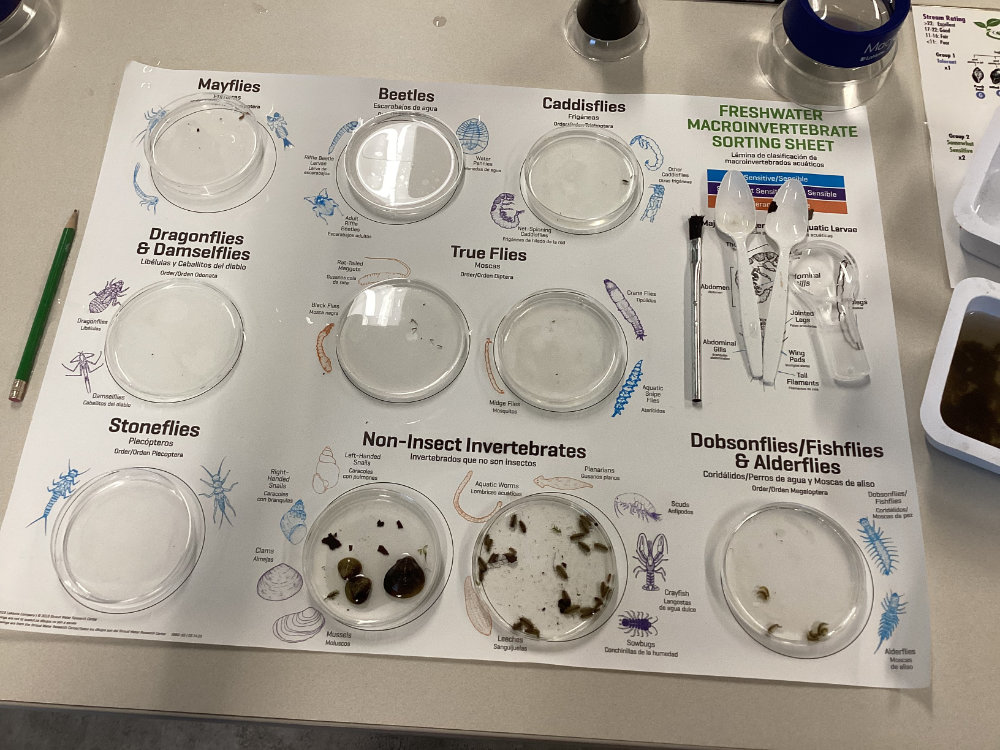
During the first year of implementation, many classes became so engaged in exploration and discussion that we never reached the planned data-analysis activities. Rather than viewing this as a problem, I recognized it as a success.
Many of my students struggle with academic engagement and peer interaction, yet they were collaborating, communicating, and sustaining attention for an extended period of time. The macroinvertebrates had created a natural opportunity for meaningful learning and social connection.
This year, I built additional structure into the lesson by reserving time at the end of class for discussion and graphing. Students analyzed the types of macroinvertebrates they observed and used identification guides to support claims about population differences and ecosystem health. Because our science unit focused on population dynamics and invasive species, these observations provided an authentic context for scientific argumentation and evidence-based reasoning.
Even with these adjustments, 45 minutes rarely feels like enough time. Students are deeply engaged in the investigation, and many require significant support with reading and writing tasks. As students and staff become more familiar with the process, I hope to continue refining the balance between exploration, observation, and data analysis.
More Than a Stream Study
Leaf packs have become much more than a science activity in my classroom. They provide opportunities for students to practice observation, communication, collaboration, and stewardship while interacting with living organisms. For students who may face barriers to participating in traditional field experiences, leaf packs bring the wonder of a stream ecosystem directly into their hands.
Most importantly, they help students develop a connection to the natural world. Whether a student is carefully examining a mayfly nymph, excitedly showing a friend a caddisfly case, or proudly sharing evidence to support a scientific claim, they are engaging in authentic environmental science.
For educators looking to increase accessibility while maintaining meaningful, hands-on environmental learning experiences, leaf packs offer a powerful place to start.
Adapting Leaf Pack Investigations for Diverse Learners
- Preview the experience. Use stream photos and the Leaf Pack Network Simulation to help students know what to expect before working with live organisms.
- Set clear expectations. Review how to safely handle macroinvertebrates and why it’s important to care for them.
- Slow the pace. Give students extra time to observe, explore, and ask questions.
- Offer different ways to participate. Let students observe, sort, identify, count, graph, or discuss their findings.
- Be flexible with recording. Modify data sheets and recording expectations to match individual learning goals.
- Use partners to build confidence. Pair students when needed and reassure hesitant learners with simple facts about the organisms.
- Prepare your support staff. Share a one-page guide with the lesson overview, key vocabulary, guiding questions, and staff roles.
- Use your team. Teachers and support staff can encourage observations, ask questions, and assist with recording.
- Allow time to reflect. End with a class discussion to share discoveries and connect observations to stream health.
- Meet students where they are. Success looks different for every learner.
Lessons Learned After Two Years of Leaf Pack Investigations
- Students are often more engaged than expected. Build flexibility into your lesson timeline.
- Observation and discussion are valuable learning outcomes, even when students do not complete every planned activity.
- Install more leaf packs than you think you will need in case some are disturbed or lost.
- Using the same stream site over multiple years helps you become familiar with the habitat and locate productive collection areas.
- Supplementing leaf packs with organisms collected with kick nets can increase biodiversity and student excitement.
- Live macroinvertebrates naturally encourage collaboration, communication, and curiosity among students.
- Forty-five minutes may not be enough time for investigation and written work, especially for students who require additional support.
- Staff involvement is essential. As teachers and support staff become familiar with the activity, investigations run more smoothly.
- The preparation requires time, but the excitement, engagement, and authentic scientific experiences make it worthwhile.
- Bringing stream ecology into the classroom can provide meaningful environmental education opportunities for students who may not otherwise have access to traditional field experiences.
Get Involved: Discover your local stream’s health with the Leaf Pack Network. The Leaf Pack Network is part of the Stroud Center’s WikiWatershed web toolkit for advancing knowledge and stewardship of fresh water.