Stroud Center Helps Communities Strengthen Local Monitoring and Protect Vital Freshwater Resources
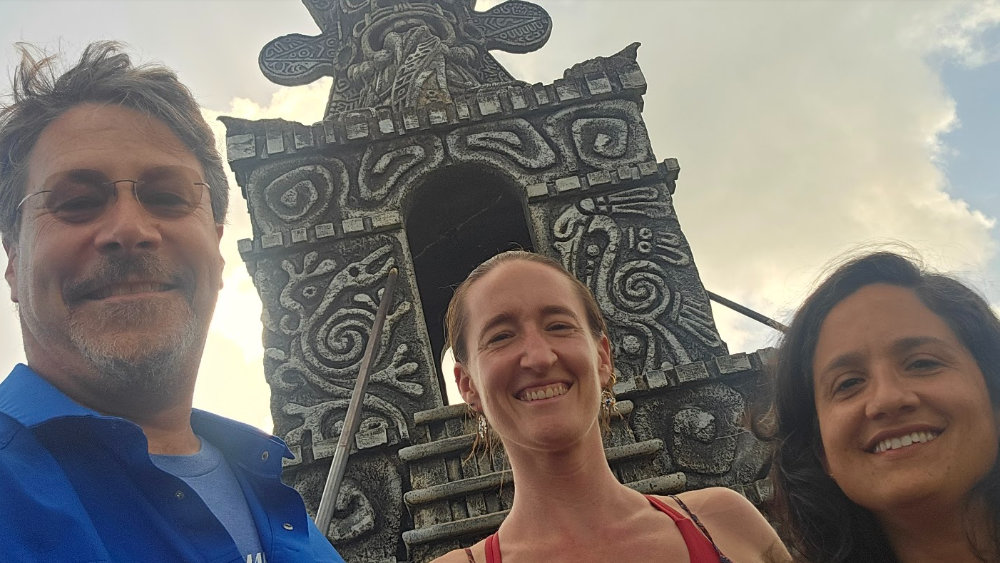
Earlier this year, staff from Stroud Water Research Center traveled to Central America, where growing development, changing climate conditions, and increasing demand for fresh water are placing ongoing pressures on rivers and streams.
In many of these watersheds, limited baseline monitoring makes it difficult for communities to understand how freshwater ecosystems are changing over time.
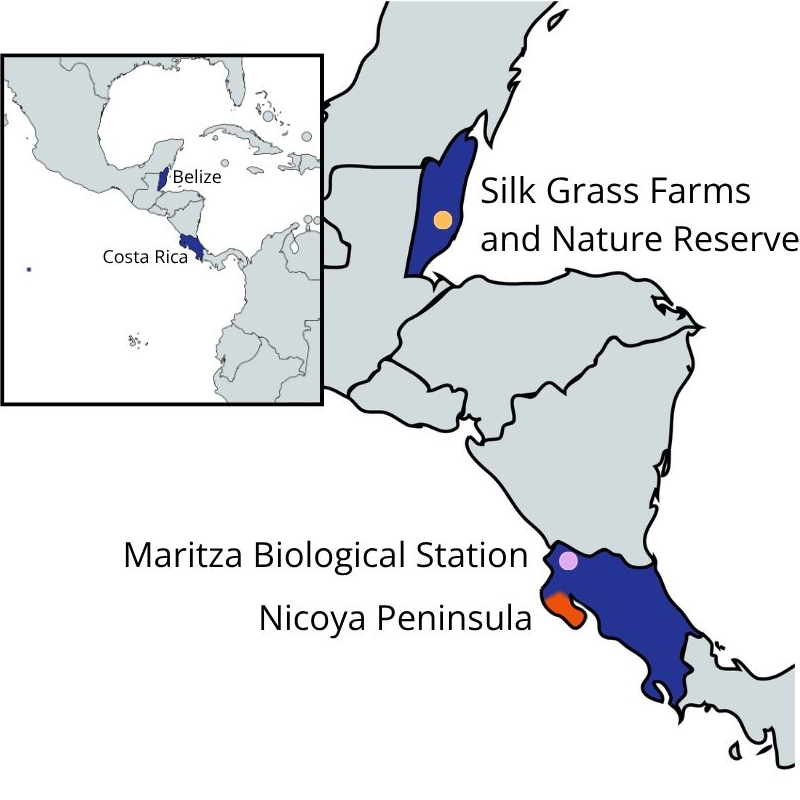
Through research, education, and community science, the Stroud Center team worked alongside local groups to generate trusted freshwater data and build the scientific foundation communities need for long-term freshwater stewardship. The work was supported by a grant from the Virginia Wellington Cabot Foundation. The initiative builds on more than four decades of tropical freshwater research by the Stroud Center, which has operated Maritza Biological Station in northwestern Costa Rica since 1989.
“Understanding how we use the land, and the impact of land use on aquatic ecosystems is the core of what we do,” says Executive Director David Arscott, Ph.D. “By gathering baseline data and helping communities collect trusted freshwater data, we also strengthen our understanding of freshwater ecosystems around the world.”
Water Quality Monitoring on Costa Rica’s Nicoya Peninsula
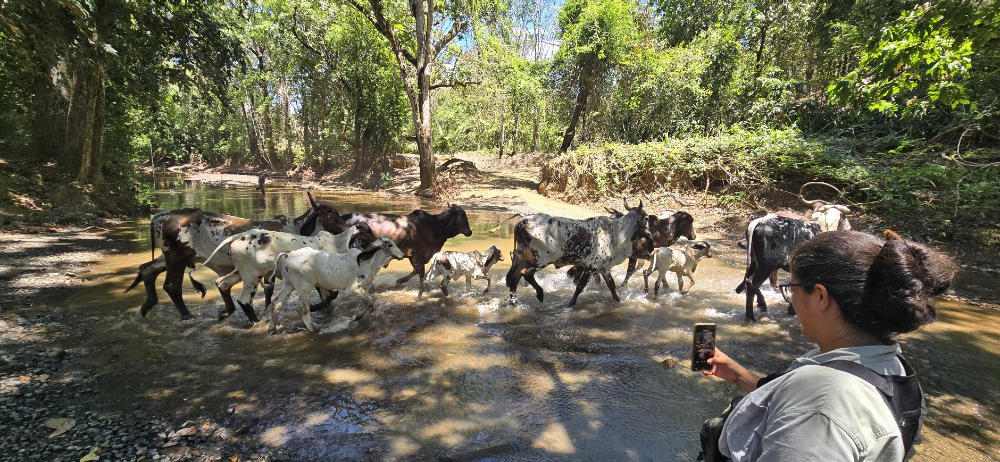
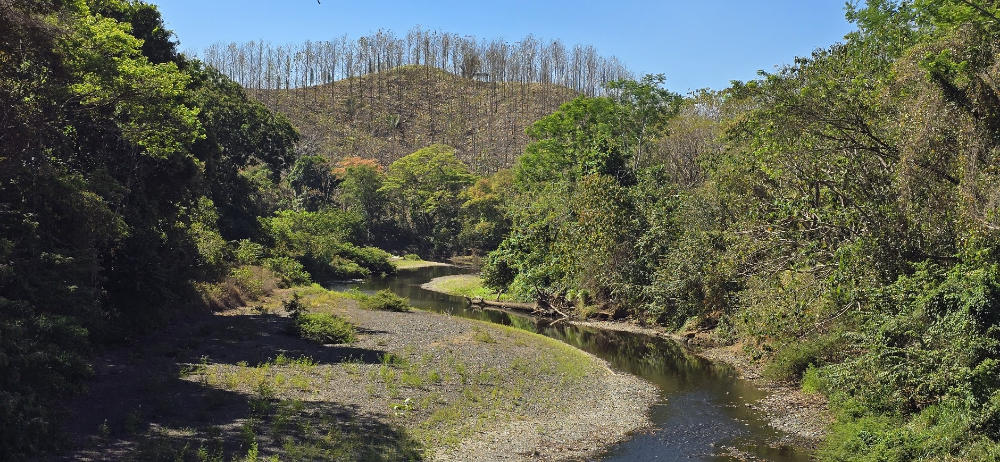
The Bongo and Ario River watersheds are the two largest on Costa Rica’s Nicoya Peninsula, supplying water for agriculture, cattle ranching, groundwater recharge, and nearby communities. As the peninsula experiences severe dry seasons, rapid coastal development, and increasing pressure on drinking water supplies, establishing baseline freshwater data is an important first step in helping communities understand and manage these changes.
During three days in March, Arscott, Associate Research Scientist Diana Oviedo Vargas, and Staff Scientist Stephanie Bernasconi surveyed about a dozen stream sites within the Bongo and Ario River networks.
The team collected water chemistry samples and surveyed aquatic macroinvertebrates — small stream-dwelling animals that can help indicate water quality.
Although the surveys were designed primarily to inform future monitoring efforts, they also revealed both encouraging signs and emerging concerns:
- The team found no evidence of illicit pollution discharges.
- Water temperatures were higher than expected at several sites.
- Some streams contained excessive riverbed algae mats.
- Aquatic macroinvertebrate communities at several locations suggested elevated nutrient levels.
These observations suggest streams are responding to working landscapes, including rangeland and teak plantations, along with prolonged dry conditions and extreme heat.
To build local capacity for freshwater monitoring and watershed education in the region, the team in June met with staff from Costa Rica’s Center for Investigation of Social and Natural Resources (CIRENAS) near Santa Teresa, located on the southern tip of the Nicoya Peninsula.
In addition to sharing Stroud Center education resources, the team will provide the survey data collected from the Bongo and Ario watersheds. With this data, CIRENAS will gain valuable baseline information to help guide watershed stewardship as the region faces prolonged dry seasons, rapid coastal development, vulnerable groundwater supplies threatened by saltwater intrusion, and drinking water and sanitation systems nearing capacity.
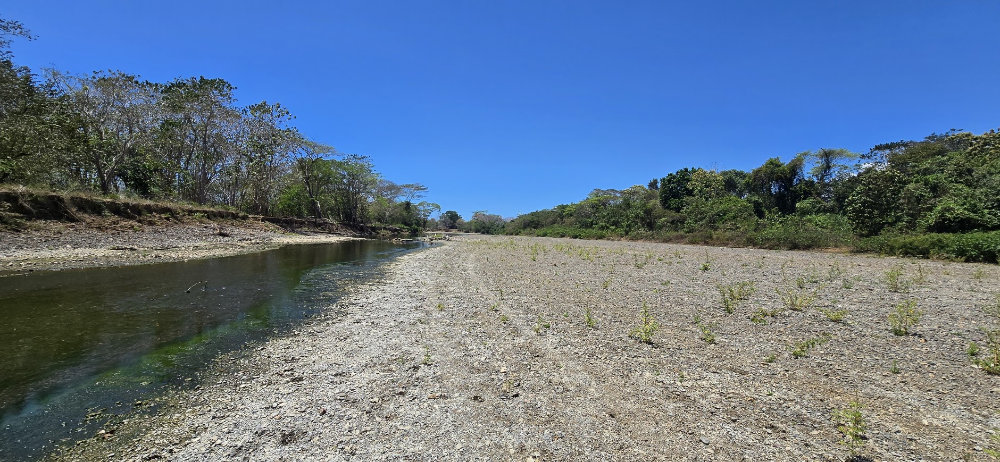
Education Program Manager Kathryn Difo has also provided virtual training to help CIRENAS educators use Stroud Center watershed curricula, with additional training and an in-person workshop planned. Equipped with these resources, CIRENAS educators are expanding watershed education in local schools, helping students understand how watersheds function, how pollution moves through streams, and why monitoring stream health matters.
Building Community Science in Belize
In Belize, the Stroud Center continued its efforts to strengthen freshwater stewardship by working with educators, students, environmental scientists, and conservation professionals to build local knowledge and monitoring skills.
Arscott, Oviedo Vargas, and Difo traveled to Silk Grass Farms and Nature Reserve in Belize’s Stann Creek District.
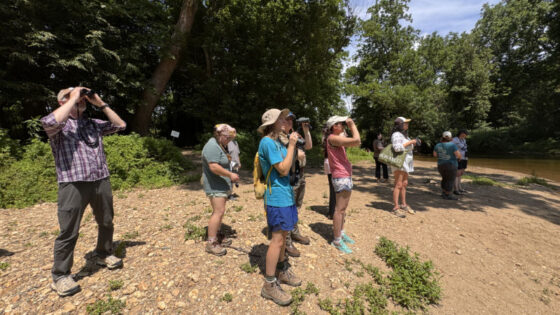
Through workshops, the team introduced participants to watershed science and freshwater monitoring techniques to support local conservation efforts.
A full-day community science workshop brought together more than 20 conservation professionals, educators, and environmental scientists from organizations including Silk Grass Farm and Nature Reserve, The Nature Conservancy – Belize, Galen University, Oceana, Stann Creek Ecumenical Junior College, the Forest Department of Belize, and Belize Maya Forest Trust.
Participants explored the physical, chemical, and biological characteristics of watersheds, practiced field collection techniques, and learned how aquatic macroinvertebrates can help them assess stream health.
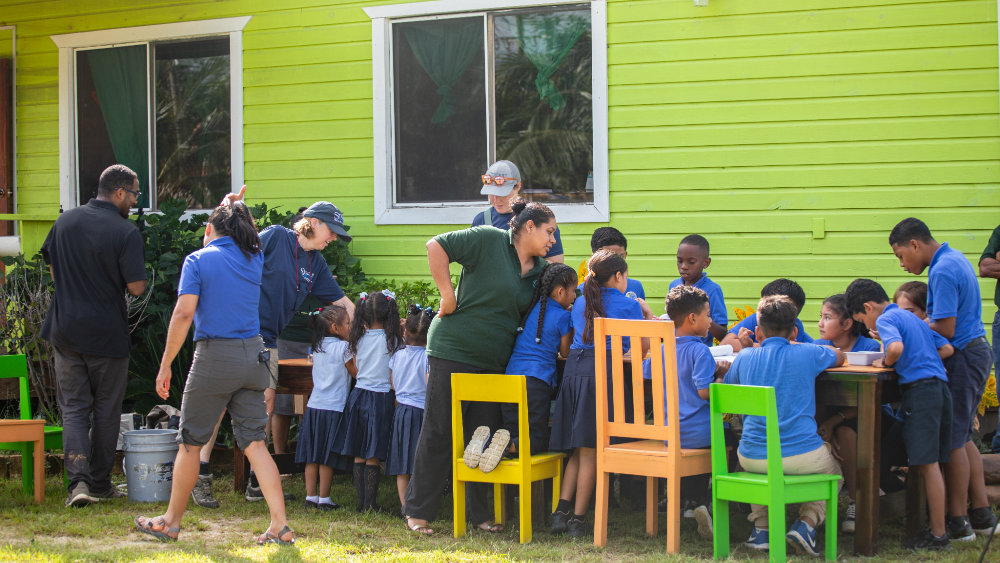
As a tropical coastal region, Belize’s Stann Creek District would benefit from long-term freshwater monitoring to better understand environmental pressures that may affect its streams and rivers, including agriculture, urban development, flooding, invasive species, and changing coastal conditions. Establishing baseline data today helps communities recognize changes and make more informed conservation decisions in the future.
By combining local knowledge with scientific methods, the workshops provided practical tools participants can continue using to better understand and protect their freshwater resources.
A Shared Goal
The freshwater challenges in Costa Rica and Belize highlight the growing need for science-informed watershed stewardship. By helping communities collect trusted freshwater data, understand their watersheds, and build long-term monitoring capacity, the Stroud Center is strengthening freshwater conservation while advancing scientific knowledge around the world.
Your gift is an investment in programs that protect our world’s freshwater sources upon which life depends. Support science today for water tomorrow.