

Understanding How Dams Change Rivers and What Happens When Dams Come Down
Dams can fundamentally change rivers, altering the movement of water, sediment, nutrients, and aquatic life. Removing a dam reconnects a river, but what happens next depends on the dam, the river, the surrounding landscape, and the history of the ecosystem.
Stroud Water Research Center scientists work with research and restoration partners to understand these changes. By studying rivers before and after dams come down, we can reveal how ecosystems respond over time and generate knowledge that can inform future river restoration.
How Do Dams Change Rivers?
Rivers are dynamic systems. Water, sediment, nutrients, and organisms are continually moving through them, connecting upstream and downstream ecosystems.
Dams interrupt those connections. Depending on their size, location, and design, dams can affect rivers in different ways.
Dams change the flow of water.
Dams slow moving water and can alter water depth, velocity, and connections between rivers, floodplains, and groundwater.
Dams trap sediment.
Particulate material, like soils and clay particles, settles out in slow-moving water and accumulates behind dams.
Dams trap pollutants.
Clay particles naturally carry a slightly negative charge and scavenge positively charged metals and pollutants, leading to higher concentrations of harmful pollutants trapped behind dams. Deep water and deep sediments frequently run out of dissolved oxygen. When that happens, chemical reactions change, and pollutants originally bound to clay get released back into the water above, where they can harm wildlife.
Dams change water quality.
Slow-moving or stagnant water is more rapidly warmed by the sun. Increasing surface water temperatures can lead to higher rates of algal and bacterial growth, both of which can be harmful to aquatic organisms and to humans.
Dams disrupt habitat and wildlife migration.
Many fish species migrate up- and down-river to complete their life cycle. Interrupting access to headwater streams prevents spawning and reduces some fish populations. Although fish ladders provide some species with a path around large dams, some species such as American eel, shad, and herring, cannot navigate ladders, so dams prevent them from reaching their natural spawning grounds.
Dams reshape rivers.
Dam operators release water to prevent flooding, provide sufficient water to maintain the river’s fish, for recreation opportunities, and for power generation in some cases. This engineering solution prevents the natural processes that would shape a natural river ecosystem from occurring.
Dams create drowning hazards.
Low-head dams can create powerful, recirculating currents below the dam that trap swimmers, paddlers, and even experienced rescuers underwater. Often called “drowning machines,” these dams can appear harmless from upstream, making them especially dangerous to people recreating on rivers.

Low-head dams, like this one on the Brandywine River in Delaware, can be especially dangerous to people recreating on rivers.

Small Dams, Big Questions
Landmark projects like the Klamath and Elwha show the enormous effort it can take to reconnect rivers after decades of damming.
But dams don’t have to be large to significantly alter rivers.
Thousands of smaller, aging dams remain on streams and rivers across the United States, including historic milldams built to power mills and support agriculture. Many no longer serve their original purpose.
In addition to the danger they pose, milldams prevent the free flow of water and habitat access many freshwater species need. And removing a small dam doesn’t necessarily produce the same results as removing a large one. Stroud Center researchers have been answering questions about the changes to water and sediment chemistry and microbiology when milldams are breached or removed.
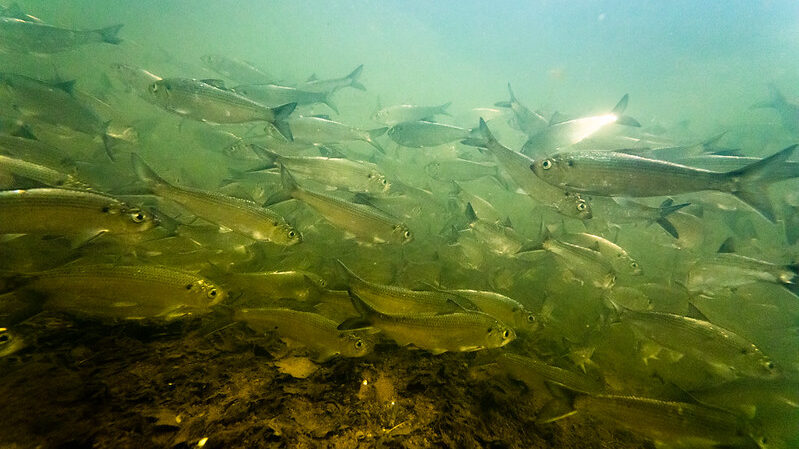
Dams prevent habitat access for freshwater species like these river herring. Photo: Chesapeake Bay Program, Flickr

What Happens When a Dam Comes Down?
Dam removal physically reconnects a river. Ecologically, however, it begins a period of transition. Stroud Center scientists and research partners have studied these changes from several angles.
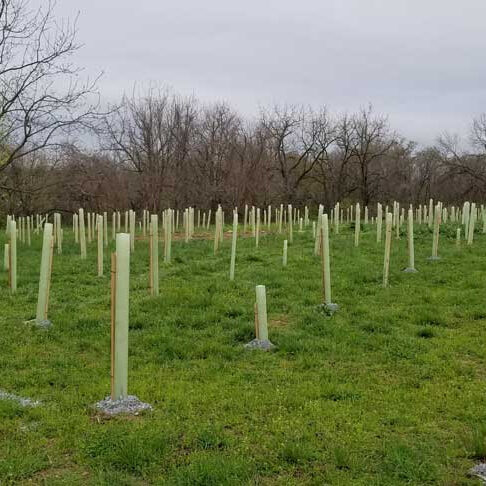
Measuring a River Before and After Dam Removal
Establishing baseline conditions makes it possible to study the river through a rare ecological transition and understand the effects of dam removal.
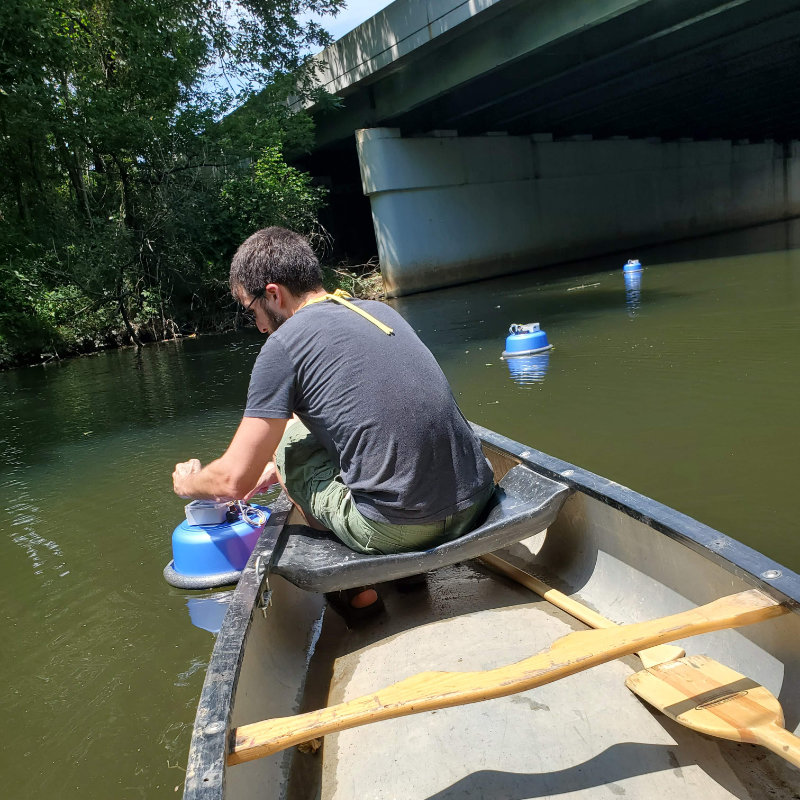
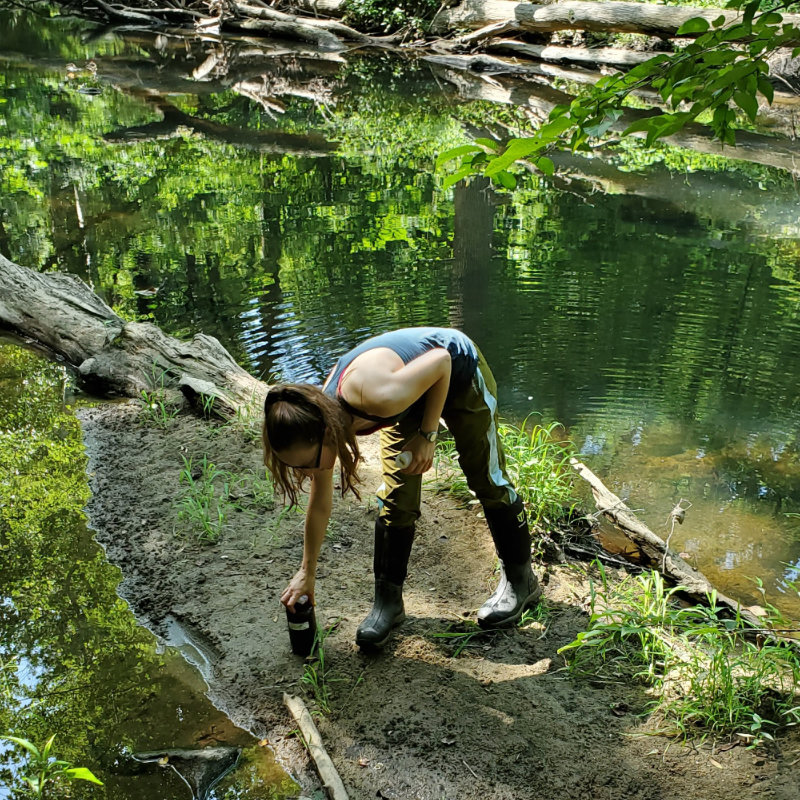
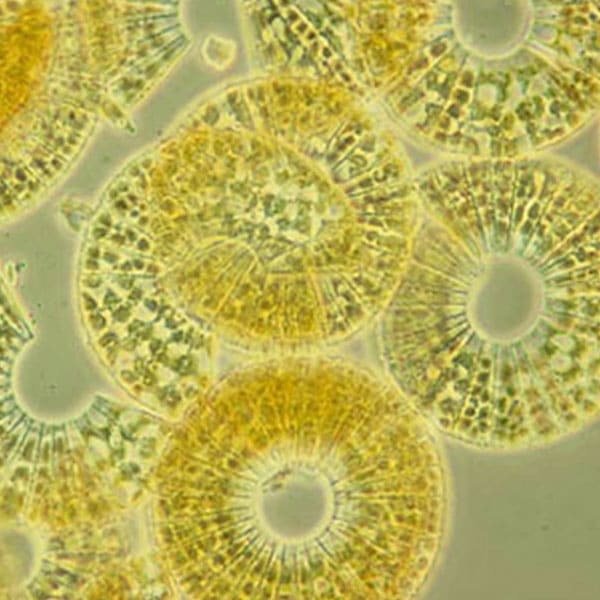
At milldam sites in Pennsylvania and Delaware, Stroud Center scientists and research partners compared dammed reaches with free-flowing sections of river and studied water levels, temperature, dissolved oxygen, nutrients, sediments, groundwater, and microbial processes.
The removal of Krady Dam on Chiques Creek in Pennsylvania created an opportunity to follow one of those rivers through the transition.
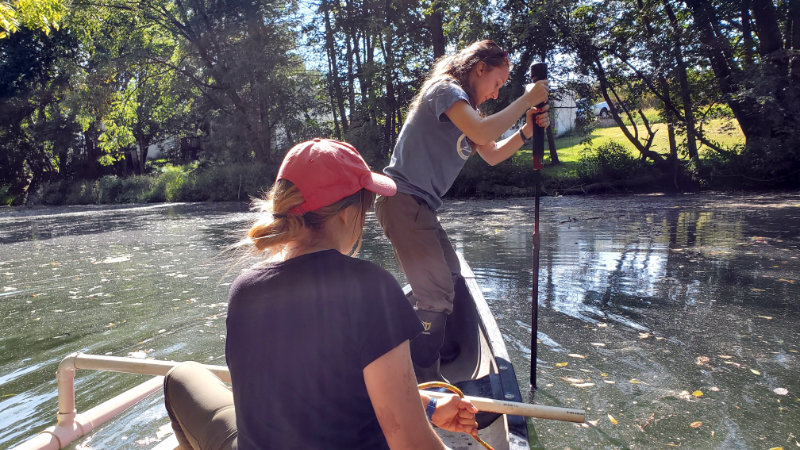
Scientists take samples at the Chiques Creek dam removal site in Pennsylvania to follow the river through the transition.
Science for Better Dam-Removal Decisions
Planning a dam removal? Stroud Water Research Center can bring independent freshwater science to help establish baseline conditions, track ecological change, and document how a river responds over time. Start the conversation by emailing communications@stroudcenter.org.
Related News

Dams and their legacies shape biogeochemical evolution of riparian sediments
Anthropogenic Legacies: How Riparian Soils Respond to Human Disturbance
Saturated, Suffocated, and Salty: Hotspots of Dissimilatory Nitrate Reduction in Anoxic Riparian Soils
Distinct changes in riparian sediment microbial communities with depth and time since dam removal
Riparian groundwater nitrogen (N) isotopes reveal human imprints of dams and road salt salinization
