Hawk Mountain’s Expanded PA Farmland Raptor Project
Reprinted with permission from Hawk Mountain Sanctuary News, Autumn 2025: 20–21.
By Bracken Brown, Biologist-Naturalist
Partnership Aims to Restore Clean Water and Wildlife
In partnership with Stroud Water Research Center, Hawk Mountain Sanctuary is extending the reach of its Pennsylvania Farmland Raptor Project into the Chesapeake Bay watershed. Through the partnership, qualifying landowners can receive free nest boxes for barn owls and kestrels, which are in decline because of habitat loss and changes in land use.
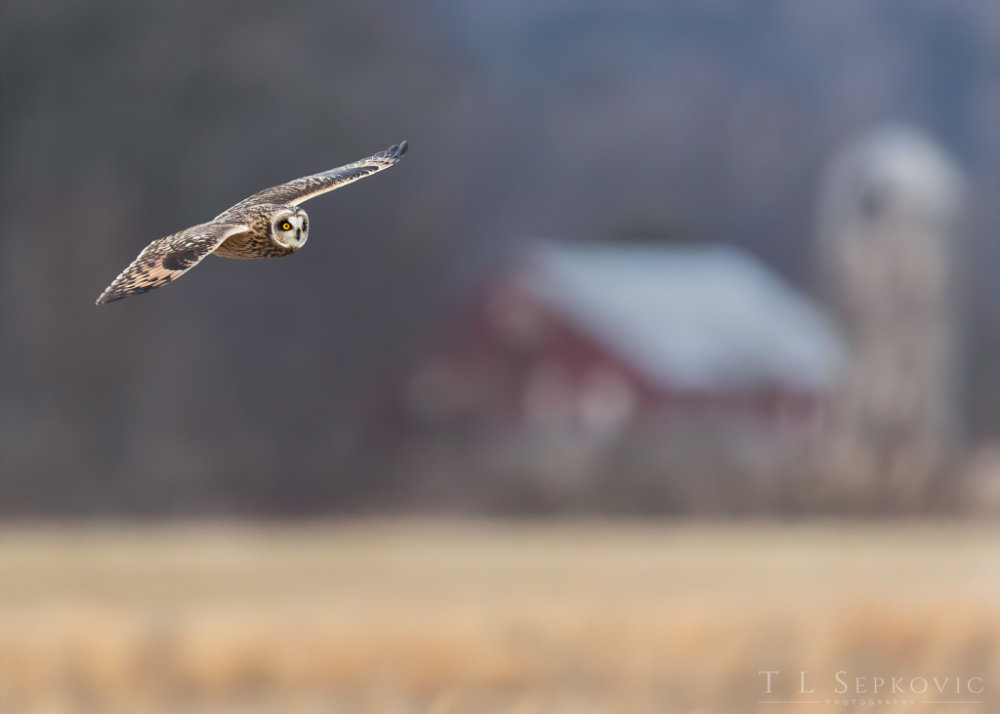
This effort links the conservation of four farmland raptors (American kestrel, northern harrier, American barn owl, and short-eared owl) with riparian restoration efforts to increase reach on functional ecosystems. It’s supported by a grant from the National Fish and Wildlife Foundation.
Since the 1960s, the Stroud Center has been monitoring water quality and establishing streamside forests, or riparian buffers. Now, through the Farmland Raptor Project, its landowner partners can make an even greater impact on their streams and local wildlife.
What seemed like a potential hurdle turned into an asset when the Stroud Center shared with Hawk Mountain its statistics on vole damage to its tree plantings and landowner concern that incorporating buffer zones would lead to a rodent population boom. Enter the farmland raptor and a perfect partnership is born!
Riparian buffers improve water quality by providing shade to water, but also by acting as a natural filter that limits agricultural runoff from reaching streams. At minimum, the Stroud Center’s landowner partners agree to establish buffers that extend 35 feet from the stream bank and use a mix of native trees and shrubs to provide both shade and natural filtration.
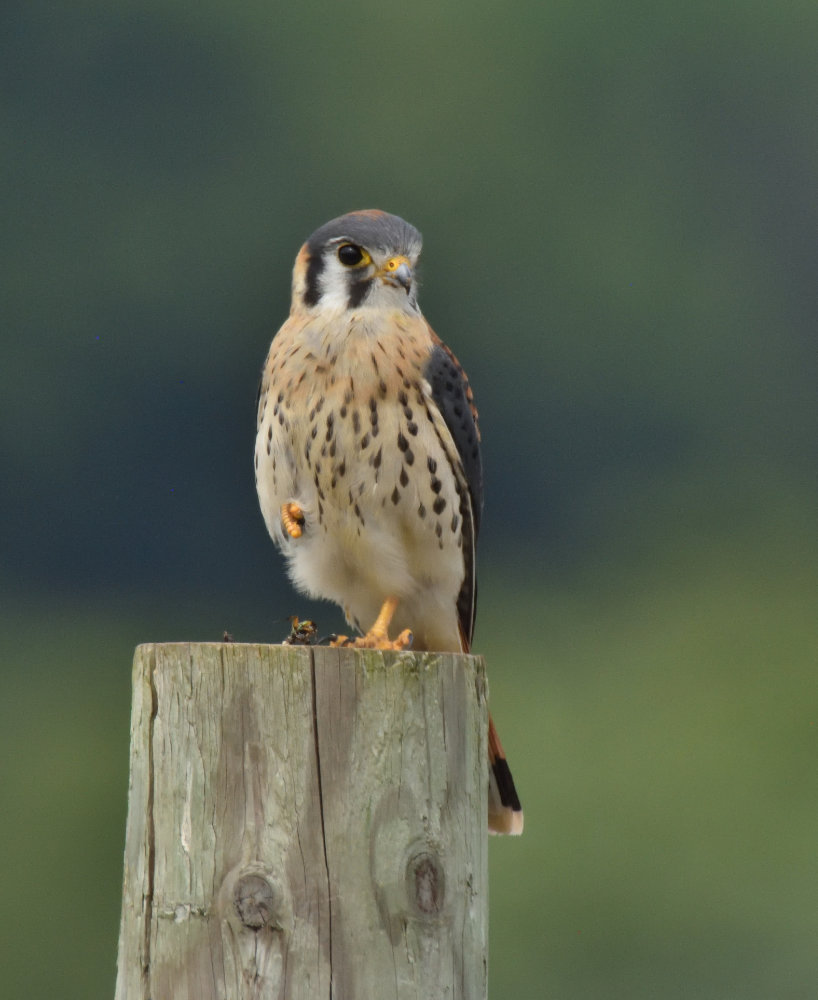
These projects are often significant endeavors for landowners and restoration project managers, as tree saplings need protection and maintenance during establishment. The first three years are when trees are at their most vulnerable and often when vole damage can kill the trees. These early stages provide excellent hunting grounds for farmland raptors, as the small trees provide perch locations to scan the grass for their next meal. As trees mature, they can also give raptors a safe place to roost during the winter.
Riparian zones increase biodiversity, as they offer refuge extending through open agricultural landscapes to birds, mammals, and insects during mowing events, which benefits the entire food chain. This project aims to use farmland raptors to track habitat functionality, as their presence indicates a healthy ecosystem.
By installing kestrel and barn owl boxes in or near restoration zones, Hawk Mountain researchers can track use of the area as the buffer matures to see if grassland raptors respond to the modified landscape. Encouraging landowners to use natural pest control and making sure to manage properties with habitat in mind can provide long-reaching benefits to local wildlife.
Conservation Project Houses Nearly 300 Kestrel Chicks in Lancaster County
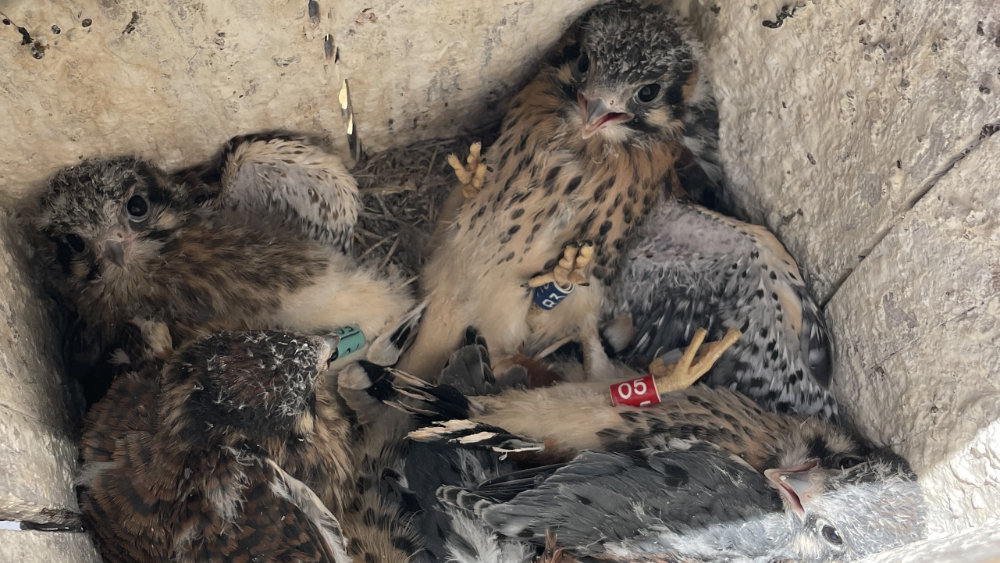
To date, the team has deployed 149 kestrel and 70 barn owl boxes on properties with buffer projects. With the landowner’s permission, the collaborative team monitored these boxes across the two years to track occupancy. The team saw a 36% occupancy in kestrel boxes during the first season alone, showing the lack of nesting areas.
The last kestrel chicks of the 2026 season fledged on August 20 and brought the project total to 275 fledged American kestrels across the two-year period. Hawk Mountain’s Maryland collaborators had four of the newly erected boxes used by American barn owls in 2026. The quick utilization of these freshly placed nest boxes highlights their importance in wildlife conservation.
The team conducted point counts in the study area year-round to assess how farmland raptors continue to use the riparian locations, finding higher counts of bird species overall in areas with buffer projects. This monitoring effort will also rely on community scientists to report sightings, either on Hawk Mountain’s online portal or through the eBird app. The team will also survey prey species in and adjacent to the riparian zones to compare diversity and availability of prey items. A healthy prey base will recruit a predator, so farmland raptors will hopefully be a litmus for the success of conservation efforts in working landscapes.
The project is expanding to include a more challenging ground-nesting raptor, the northern harrier, also known as the marsh hawk, with a new tracking project. With funding from the Department of Conservation and Natural Resources and the Pennsylvania Game Commission, Hawk Mountain will assess habitat use and dispersal of harriers, as well as their sensitivity to land use changes, in the Keystone State. Once a relatively common nesting raptor along the Schuylkill and Susquehanna river corridors, their habit of hiding their nests in tall grass makes them susceptible to unintentional mowing before the young are old enough to fly.
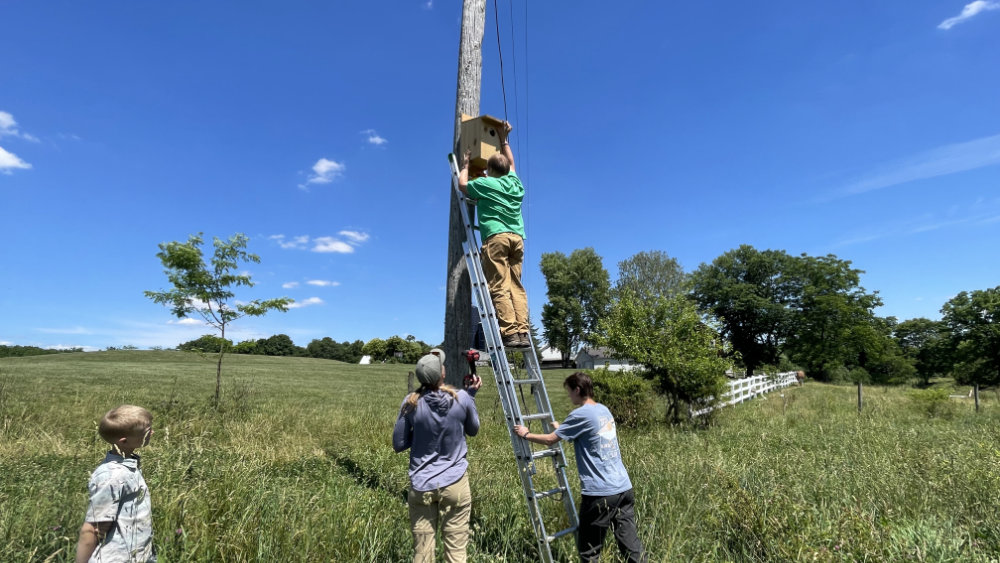
The Farmland Raptor Project would be a near-impossible undertaking without partners, and Hawk Mountain extends its gratitude to the Stroud Center, Pennsylvania Game Commission, Maryland Bird Conservation Partnership, Steve Eisenhauer, Zoo America, Hershey Area Raptor Project, and all our landowner hosts! The success of this effort is due to landowners being willing to work with us to get boxes deployed, recognizing the value of recruiting farmland raptors for natural pest control, and telling their neighbors about the effort.
This grassroots, word-of-mouth strategy has built significant capacity for our conservation efforts and has settled into a repeatable model that we look forward to expanding to new watersheds.
Take Action
- If you see a box near a restoration zone, scan for grassland icons and report your sightings on the project! To learn more about the project or to report your sightings, visit Hawk Mountain Sanctuary’s Farmland Raptors page.
- If you are interested in streamside buffers or soil health practices for your property, connect with the Stroud Center’s watershed restoration team.
About the Author
Bracken Brown is a biologist-naturalist at Hawk Mountain Sanctuary. He grew up in the shadow of Hawk Mountain and, since childhood, has been engaged in the Sanctuary’s local trapping and monitoring projects, including the American Kestrel Nest Box Program, new world vulture research, and seasonal counts and surveys. Brown supports natural history monitoring and long-term research by conducting migration counts and surveys and maintaining avian and GIS databases, and helps with volunteer recruitment and public outreach.