
On September 1, 2026, Stroud Water Research Center submitted comments to the Pennsylvania Department of Environmental Protection on proposed updates to its biosolids-permit requirements.
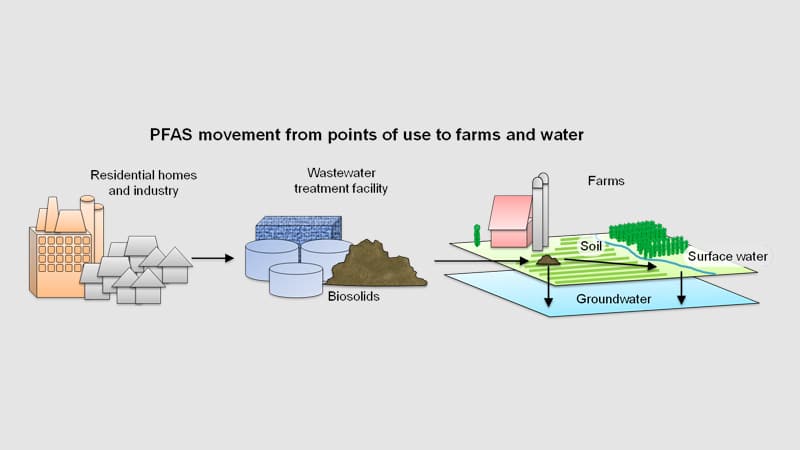
Biosolids are a byproduct of wastewater treatment, and some are applied on farmlands as fertilizer.
Research by the Stroud Center and others has found PFAS, also called forever chemicals, are present in some biosolids. And our research on Pennsylvania farm fields shows that a variety of these compounds may be found in some soil and water samples from fields treated with biosolids.
PA DEP Proposes Updated Safeguards to Prevent PFAS Forever Chemicals in Biosolids from Polluting Groundwater
Comments submitted on September 1, 2026
Dear Pennsylvania Department of Environmental Protection Team,
Stroud Water Research Center appreciates the Pennsylvania Department of Environmental Protection’s continued work to address per- and polyfluoroalkyl substances (PFAS) in the commonwealth’s waters and wastewater systems. We support DEP’s efforts to identify PFAS sources, improve monitoring, and reduce the movement of these persistent chemicals within the environment.
Our comments are informed by Stroud Center research on the occurrence, persistence, and movement of PFAS in agricultural soils and surface waters associated with land application of biosolids.
Beginning in 2021, Stroud Center researchers, with collaborators from the Center for PFAS Solutions, studied 10 Pennsylvania farms using a paired-field design. Within these 10 farms, fields that had received biosolids and those that had no history of biosolids amendment were sampled at two soil depths per location. At two farms, biosolids and surface waters were also sampled. Forty PFAS compounds were analyzed using EPA Method 1633A. PFOA and PFOS were among the compounds measured.
High Rate of PFAS Contamination Found on PA Farms Using Biosolids
The study revealed significant levels of PFAS contamination on most fields treated with biosolids:
- On average, there were significantly higher PFAS concentrations in biosolids-amended soils than in untreated control soils, however, results varied widely. In one instance, there was no difference in contamination between the treated and control fields (concentrations were both very low). Yet at another farm, the treated soils contained 100 times more total PFAS than in the control fields. Up to 14 PFAS compounds were found in treated soils, while PFOS was the only PFAS found in control soils.
- PFAS were detected at multiple soil depths, indicating that these compounds can persist within and move through agricultural soils.
- The composition and concentration of PFAS varied with soil characteristics, depth, and biosolids source.
Sourcing Biosolids With Lower PFAS Concentrations
The variation in concentrations of PFAS found in agricultural soils amended with biosolids is high. This indicates not all biosolids are equally contaminated. Furthermore, as we state in our recent paper, “Median PFAS concentrations were often lower in soils receiving biosolids from municipal applicators than those receiving biosolids from private applicators…Private biosolids operators often contract with multiple public and private wastewater treatment facilities in the municipal and industrial sectors, which may increase the risk of inadvertently mixing biosolids that may be highly contaminated with PFAS.” Measuring PFAS concentrations in biosolids before they are combined can help reduce potential contamination of biosolids that would otherwise have lower PFAS content and be more appropriate for soil applications.
Tracking PFOA and PFOS Alone Might Not Be Enough
Biosolids often contain many more PFAS compounds. Through repeated biennial reviews under the Clean Water Act, the USEPA has cataloged 29 distinct PFAS in biosolids. In our study, biosolids sampled from two farms contained 16 other PFAS compounds, in addition to PFOA and PFOS. Furthermore, in our study, precursors, some of which transform into PFOS and PFOA in the environment, were detected in biosolids but not in treated soils, suggesting their relatively fast transformation once they are applied to the fields. This indicates that measuring only PFOS and PFOA in biosolids underestimates the true amount of these compounds ending up in the soil and ultimately the water.
Biosolids Applied to Farms Might Contaminate Nearby Surface Waters
At two study farms, multiple PFAS compounds were detected in streams draining biosolids-amended fields. Shorter-chain PFAS were detected in water, consistent with their greater environmental mobility. These findings demonstrate a pathway by which PFAS associated with biosolids move from terrestrial systems into surface waters. This represents a risk to our drinking water supplies too, as over 50% of Pennsylvania’s source waters are streams and rivers. Our understanding of how these compounds change and move from biosolids, through soil, and into our waterways, however, remains undefined, and further research is needed.
Early Data Show PFAS Linger on Farms
Ongoing, unpublished research conducted at the Stroud Center provides further evidence of PFAS persistence. At one Pennsylvania study site where the use of biosolids was discontinued in 2023, PFAS concentrations measured in soils and streamwater over approximately two subsequent years showed no measurable decline. These data are preliminary and have not yet undergone peer review, but they are consistent with the well-established environmental persistence of many PFAS compounds.
Research-Informed Considerations
For these reasons, we encourage DEP to consider the proposed PFOA and PFOS requirements as an important foundation for a monitoring program that can evolve as the science develops. In particular, we respectfully recommend that DEP:
- Consider monitoring a broader suite of PFAS where practicable. EPA Method 1633A provides an analytical method for 40 PFAS compounds in wastewater, surface water, soils, and biosolids. EPA currently recommends this method for PFAS monitoring in wastewater and biosolids, including in NPDES permitting applications.
- Continue emphasizing identification and reduction of significant PFAS sources upstream of wastewater treatment plants. We strongly support DEP’s attention to source identification. Because conventional wastewater treatment processes are generally not designed to destroy PFAS, treatment and solids management can transfer persistent compounds among wastewater, biosolids, receiving waters, and other environmental media rather than eliminate them. EPA similarly recommends pretreatment best management practices to identify and reduce PFAS sources entering publicly owned treatment works.
- Consider PFAS precursors and transformation products when interpreting PFOA and PFOS results. Measuring PFOA and PFOS provides valuable information, but their concentration at a wastewater treatment plant may not represent the full PFAS burden being transferred to effluent and biosolids.
- Consider additional research into the scope, scale, and transformation of these compounds in our watersheds and our agricultural systems. PFOA and PFOS compounds are known to have human health effects, yet their distribution into and movement through our agricultural systems is largely unknown.
- Within the permitting process, consider accounting for the accumulation of PFOA and PFOS (and all other PFAS) over time. While individual applications at a given site may fall within defined parameters, multiple applications will increase the total PFOA and PFOS load to the soil, potentially rising above the limits imposed.
Pennsylvania is confronting a challenging class of contaminants for which the science, analytical capabilities, and regulatory approaches continue to develop. DEP’s proposed requirements represent a constructive step toward understanding and reducing PFAS releases. We encourage DEP to retain flexibility to expand monitoring beyond PFOA and PFOS as evidence and analytical capacity advance.
The Stroud Center appreciates DEP’s leadership on this issue and the opportunity to contribute findings from our research. We would welcome opportunities to share additional data from our ongoing work as they become available.
Respectfully submitted on behalf of Stroud Water Research Center,

David B. Arscott, Ph.D.
Executive Director, President, Research Scientist
References
- Oviedo-Vargas, D., Anton, J., Coleman-Kammula, S., & Qin, X. (2025). Quantification of PFAS in soils treated with biosolids in ten northeastern US farms. Scientific Reports, 15, 5582. https://doi.org/10.1038/s41598-025-90184-z
- Oviedo-Vargas, D., Stroud Water Research Center. Unpublished data, ongoing Pennsylvania PFAS and biosolids study, 2023–present.
Stroud Water Research Center investigates freshwater challenges and translates complex science into policy insights, grounding environmental decisions in evidence and helping policymakers and agencies reduce flooding, improve water quality, and protect wildlife and public health. Learn more about how our freshwater science informs water policy.
PFAS News

Stroud Center Weighs In on Pennsylvania’s Proposed PFAS Safeguards
The Next Frontiers of Freshwater Science

These Contaminants Are Reaching Our Surface Water
Study Points to Farmland as Possible Source of PFAS in Fish

Quantification of PFAS in soils treated with biosolids in ten northeastern U.S. farms